Culture Ark · D-1273 · Inventions · Browse the gallery · The full 2,000-pick list
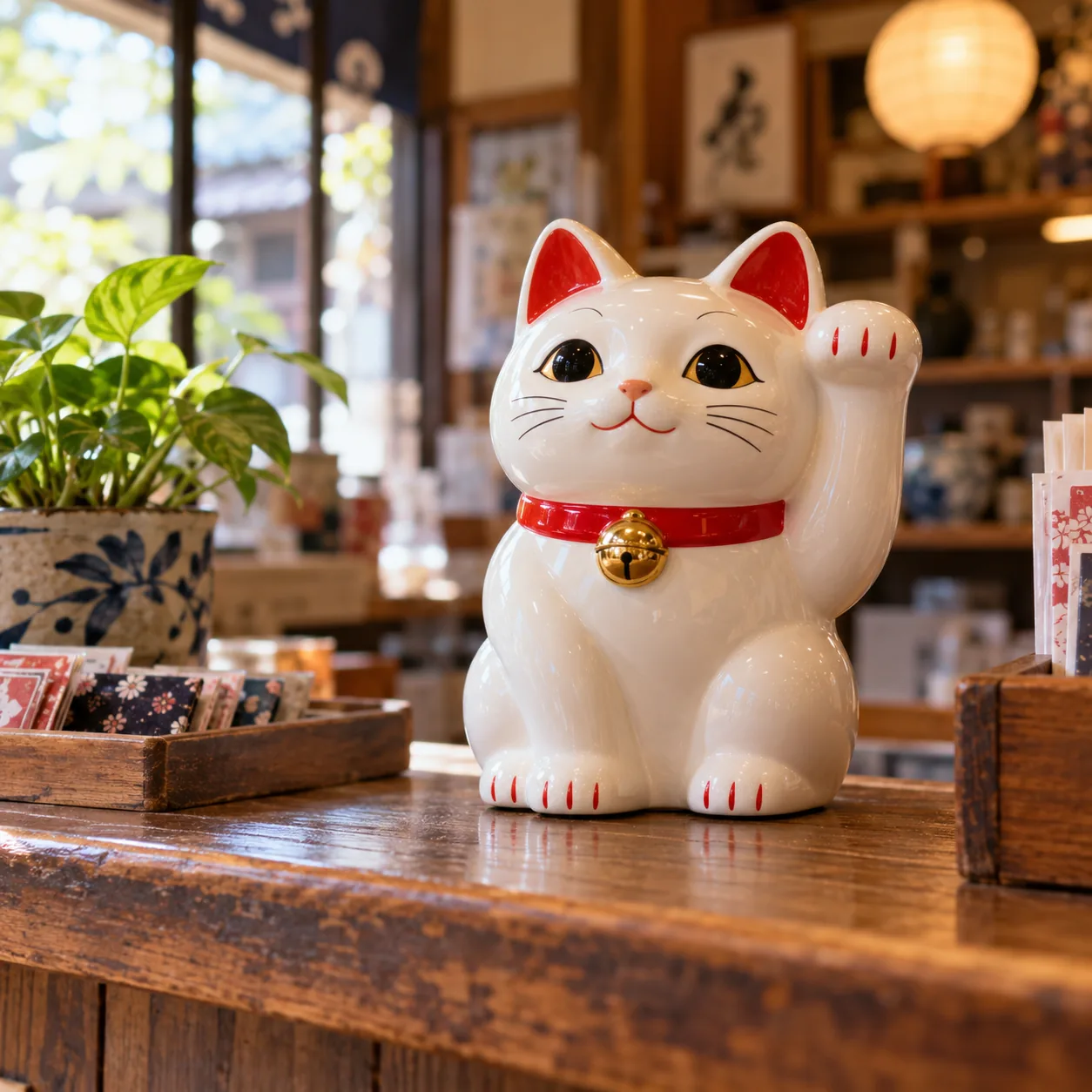
Generated interpretation, not documentary evidence. Original ceramic beckoning-cat interpretation on an imagined shop counter.
Credit: AI-generated for Culture Ark using OpenAI image generation Reuse/status: Generated content; no exclusive ownership or underlying-work rights claimed Raised paw, collar and bell inspected. No named maker, sacred provenance or exact museum-object claim; indistinct background marks not treated as authentic calligraphy. No authentic-reference or endorsement claim.
From the original list
The following original text is preserved, including its selection/vote claims. Preservation is not independent verification of every assertion.
Why: The waving cat that beckons customers and luck.
What to preserve: Raised paw meanings
Year and origin: 19th century · Japan
Vote: 6/9 (historian 2 · future kid 2 · curator 2)
Learn more: Maneki-neko on Wikipedia
Supplemental context
Maneki-neko is a beckoning-cat figurine associated with welcoming people and inviting good fortune. Japan Tourism Agency’s Tokoname account distinguishes the broader tradition from local production, which began in the late 1930s. It explains a common reading of the left raised paw as inviting people and the right as inviting wealth or good fortune. The object links commerce, ceramics and everyday hopes: a shop counter can hold something that is both decoration and a meaningful gesture of welcome.
Creator/community: Japanese figurine makers, shopkeepers and collectors; regional ceramic producers including Tokoname Place/era: Japan; nineteenth-century emergence with later regional production
Context and limits
The same source says the origin is unclear and places the first figurines tentatively in the mid-nineteenth century. Paw meanings are conventions, not universal rules across every maker or owner, and good fortune is a belief rather than a guaranteed effect. The card is a generic invented example, not a certified Tokoname product.
Where to learn more
- https://apiarybee.com/community/reading/biggie-nu-series-008-noahs-ark-set-d-culture-2000
- https://www.mlit.go.jp/tagengo-db/en/R5-00619.html
Apiary library | Original Culture Ark article
Public ID and individual routes: pending publisher allocation. Internal source ID: D-1273
Part of the Culture Ark: 2,000 things people should still be able to see in 2,000 years, picked by AI research teams. This page keeps the original list entry for D-1273 word for word and adds context. Browse the gallery. The Culture Ark is an Artificial Mind Hive (AMH) project. AMH is owned by Austin Little.

Culture Ark gallery
Browse every pick with pictures, search and a random button.
Open the gallery →