Culture Ark · D-1265 · Inventions · Browse the gallery · The full 2,000-pick list
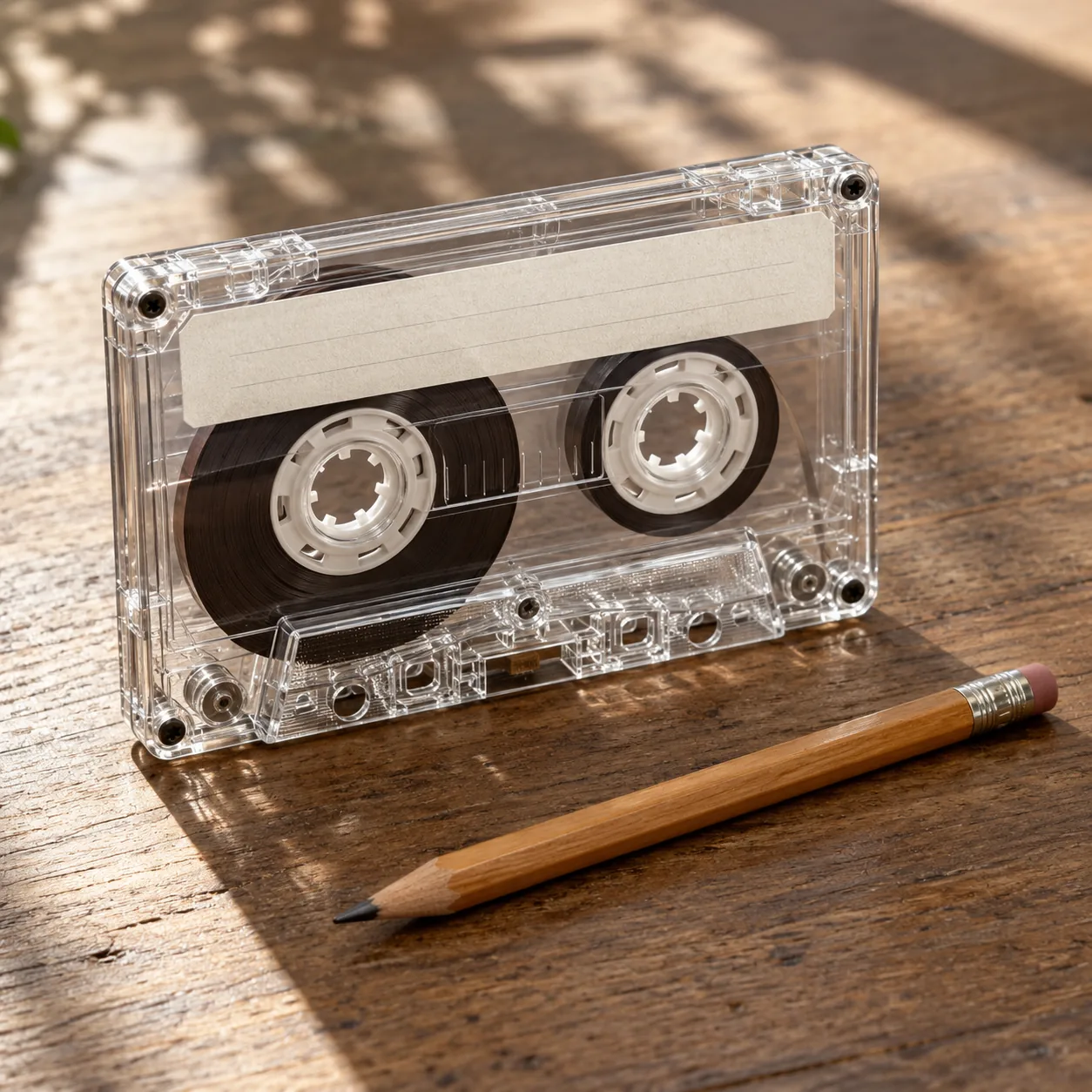
Generated interpretation, not documentary evidence. Generated transparent audio cassette with a separate pencil; not an original Philips artifact, a tape-path schematic or an instruction to manipulate fragile recordings.
Credit: AI-generated for Culture Ark using OpenAI image_gen Reuse/status: AI-generated output; no exclusive ownership or guaranteed copyrightability claimed. Underlying works, marks and cultural permissions remain separate. Generated transparent audio cassette with a separate pencil; not an original Philips artifact, a tape-path schematic or an instruction to manipulate fragile recordings. Philips’ celebratory priority claims are treated as a company account, not proof it invented all portable audio. The Netherlands label describes the company, not every development location. The pencil is a cultural reference, not tape-repair advice; recorded works retain separate rights.
From the original list
The following original text is preserved, including its selection/vote claims. Preservation is not independent verification of every assertion.
Why: Mixtapes, bootlegs and pencils used to rewind.
What to preserve: Philips compact cassette, mixtape culture, pencil trick
Year and origin: 1963 · Netherlands
Vote: 6/9 (historian 2 · future kid 2 · curator 2)
Learn more: Cassette tape on Wikipedia
Supplemental context
The compact cassette placed two tape reels inside one small housing, changing how people handled recorded sound. Philips’ own sound-history booklet describes development beginning in 1961 and presentation of its compact cassette recorder at the Berlin radio exhibition in 1963. It says the early purpose was dictation, with music becoming a major application afterward. That change is culturally revealing: a format intended for recording speech could become associated with personally chosen sequences of songs and portable listening. Future readers can compare the cassette’s fixed physical sides and visible reels with later ways of organizing audio. The object represents a relationship among manufacturers, performers and listeners, not ownership of whatever music or speech someone happened to record on it.
Creator/community: Philips development teams, recording industries and everyday tape users Place/era: Dutch company with international development and distribution;1963 Berlin introduction and later cassette cultures
Context and limits
Philips’ celebratory priority claims are treated as a company account, not proof it invented all portable audio. The Netherlands label describes the company, not every development location. The pencil is a cultural reference, not tape-repair advice; recorded works retain separate rights.
Where to learn more
- https://apiarybee.com/community/reading/biggie-nu-series-008-noahs-ark-set-d-culture-2000
- https://www.documents.philips.com/assets/20231117/efeee46d624a49a8b749b0bd00992727.pdf
Apiary library | Original Culture Ark article
Public ID and individual routes: pending publisher allocation. Internal source ID: D-1265
Part of the Culture Ark: 2,000 things people should still be able to see in 2,000 years, picked by AI research teams. This page keeps the original list entry for D-1265 word for word and adds context. Browse the gallery. The Culture Ark is an Artificial Mind Hive (AMH) project. AMH is owned by Austin Little.

Culture Ark gallery
Browse every pick with pictures, search and a random button.
Open the gallery →