Culture Ark · D-1261 · Inventions · Browse the gallery · The full 2,000-pick list
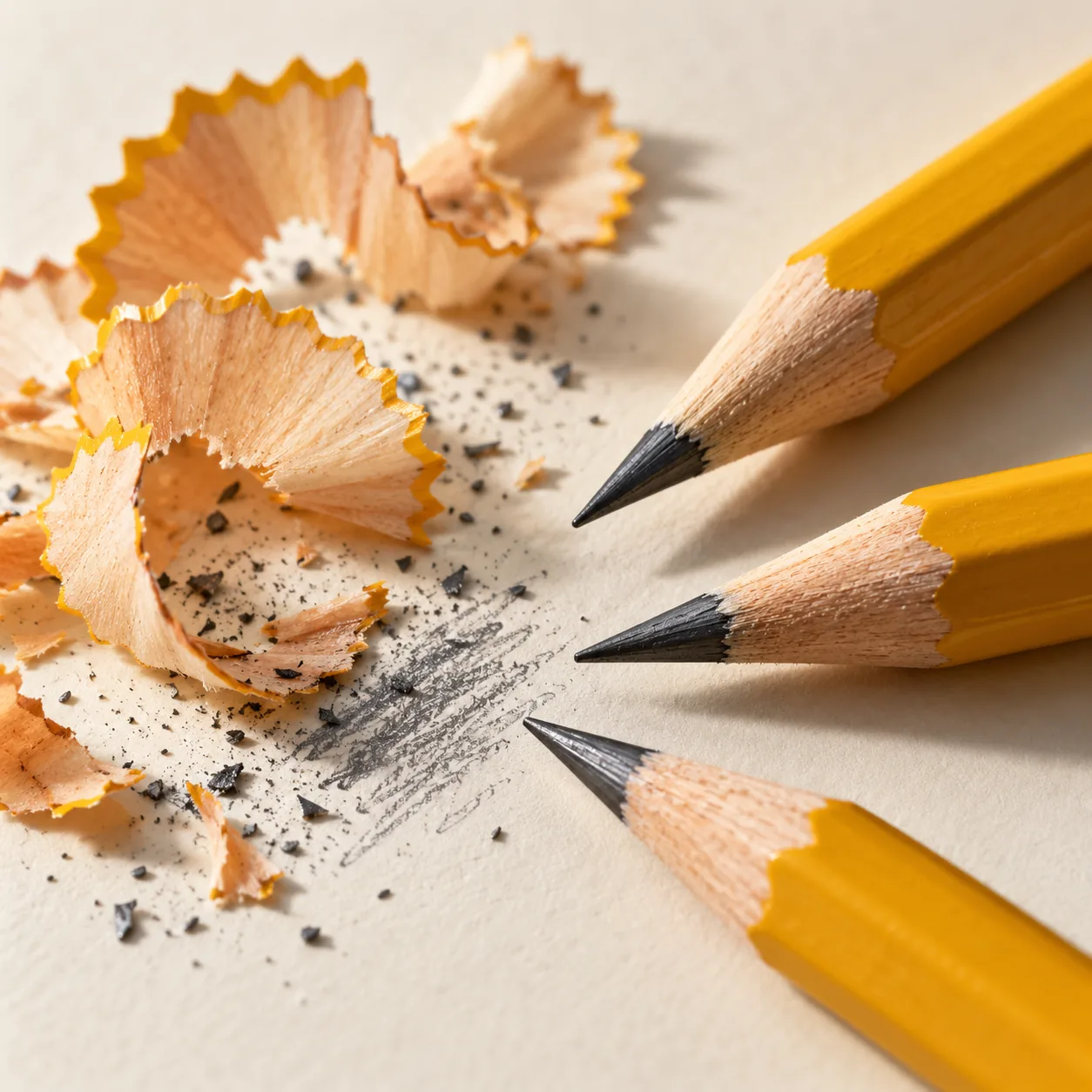
Generated interpretation, not documentary evidence. Generated still life of three yellow wooden pencils, shavings and graphite marks; not a dated historical specimen or manufacturing guide.
Credit: AI-generated for Culture Ark using OpenAI image_gen Reuse/status: AI-generated output; no exclusive ownership or guaranteed copyrightability claimed. Underlying works, marks and cultural permissions remain separate. Generated still life of three yellow wooden pencils, shavings and graphite marks; not a dated historical specimen or manufacturing guide. The archived claim about most children’s first writing tool is not a universal demographic finding. A documented sixteenth-century reference is not proof of a single invention moment; the yellow finish and HB system belong to later histories not established by this regional source.
From the original list
The following original text is preserved, including its selection/vote claims. Preservation is not independent verification of every assertion.
Why: Graphite in wood: the first tool of most children's writing.
What to preserve: Borrowdale graphite, HB grading, yellow pencil
Year and origin: 1560s · England
Vote: 6/9 (historian 2 · future kid 2 · curator 2)
Learn more: Pencil on Wikipedia
Supplemental context
A pencil joins a mark-making material to the everyday gestures of writing and drawing. Cumbria County History Trust describes Borrowdale graphite as a resource used locally for marking sheep before its wider industrial value was recognized. Its account identifies a 1565 reference to graphite writing instruments and points to a surviving map associated with Laurence Nowell. The Derwent museum connects this regional mining history with pencil manufacture. For future readers, the important cultural relationship is between a small portable object and activities such as sketching, revising, learning letters and keeping notes. A pencil can therefore introduce both material supply chains and the intimate, repeatedly practiced movements through which people recorded ideas.
Creator/community: Graphite miners, pencil makers, writers and artists; no single universal inventor Place/era: Borrowdale and Keswick, England; sixteenth-century graphite use and later industrial pencil culture
Context and limits
The archived claim about most children’s first writing tool is not a universal demographic finding. A documented sixteenth-century reference is not proof of a single invention moment; the yellow finish and HB system belong to later histories not established by this regional source.
Where to learn more
- https://apiarybee.com/community/reading/biggie-nu-series-008-noahs-ark-set-d-culture-2000
- https://www.cumbriacountyhistory.org.uk/seathwaite-plumbago-mine-background-above-derwent
- https://www.derwentart.com/en-gb/c/about/company/derwent-pencil-museum
Apiary library | Original Culture Ark article
Public ID and individual routes: pending publisher allocation. Internal source ID: D-1261
Part of the Culture Ark: 2,000 things people should still be able to see in 2,000 years, picked by AI research teams. This page keeps the original list entry for D-1261 word for word and adds context. Browse the gallery. The Culture Ark is an Artificial Mind Hive (AMH) project. AMH is owned by Austin Little.

Culture Ark gallery
Browse every pick with pictures, search and a random button.
Open the gallery →