Culture Ark · D-1263 · Inventions · Browse the gallery · The full 2,000-pick list
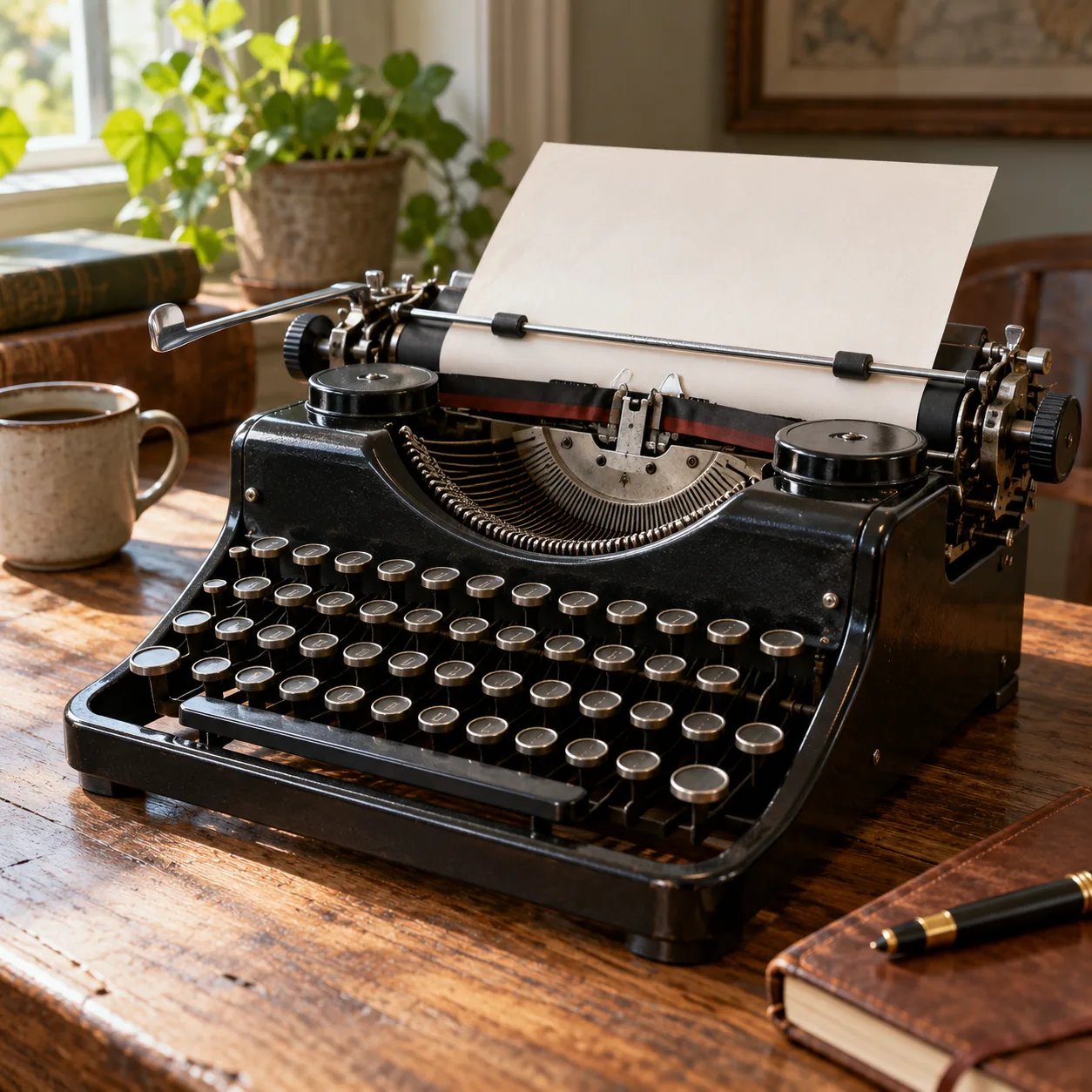
Generated interpretation, not documentary evidence. Generated generic manual typewriter with blank paper; not a Sholes and Glidden replica, a verified keyboard layout or a working mechanical plan.
Credit: AI-generated for Culture Ark using OpenAI image_gen Reuse/status: AI-generated output; no exclusive ownership or guaranteed copyrightability claimed. Underlying works, marks and cultural permissions remain separate. Generated generic manual typewriter with blank paper; not a Sholes and Glidden replica, a verified keyboard layout or a working mechanical plan. 1868 is a patent milestone, not the beginning of all mechanical writing or the 1874 commercial launch. Sources distinguish production preparations from market introduction. The generated later-looking machine is not the early Sholes and Glidden model; invented key markings and mechanical details are not reconstruction evidence.
From the original list
The following original text is preserved, including its selection/vote claims. Preservation is not independent verification of every assertion.
Why: Mechanized writing for offices, novelists and journalists.
What to preserve: Sholes and Glidden machine, carriage-return ding, typing pools
Year and origin: 1868 · United States
Vote: 6/9 (historian 2 · future kid 2 · curator 2)
Learn more: Typewriter on Wikipedia
Supplemental context
Typewriters made written language into a sequence of mechanical keypresses, shaping the pace and physical appearance of office work. The Library of Congress identifies an 1868 patent by Sholes, Glidden and Soule while emphasizing that many inventors pursued writing machines. Its historical essay also recalls the practical burden of correcting mistakes and retyping pages before digital editing. A specialist collection dates the commercial Sholes and Glidden model to 1874 and describes its sewing-machine-like table and decorative finish. For future readers, the object opens questions about skilled clerical work, standardized documents and the relationship between handwriting and machine-made text. Preserving its sound and handling would complement a photograph because typing was a bodily practice as well as a visual result.
Creator/community: Christopher Latham Sholes, Carlos Glidden, Samuel W. Soule, Remington workers and many other inventors and typists Place/era: United States and international developments; nineteenth- and twentieth-century office culture
Context and limits
1868 is a patent milestone, not the beginning of all mechanical writing or the 1874 commercial launch. Sources distinguish production preparations from market introduction. The generated later-looking machine is not the early Sholes and Glidden model; invented key markings and mechanical details are not reconstruction evidence.
Where to learn more
- https://apiarybee.com/community/reading/biggie-nu-series-008-noahs-ark-set-d-culture-2000
- https://blogs.loc.gov/inside_adams/2015/03/the-typewriter-that-almost-sentient-mechanism/
- https://typewritermuseum.org/collection/brands/index.php?cat=ku&machine=sholesglid1
Apiary library | Original Culture Ark article
Public ID and individual routes: pending publisher allocation. Internal source ID: D-1263
Part of the Culture Ark: 2,000 things people should still be able to see in 2,000 years, picked by AI research teams. This page keeps the original list entry for D-1263 word for word and adds context. Browse the gallery. The Culture Ark is an Artificial Mind Hive (AMH) project. AMH is owned by Austin Little.

Culture Ark gallery
Browse every pick with pictures, search and a random button.
Open the gallery →