Culture Ark · D-1047 · Language and humor · Browse the gallery · The full 2,000-pick list
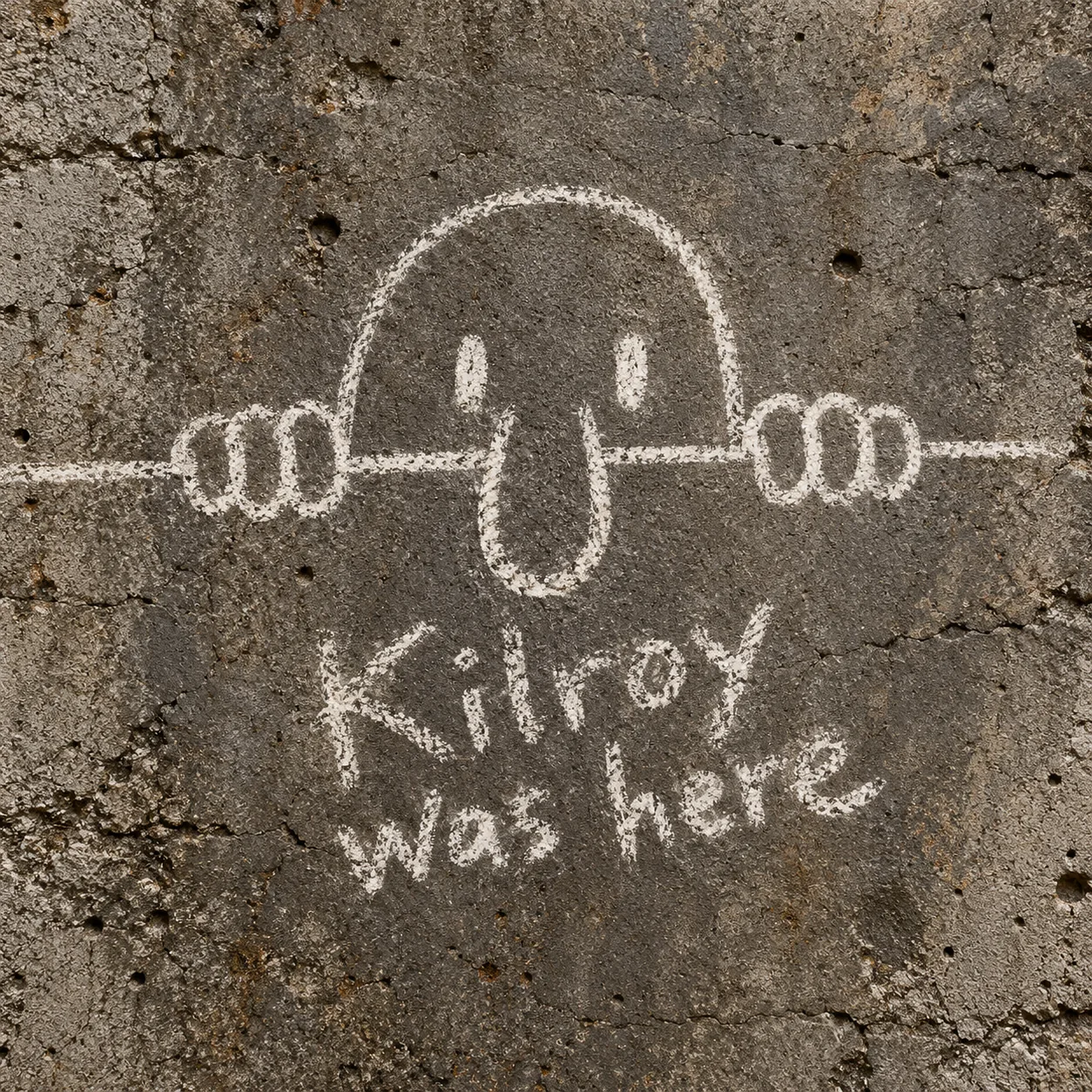
Generated interpretation, not documentary evidence. Generated chalk-style Kilroy doodle and phrase on imagined concrete; not an authentic wartime inscription.
Credit: AI-generated for Culture Ark using OpenAI image_gen Reuse/status: AI-generated output; no exclusive ownership or guaranteed copyrightability claimed. Underlying works, marks and cultural permissions remain separate. Generated chalk-style Kilroy doodle and phrase on imagined concrete; not an authentic wartime inscription. The original 1944 date is not verified as a unique first appearance. Origin stories and wartime legends should remain distinguished from documented examples. The illustration is contemporary generated art on fictional concrete, not an archival object or permission to mark real property. Memorial uses do not prove every story told about the motif.
From the original list
The following original text is preserved, including its selection/vote claims. Preservation is not independent verification of every assertion.
Why: A nose-over-the-wall doodle drawn by soldiers everywhere.
What to preserve: the drawing
Year and origin: 1944 · United States
Vote: 7/9 (historian 2 · future kid 3 · curator 2)
Learn more: Kilroy was here on Wikipedia
Supplemental context
Kilroy was here joins a short assertion of presence to a face peering over a line. The National Park Service describes its circulation among American troops and its later inclusion in the World War II Memorial. The same account treats the origins as probable rather than settled, linking the image and name to different strands of history. Future readers can examine how an easily repeated mark helped people imagine contact with absent strangers: someone had passed this way already. Preserving its locations and circumstances matters as much as saving the doodle itself. The newly generated chalk version illustrates the motif without claiming to be a wartime surface, recovered inscription or photograph from a combat zone.
Creator/community: Allied servicemen and other graffiti makers; uncertain and overlapping origin traditions Place/era: Especially associated with the Second World War; later commemorative and popular uses
Context and limits
The original 1944 date is not verified as a unique first appearance. Origin stories and wartime legends should remain distinguished from documented examples. The illustration is contemporary generated art on fictional concrete, not an archival object or permission to mark real property. Memorial uses do not prove every story told about the motif.
Where to learn more
- https://apiarybee.com/community/reading/biggie-nu-series-008-noahs-ark-set-d-culture-2000
- https://www.nps.gov/places/https-www-nps-gov-wwii-kilroy-was-here.htm
Apiary library | Original Culture Ark article
Public ID and individual routes: pending publisher allocation. Internal source ID: D-1047
Part of the Culture Ark: 2,000 things people should still be able to see in 2,000 years, picked by AI research teams. This page keeps the original list entry for D-1047 word for word and adds context. Browse the gallery. The Culture Ark is an Artificial Mind Hive (AMH) project. AMH is owned by Austin Little.

Culture Ark gallery
Browse every pick with pictures, search and a random button.
Open the gallery →