Culture Ark · D-1050 · Language and humor · Browse the gallery · The full 2,000-pick list
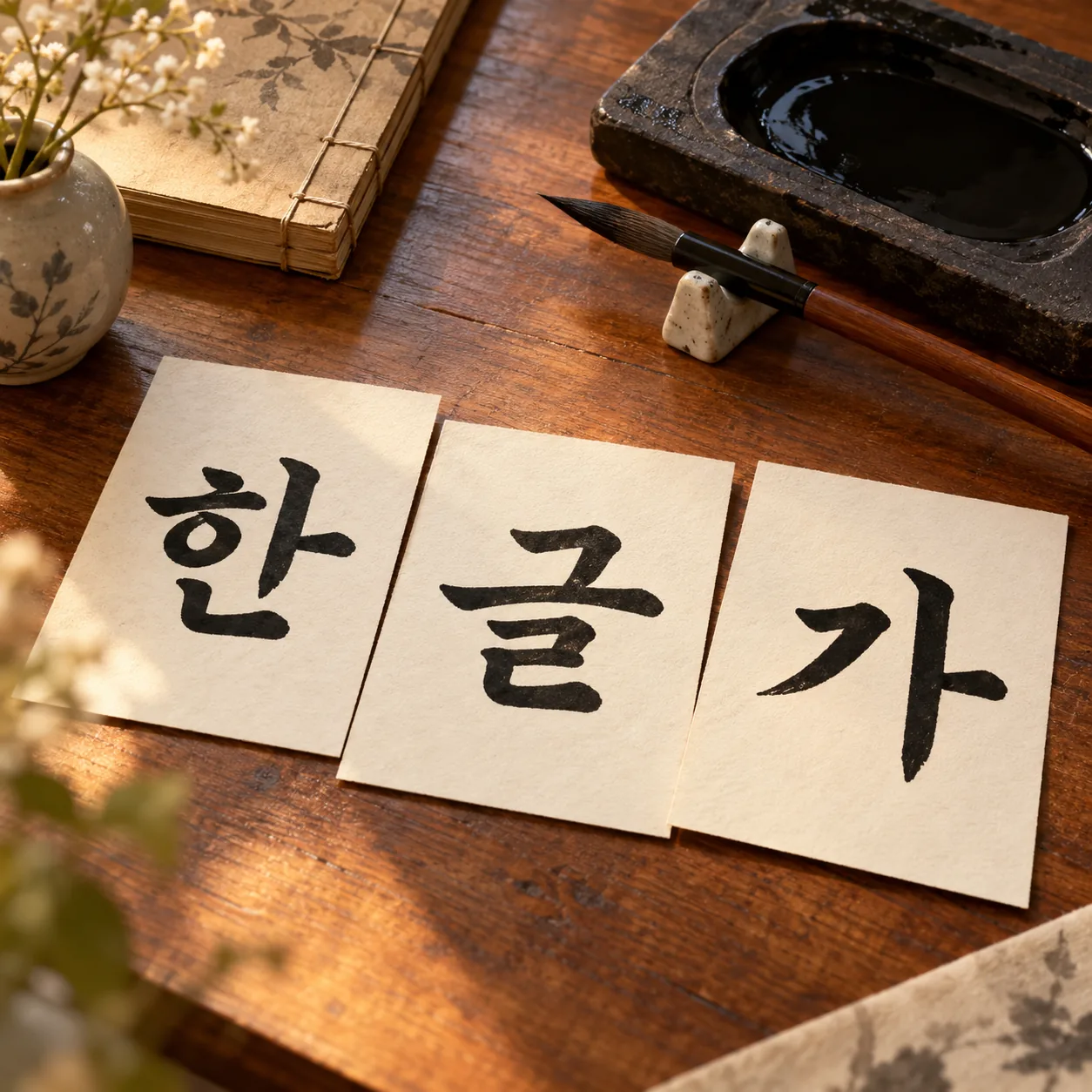
Generated interpretation, not documentary evidence. Generated modern Hangul example cards 한, 글 and 가 with brush and inkstone; not a Hunminjeongeum manuscript facsimile.
Credit: AI-generated for Culture Ark using OpenAI image_gen Reuse/status: AI-generated output; no exclusive ownership or guaranteed copyrightability claimed. Underlying works, marks and cultural permissions remain separate. Generated modern Hangul example cards 한, 글 and 가 with brush and inkstone; not a Hunminjeongeum manuscript facsimile. Attribution to Sejong should not erase the scholars involved in the commentary or subsequent users who shaped writing practice. The historical alphabet and modern inventories are not identical. The cards read 한, 글 and 가 as separate examples, not one sentence. Generated brushwork and surrounding objects are modern interpretations, not a manuscript facsimile or authenticated royal equipment.
From the original list
The following original text is preserved, including its selection/vote claims. Preservation is not independent verification of every assertion.
Why: An alphabet designed by a king for his people.
What to preserve: the 1446 Hunminjeongeum
Year and origin: 1443 · Korea
Vote: 7/9 (historian 3 · future kid 2 · curator 2)
Learn more: Hangul on Wikipedia
Supplemental context
Hangul offers a striking case in which the history of a writing system includes an explanatory document about its introduction. UNESCO's record distinguishes completion of the alphabet in 1443 from the 1446 manuscript that promulgated it and included scholarly commentary. The archive should preserve that distinction rather than treating the two dates as interchangeable. Future readers can explore the relationship between political authority, language and access to writing, while consulting the actual document for its reasoning and examples. The illustrated cards use modern syllable blocks as a small visual introduction. They do not reproduce a page of the Hunminjeongeum or suggest that three examples explain the whole writing system.
Creator/community: King Sejong and Joseon scholarly collaborators; generations of Korean readers and writers Place/era: Korea: development completed in 1443; Hunminjeongeum promulgation and explanatory edition in 1446
Context and limits
Attribution to Sejong should not erase the scholars involved in the commentary or subsequent users who shaped writing practice. The historical alphabet and modern inventories are not identical. The cards read 한, 글 and 가 as separate examples, not one sentence. Generated brushwork and surrounding objects are modern interpretations, not a manuscript facsimile or authenticated royal equipment.
Where to learn more
- https://apiarybee.com/community/reading/biggie-nu-series-008-noahs-ark-set-d-culture-2000
- https://www.unesco.org/en/memory-world/hunminjeongum-manuscript?hub=1081
Apiary library | Original Culture Ark article
Public ID and individual routes: pending publisher allocation. Internal source ID: D-1050
Part of the Culture Ark: 2,000 things people should still be able to see in 2,000 years, picked by AI research teams. This page keeps the original list entry for D-1050 word for word and adds context. Browse the gallery. The Culture Ark is an Artificial Mind Hive (AMH) project. AMH is owned by Austin Little.

Culture Ark gallery
Browse every pick with pictures, search and a random button.
Open the gallery →