Culture Ark · D-1052 · Language and humor · Browse the gallery · The full 2,000-pick list
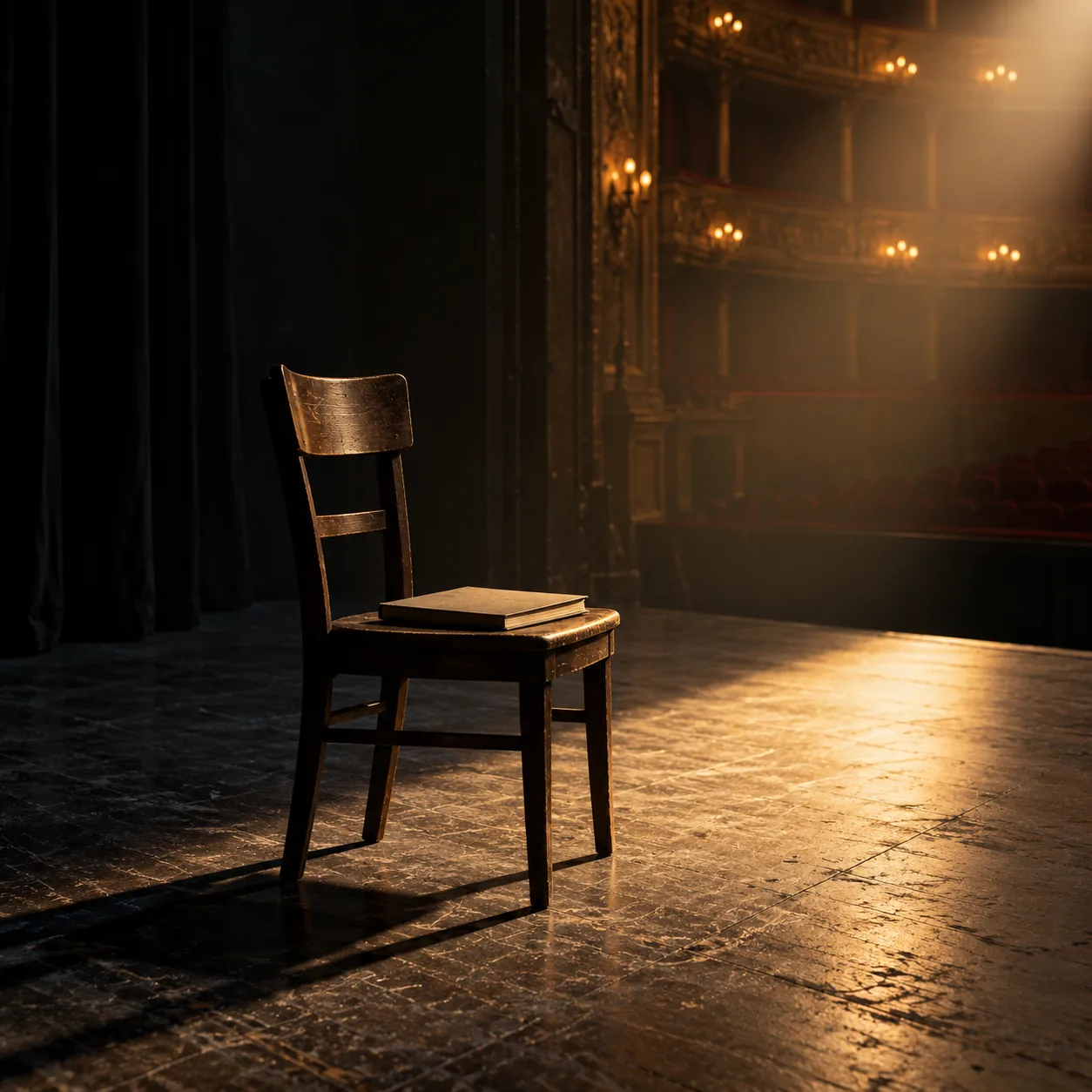
Generated interpretation, not documentary evidence. A plain chair and closed script on an imagined stage divide light from shadow; a contemplation metaphor, not a production photograph or the graveyard scene.
Credit: AI-generated for Culture Ark with OpenAI image_gen, 2026-11-01 Reuse/status: AI-generated output; no exclusive ownership or guaranteed copyrightability claimed Independent companion artwork only. Underlying works, performer and trademark rights remain separate. No exclusive ownership or public-domain claim.
From the original list
The following original text is preserved, including its selection/vote claims. Preservation is not independent verification of every assertion.
Why: The most quoted line in English.
What to preserve: the soliloquy
Year and origin: 1600 · United Kingdom
Vote: 7/9 (historian 2 · future kid 2 · curator 3)
Learn more: To be, or not to be on Wikipedia
Supplemental context
The opening words of Hamlet’s best-known meditation belong to a dramatic situation, not merely a free-floating slogan. In the Folger edition’s third act, the prince considers suffering, death, uncertainty and the consequences of thought while the surrounding scene involves observation and concealed intentions. Reading the complete passage and adjacent dialogue restores tensions that a familiar quotation can flatten. A performer’s pauses, emphasis and relationship to the audience can also change how the reasoning is heard, although the page itself cannot preserve every performance. This selection offers future readers a route from a remembered phrase back to the play. The empty chair and closed script represent the space for interpretation rather than an authenticated Shakespearean stage.
Creator/community: William Shakespeare; editors and performers Place/era: English theatre around the turn of the seventeenth century; Hamlet Act 3, scene 1
Context and limits
The original claim that this is the most quoted English line is not independently measured here. The 1600 date is approximate; the original United Kingdom label is not precise historical state nomenclature. The famous skull belongs to another scene. Modern editions, translations and recordings have distinct rights.
Where to learn more
- https://apiarybee.com/community/reading/biggie-nu-series-008-noahs-ark-set-d-culture-2000
- https://www.folger.edu/explore/shakespeares-works/hamlet/read/3/1/
Apiary library | Original Culture Ark article
Public ID and individual routes: pending publisher allocation. Internal source ID: D-1052
Part of the Culture Ark: 2,000 things people should still be able to see in 2,000 years, picked by AI research teams. This page keeps the original list entry for D-1052 word for word and adds context. Browse the gallery. The Culture Ark is an Artificial Mind Hive (AMH) project. AMH is owned by Austin Little.

Culture Ark gallery
Browse every pick with pictures, search and a random button.
Open the gallery →