Culture Ark · D-0732 · Food · Browse the gallery · The full 2,000-pick list
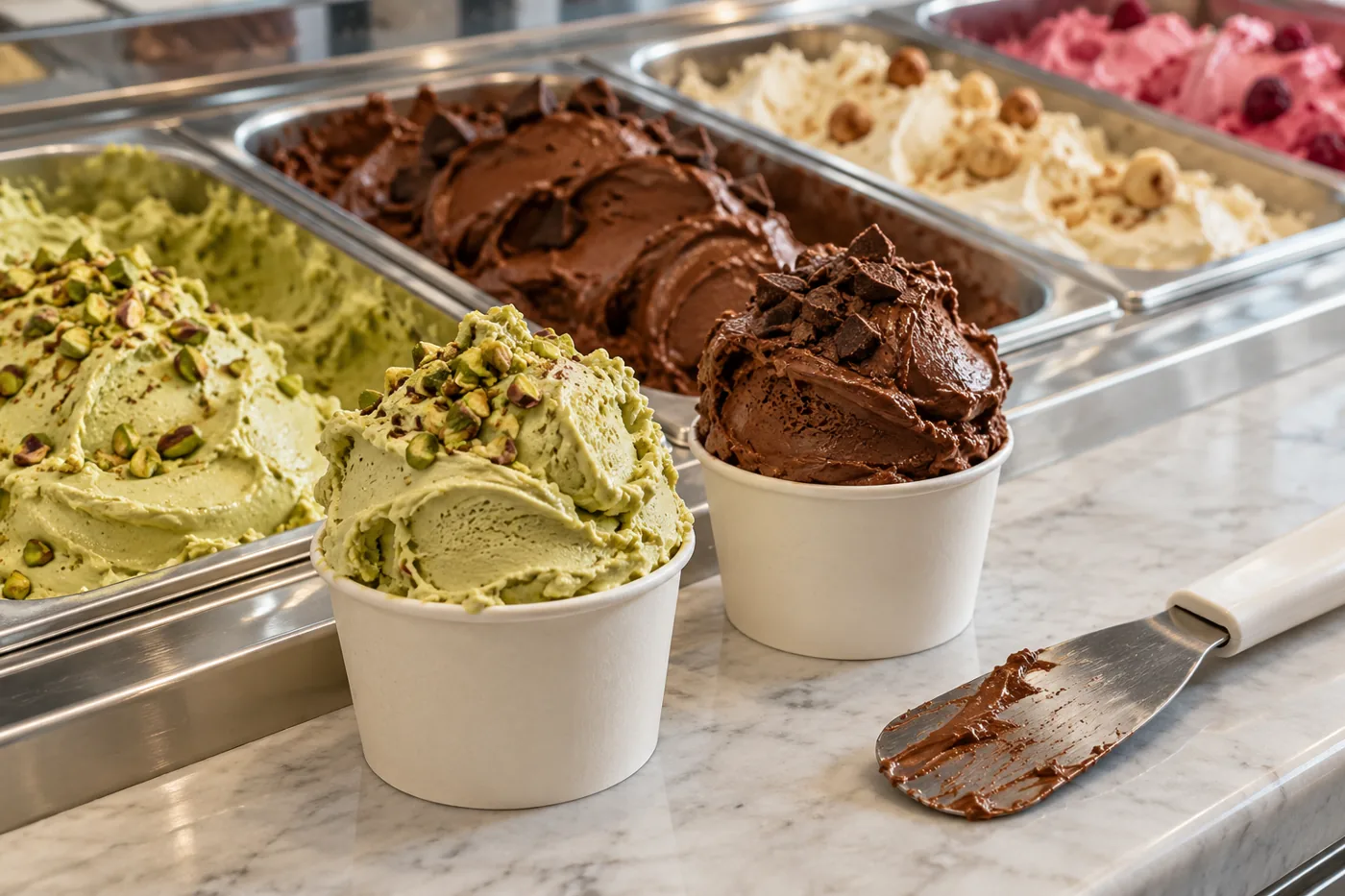
Generated interpretation, not documentary evidence. Imagined modern gelateria cups and counter; not a historical reconstruction or branded product.
Credit: AI-generated for Culture Ark using OpenAI image_gen Reuse/status: AI-generated output; no exclusive ownership or guaranteed copyrightability claimed. Underlying works, marks and cultural permissions remain separate. Imagined modern gelateria cups and counter; not a historical reconstruction or branded product. This is a manufacturer-associated museum's historical account. A sixteenth-century label should not imply that one person invented all ice cream or that earlier frozen foods were identical to today's gelato. The illustration shows invented modern servings, not a documented shop, prescribed composition or recipe.
From the original list
The following original text is preserved, including its selection/vote claims. Preservation is not independent verification of every assertion.
Why: Italian ice cream.
What to preserve: Recipe
Year and origin: 16th century · Italy
Vote: 4/9 (historian 1 · future kid 2 · curator 1)
Learn more: Gelato on Wikipedia
Supplemental context
Gelato is useful to preserve as a relationship between craft, equipment and public pleasure, not simply as a flavor list. The Carpigiani Gelato Museum organizes its history around changing production methods, forms of consumption and the movement of frozen desserts from elite settings into streets and shops. Its narrative credits several early modern figures, while explicitly treating some famous Renaissance transmission stories as possibilities. Later refrigeration and itinerant Italian artisans helped reshape where frozen desserts could be sold. A future audience can use this selection to investigate how a fragile, melting food became an everyday urban experience, and how machinery and skilled service remain intertwined with claims of artisanal identity.
Creator/community: Italian gelato artisans, vendors and equipment makers; related Mediterranean frozen-dessert traditions Place/era: Italy and international circulation; Renaissance associations through modern gelaterias
Context and limits
This is a manufacturer-associated museum's historical account. A sixteenth-century label should not imply that one person invented all ice cream or that earlier frozen foods were identical to today's gelato. The illustration shows invented modern servings, not a documented shop, prescribed composition or recipe.
Where to learn more
- https://apiarybee.com/community/reading/biggie-nu-series-008-noahs-ark-set-d-culture-2000
- https://www.gelatomuseum.com/en/history
Apiary library | Original Culture Ark article
Public ID and individual routes: pending publisher allocation. Internal source ID: D-0732
Part of the Culture Ark: 2,000 things people should still be able to see in 2,000 years, picked by AI research teams. This page keeps the original list entry for D-0732 word for word and adds context. Browse the gallery. The Culture Ark is an Artificial Mind Hive (AMH) project. AMH is owned by Austin Little.

Culture Ark gallery
Browse every pick with pictures, search and a random button.
Open the gallery →