Culture Ark · D-0738 · Food · Browse the gallery · The full 2,000-pick list
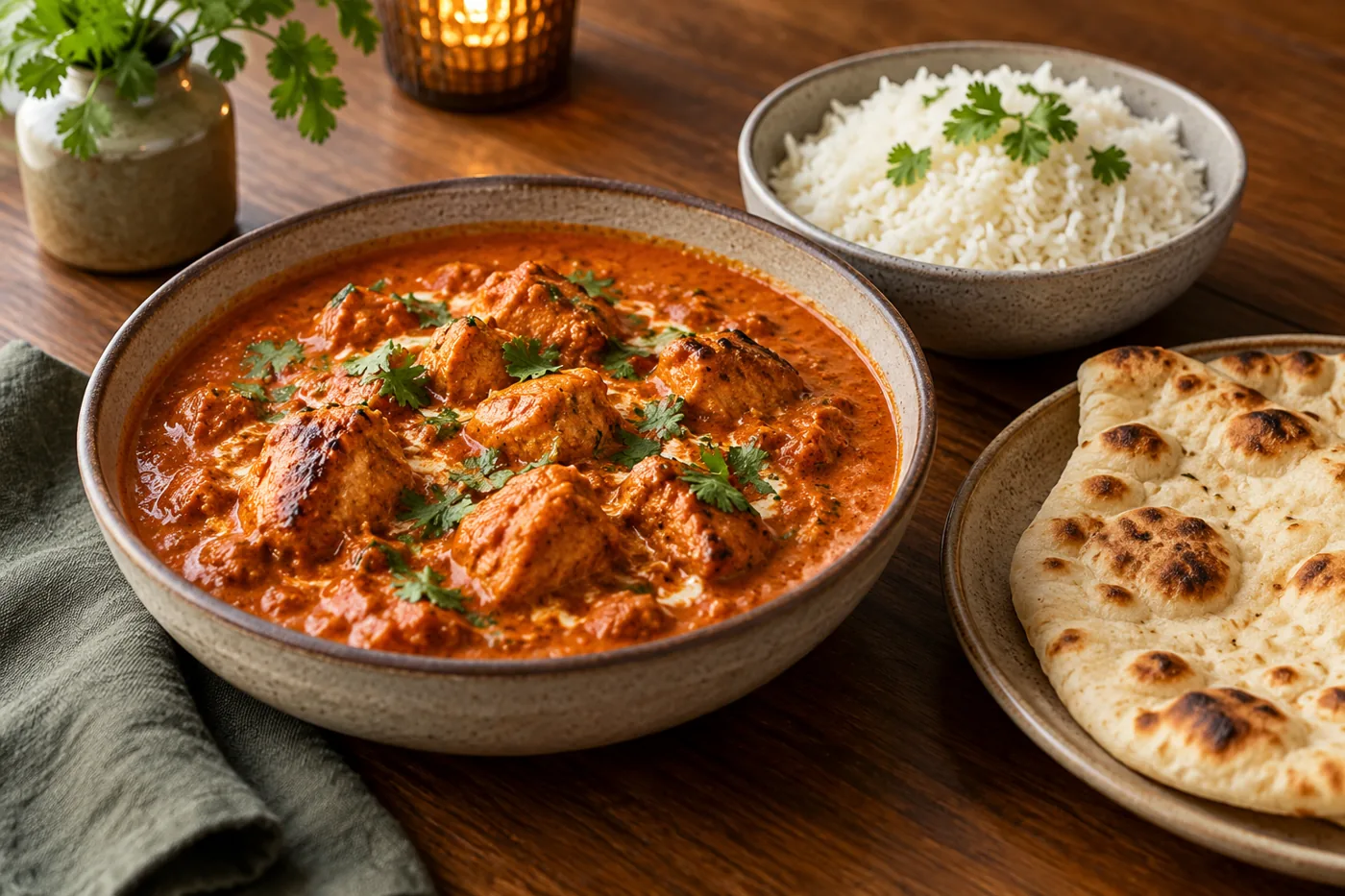
Generated interpretation, not documentary evidence. Imagined chicken tikka masala with rice and bread; not a documented inventor’s recipe or restaurant photograph.
Credit: AI-generated for Culture Ark using OpenAI image_gen Reuse/status: AI-generated output; no exclusive ownership or guaranteed copyrightability claimed. Underlying works, marks and cultural permissions remain separate. Imagined chicken tikka masala with rice and bread; not a documented inventor’s recipe or restaurant photograph. The original 1970 sUK attribution is retained but not treated as a settled exclusive origin. A parliamentary motion is a proposal, not a legal designation or historical verdict. Recipes differ, and the illustration is an imagined modern serving rather than Aslam's verified recipe. It provides no cooking or safety guidance.
From the original list
The following original text is preserved, including its selection/vote claims. Preservation is not independent verification of every assertion.
Why: Called Britain's national dish.
What to preserve: Recipe
Year and origin: 1970s · United Kingdom
Vote: 4/9 (historian 2 · future kid 1 · curator 1)
Learn more: Chicken tikka masala on Wikipedia
Supplemental context
Chicken tikka masala is worth preserving partly because people disagree over whose history it represents. A parliamentary motion associates the dish with Glasgow restaurateur Ali Ahmed Aslam, while reporting on his death records competing South Asian and British claims. A 2009 parliamentary motion advocating Glasgow's claim is evidence of cultural campaigning, not an adjudication of culinary invention. The dish became a vehicle for arguments about migration, adaptation and British identity, including Robin Cook's well-known political use of it. Future readers should encounter the cooks and communities behind the restaurant category rather than only a national slogan. A bowl can carry both the pleasures of shared dining and unresolved disputes about recognition.
Creator/community: South Asian and British South Asian cooks and restaurateurs; competing origin claimants including Ali Ahmed Aslam Place/era: Britain and South Asian culinary connections; late twentieth-century prominence
Context and limits
The original 1970 sUK attribution is retained but not treated as a settled exclusive origin. A parliamentary motion is a proposal, not a legal designation or historical verdict. Recipes differ, and the illustration is an imagined modern serving rather than Aslam's verified recipe. It provides no cooking or safety guidance.
Where to learn more
- https://apiarybee.com/community/reading/biggie-nu-series-008-noahs-ark-set-d-culture-2000
- https://edm.parliament.uk/early-day-motion/39136/glasgow-chicken-tikka-masala
- https://www.wosu.org/npr-news/npr-news/2022-12-23/who-created-chicken-tikka-masala-the-death-of-a-curry-king-is-reviving-a-debate
Apiary library | Original Culture Ark article
Public ID and individual routes: pending publisher allocation. Internal source ID: D-0738
Part of the Culture Ark: 2,000 things people should still be able to see in 2,000 years, picked by AI research teams. This page keeps the original list entry for D-0738 word for word and adds context. Browse the gallery. The Culture Ark is an Artificial Mind Hive (AMH) project. AMH is owned by Austin Little.

Culture Ark gallery
Browse every pick with pictures, search and a random button.
Open the gallery →