Culture Ark · D-0735 · Food · Browse the gallery · The full 2,000-pick list
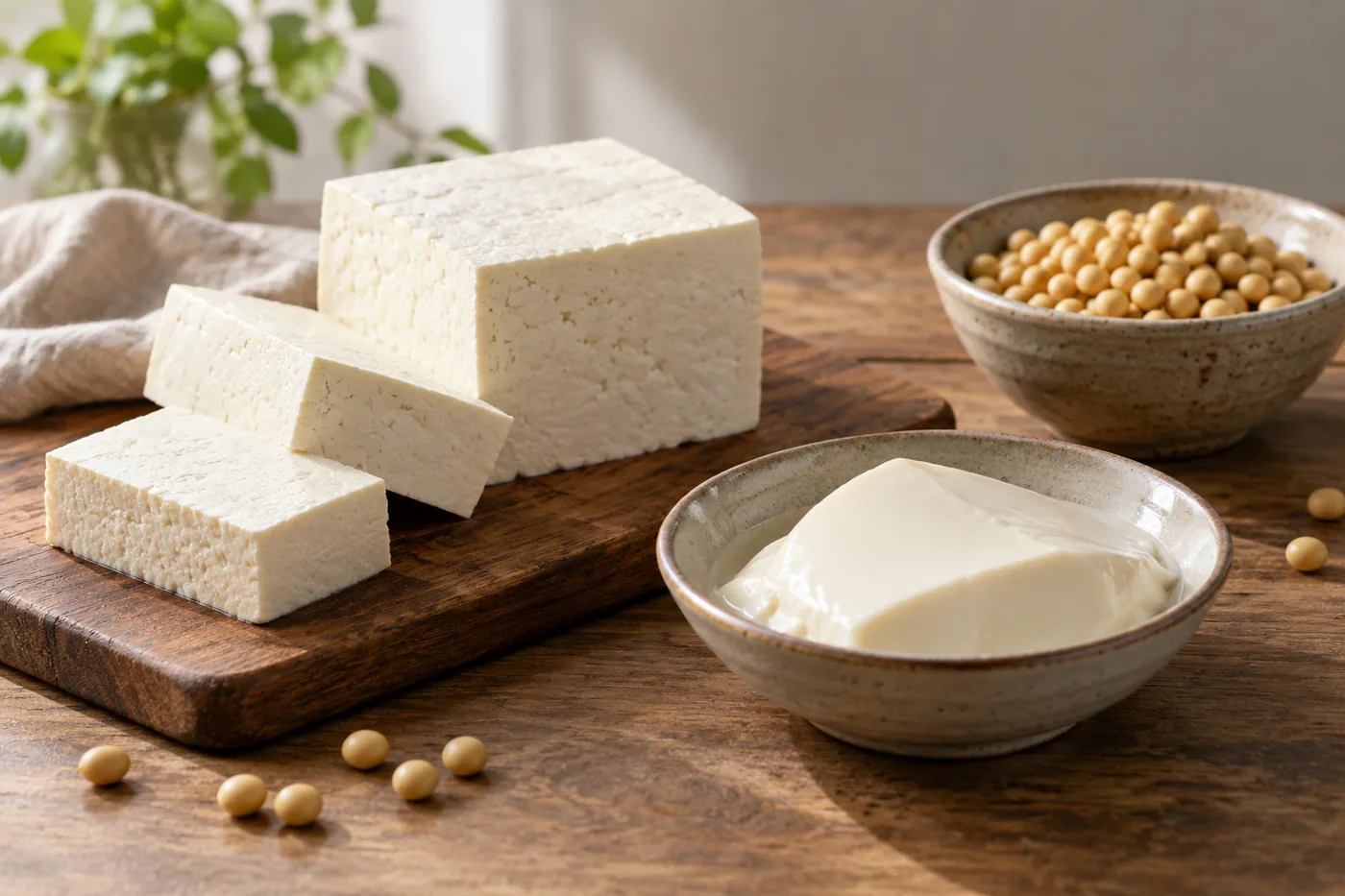
Generated interpretation, not documentary evidence. Imagined firm and soft tofu with soybeans; not a manufacturing diagram or nutrition claim.
Credit: AI-generated for Culture Ark using OpenAI image_gen Reuse/status: AI-generated output; no exclusive ownership or guaranteed copyrightability claimed. Underlying works, marks and cultural permissions remain separate. Imagined firm and soft tofu with soybeans; not a manufacturing diagram or nutrition claim. The original second-century-BC dating is not established by the checked source. This trade association offers a Japanese perspective, and some anecdotes require further historical verification. The phrase about billions is not quantified here. The image is a material comparison, not processing instructions, nutrition advice or a complete ingredient list.
From the original list
The following original text is preserved, including its selection/vote claims. Preservation is not independent verification of every assertion.
Why: Bean curd, a protein for billions.
What to preserve: Process
Year and origin: c. 2nd century BC · China
Vote: 4/9 (historian 2 · future kid 1 · curator 1)
Learn more: Tofu on Wikipedia
Supplemental context
Tofu is an example of food culture built around transformation rather than a single finished dish. A soybean-based ingredient can acquire different textures and roles in kitchens, from firm pieces to delicate soft preparations. The Japan Tofu Association's historical material places tofu's roots in China and follows its relationship with Japanese temple food, urban consumption and culinary writing. It also presents the origin as uncertain rather than securely assigning the invention to a named ancient ruler. Future readers can learn from tofu how an ingredient travels across languages and communities, and how changing access, religious practice and commercial production alter its social meaning without producing one universal way to eat it.
Creator/community: Chinese tofu-making traditions; later East Asian producers, cooks and Buddhist food communities Place/era: Chinese origins; diverse East Asian histories and global contemporary use
Context and limits
The original second-century-BC dating is not established by the checked source. This trade association offers a Japanese perspective, and some anecdotes require further historical verification. The phrase about billions is not quantified here. The image is a material comparison, not processing instructions, nutrition advice or a complete ingredient list.
Where to learn more
- https://apiarybee.com/community/reading/biggie-nu-series-008-noahs-ark-set-d-culture-2000
- https://tofu-as.com/tofu/history/
Apiary library | Original Culture Ark article
Public ID and individual routes: pending publisher allocation. Internal source ID: D-0735
Part of the Culture Ark: 2,000 things people should still be able to see in 2,000 years, picked by AI research teams. This page keeps the original list entry for D-0735 word for word and adds context. Browse the gallery. The Culture Ark is an Artificial Mind Hive (AMH) project. AMH is owned by Austin Little.

Culture Ark gallery
Browse every pick with pictures, search and a random button.
Open the gallery →