Culture Ark · D-0734 · Food · Browse the gallery · The full 2,000-pick list
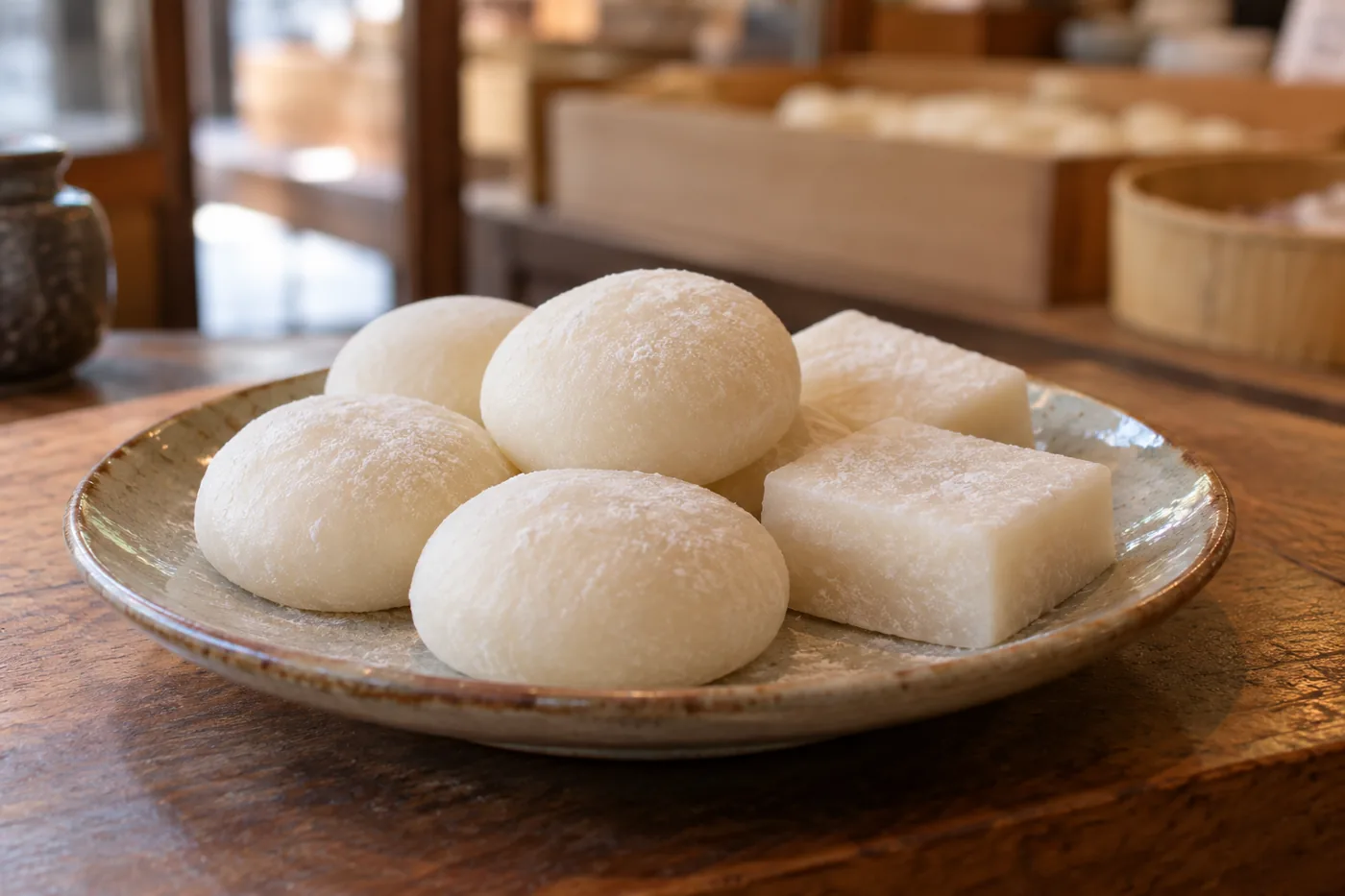
Generated interpretation, not documentary evidence. Imagined round and rectangular rice cakes on a plate; not an authenticated ritual arrangement or recipe.
Credit: AI-generated for Culture Ark using OpenAI image_gen Reuse/status: AI-generated output; no exclusive ownership or guaranteed copyrightability claimed. Underlying works, marks and cultural permissions remain separate. Imagined round and rectangular rice cakes on a plate; not an authenticated ritual arrangement or recipe. The tourism article is an introductory account, not evidence for one exact ancient invention date. Not every product called mochi is made by the same process, and local customs differ. The reused generated image is not an authenticated New Year offering or a technique/safety demonstration.
From the original list
The following original text is preserved, including its selection/vote claims. Preservation is not independent verification of every assertion.
Why: Pounded rice cakes for New Year.
What to preserve: Mochitsuki
Year and origin: ancient · Japan
Vote: 4/9 (historian 1 · future kid 2 · curator 1)
Learn more: Mochi on Wikipedia
Supplemental context
Mochi connects rice, physical work, local taste and the calendar. Japan National Tourism Organization's account describes the pounding of steamed glutinous rice and its association with communal New Year occasions, while emphasizing significant regional differences. It discusses both shapes and preparations rather than presenting a single national serving. This makes the selection more informative than a photograph of a sweet alone: future readers can ask who gathered to make it, what occasions gave it meaning, and how purchased products changed participation. The illustrated round and rectangular rice cakes introduce that diversity without pretending to record a particular community's ceremony or to demonstrate the coordinated work of mochi pounding.
Creator/community: Japanese households, rice-cake makers and local celebratory communities Place/era: Japan; longstanding traditions and contemporary regional practice
Context and limits
The tourism article is an introductory account, not evidence for one exact ancient invention date. Not every product called mochi is made by the same process, and local customs differ. The reused generated image is not an authenticated New Year offering or a technique/safety demonstration.
Where to learn more
- https://apiarybee.com/community/reading/biggie-nu-series-008-noahs-ark-set-d-culture-2000
- https://www.japan.travel/en/blog/unique-mochi-dishes-from-around-japan/
Apiary library | Original Culture Ark article
Public ID and individual routes: pending publisher allocation. Internal source ID: D-0734
Part of the Culture Ark: 2,000 things people should still be able to see in 2,000 years, picked by AI research teams. This page keeps the original list entry for D-0734 word for word and adds context. Browse the gallery. The Culture Ark is an Artificial Mind Hive (AMH) project. AMH is owned by Austin Little.

Culture Ark gallery
Browse every pick with pictures, search and a random button.
Open the gallery →