Culture Ark · D-0731 · Food · Browse the gallery · The full 2,000-pick list
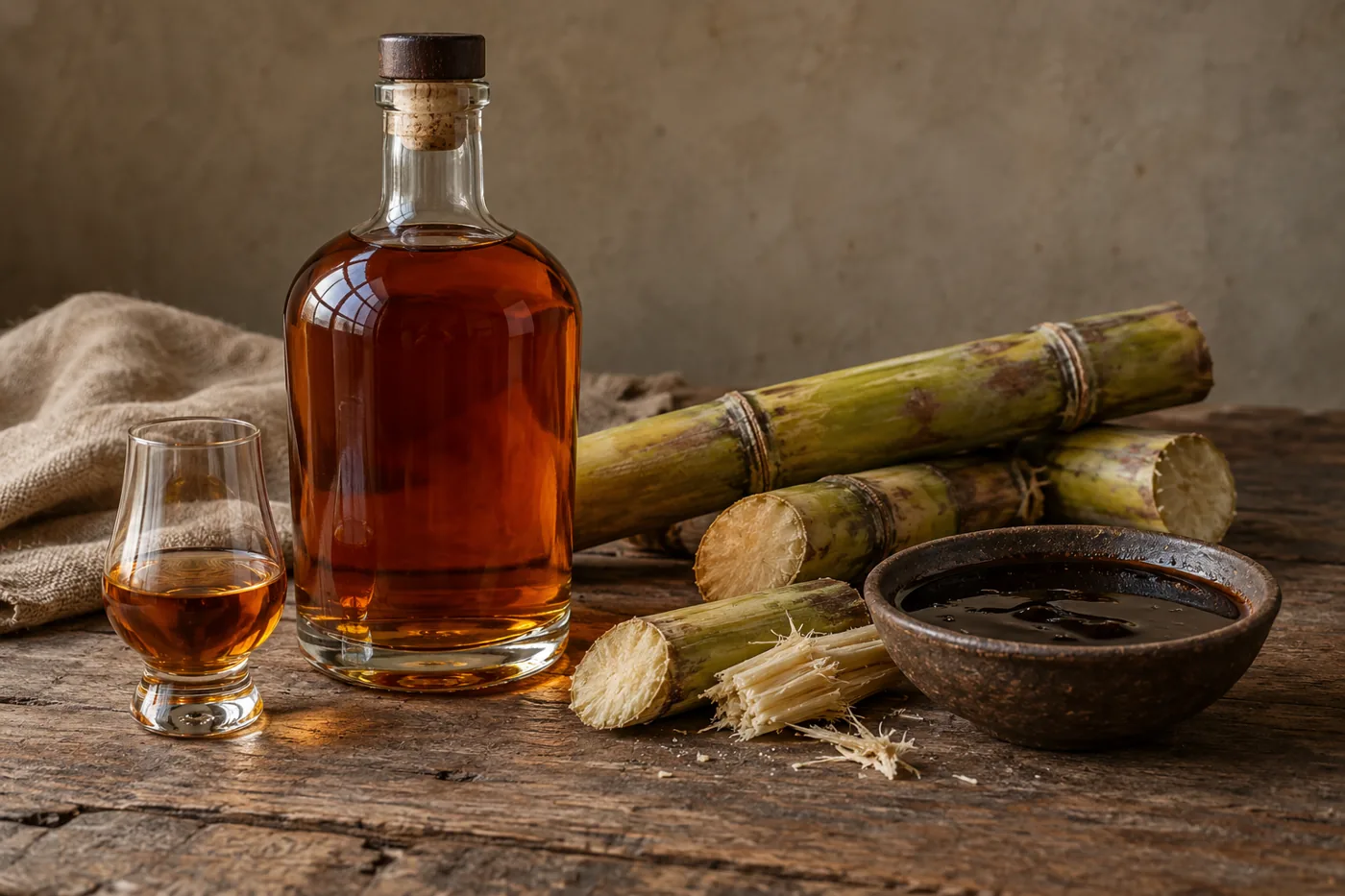
Generated interpretation, not documentary evidence. Imagined unbranded rum bottle, cane and molasses; a symbolic material connection, not documentary plantation evidence.
Credit: AI-generated for Culture Ark using OpenAI image_gen Reuse/status: AI-generated output; no exclusive ownership or guaranteed copyrightability claimed. Underlying works, marks and cultural permissions remain separate. Imagined unbranded rum bottle, cane and molasses; a symbolic material connection, not documentary plantation evidence. The museum provides an Atlantic trade perspective, not proof of a single inventor or an exact Barbados invention date. The original date remains unchanged but is not independently certified here. The still life is symbolic, not a colonial artifact or endorsement of alcohol consumption; no distillation instructions are supplied.
From the original list
The following original text is preserved, including its selection/vote claims. Preservation is not independent verification of every assertion.
Why: A spirit of sugar, sailors and slavery.
What to preserve: History
Year and origin: 17th century · Caribbean (Barbados)
Vote: 4/9 (historian 2 · future kid 1 · curator 1)
Learn more: Rum on Wikipedia
Supplemental context
Rum connects a drink to the wider history of sugar production, colonial commerce and coerced labor. The Massachusetts Commonwealth Museum explains that molasses from Caribbean plantations supplied New England rum production, while island planters concentrated on sugar and imported provisions. Its account places rum within the African slave trade rather than treating it merely as a colorful accompaniment to sailors. For future readers, this selection is valuable because an ordinary commercial bottle can conceal a vast network of land, labor and power. Preserving rum's cultural history should therefore include the people forced to produce the wealth, as well as later distilling communities and drinking customs.
Creator/community: Caribbean sugar workers and distillers, including enslaved Africans; Atlantic merchants and consumers Place/era: Caribbean and Atlantic world; seventeenth century onward
Context and limits
The museum provides an Atlantic trade perspective, not proof of a single inventor or an exact Barbados invention date. The original date remains unchanged but is not independently certified here. The still life is symbolic, not a colonial artifact or endorsement of alcohol consumption; no distillation instructions are supplied.
Where to learn more
- https://apiarybee.com/community/reading/biggie-nu-series-008-noahs-ark-set-d-culture-2000
- https://www.sec.state.ma.us/divisions/commonwealth-museum/exhibits/online/slavery-to-freedom/from-slavery-to-freedom-5.htm
Apiary library | Original Culture Ark article
Public ID and individual routes: pending publisher allocation. Internal source ID: D-0731
Part of the Culture Ark: 2,000 things people should still be able to see in 2,000 years, picked by AI research teams. This page keeps the original list entry for D-0731 word for word and adds context. Browse the gallery. The Culture Ark is an Artificial Mind Hive (AMH) project. AMH is owned by Austin Little.

Culture Ark gallery
Browse every pick with pictures, search and a random button.
Open the gallery →