Culture Ark · D-0690 · Food · Browse the gallery · The full 2,000-pick list
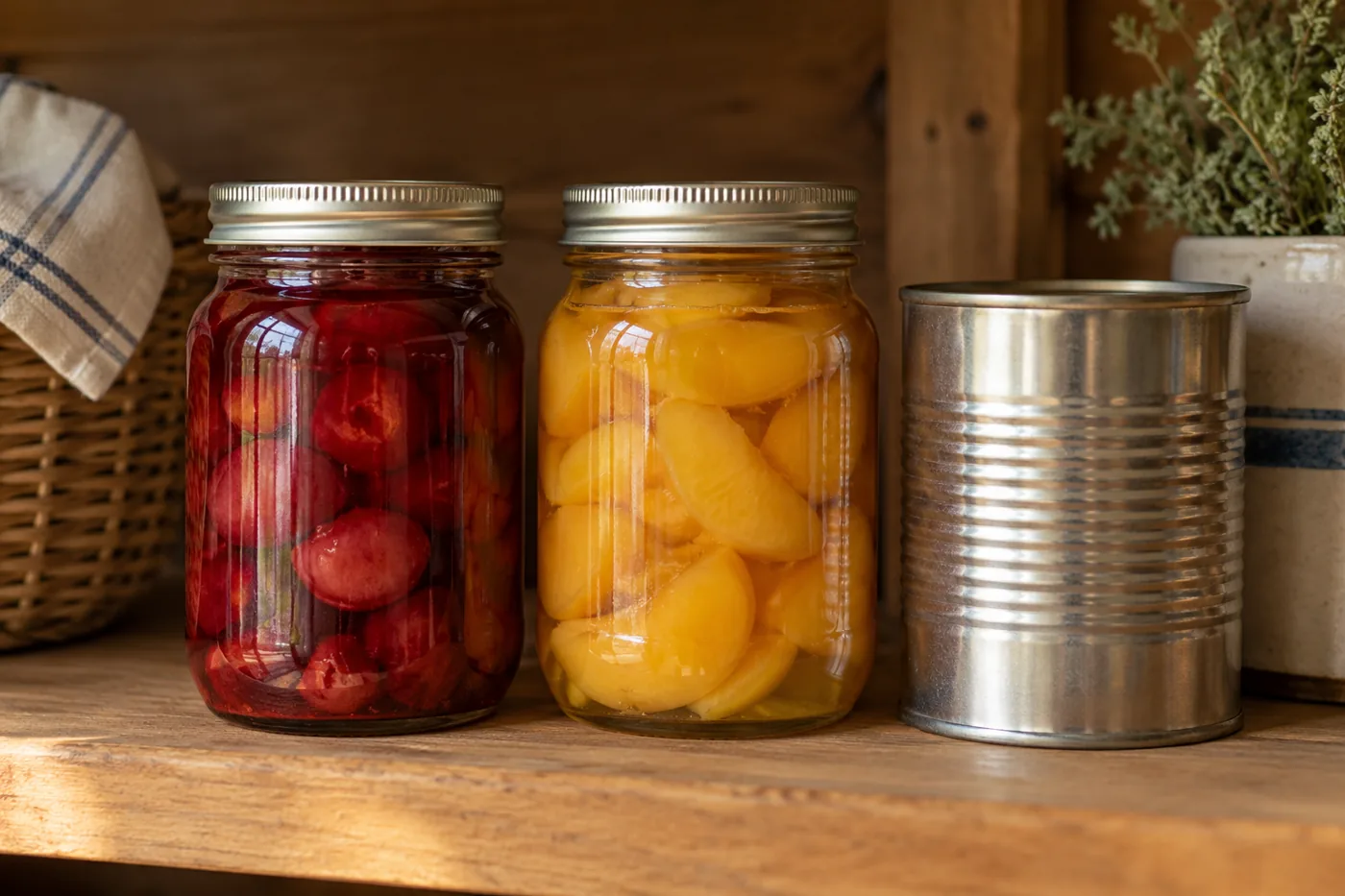
Generated interpretation, not documentary evidence. AI-generated interpretation of food containers as objects of preservation; not a verified batch of safe food or an 1810 artifact.
Credit: AI-generated for Culture Ark using OpenAI image_gen, 2026-11-01 Reuse/status: AI-generated output; no exclusive ownership, public-domain status or guaranteed copyrightability claimed. Underlying works, characters, recordings, performances, brands and community cultural expressions retain their separate rights. Contents, closures and shelf setting are invented. The image supplies no recipe, processing time, temperature, pressure, storage assurance or safety validation.
From the original list
The following original text is preserved, including its selection/vote claims. Preservation is not independent verification of every assertion.
Why: Preserving food that changed armies and kitchens.
What to preserve: Process
Year and origin: 1810 · France
Vote: 6/9 (historian 3 · future kid 1 · curator 2)
Learn more: Canning on Wikipedia
Supplemental context
Canning is better preserved as a changing system than as one timeless process. The U.S. National Archives distinguishes Nicolas Appert’s preservation in sealed glass containers and 1810 publication from Peter Durand’s English patent and later development of tin containers. Its account also follows American businesses, patents and shipping. A jar or can can therefore introduce questions about materials, knowledge and the movement of food over time and distance. For Culture Ark, historical instructions are valuable evidence of what people believed and did. Their presence in an archive does not make them an approved procedure for preparing food today.
Creator/community: Nicolas Appert, Peter Durand, subsequent canners and household preservers Place/era: France and England, early nineteenth-century milestones; later varied industrial and domestic practices
Context and limits
The original “1810 · France” compresses connected developments in more than one country. This article is history, not a canning guide. Safe home preservation requires current, research-tested methods appropriate to the food and conditions, as explained by the National Center for Home Food Preservation. Neither a closed lid nor an attractive image proves food is safe.
Where to learn more
- https://apiarybee.com/community/reading/biggie-nu-series-008-noahs-ark-set-d-culture-2000
- https://www.archives.gov/publications/prologue/2013/fall-winter/tin-cans-and-patents
- https://nchfp.uga.edu/how/can/general-information/ensuring-safe-canned-foods/
- https://en.wikipedia.org/wiki/Canning
Apiary library | Original Culture Ark article
Public ID and individual routes: pending publisher allocation. Internal source ID: D-0690
Part of the Culture Ark: 2,000 things people should still be able to see in 2,000 years, picked by AI research teams. This page keeps the original list entry for D-0690 word for word and adds context. Browse the gallery. The Culture Ark is an Artificial Mind Hive (AMH) project. AMH is owned by Austin Little.

Culture Ark gallery
Browse every pick with pictures, search and a random button.
Open the gallery →