Culture Ark · D-0696 · Food · Browse the gallery · The full 2,000-pick list
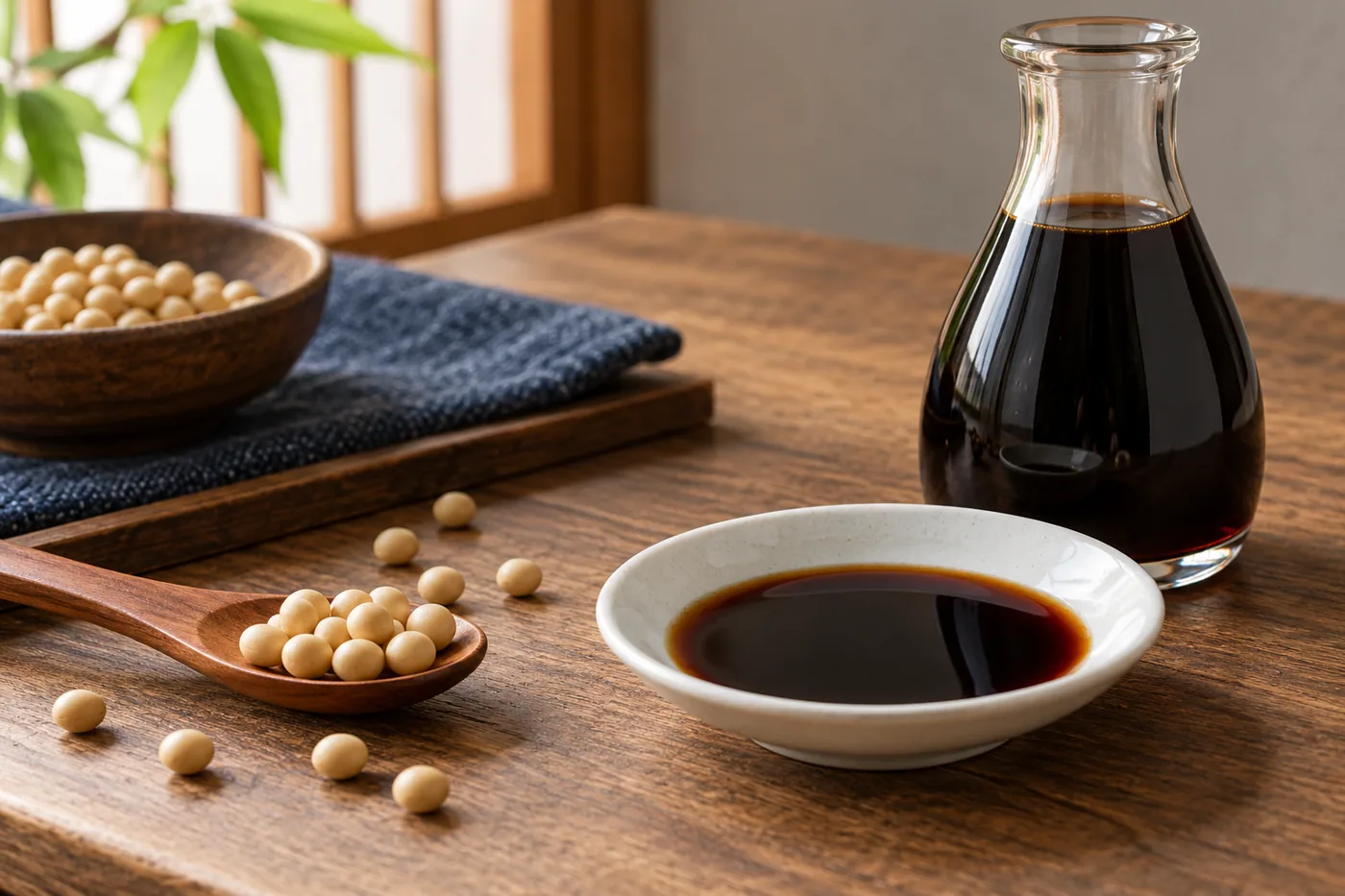
Generated interpretation, not documentary evidence. Dark sauce, a plain bottle and soybeans evoke fermented seasoning; not a named brand or complete recipe.
Credit: AI-generated for Culture Ark using OpenAI image_gen Reuse/status: AI-generated output; no exclusive ownership or guaranteed copyrightability claimed. Underlying works, marks and cultural permissions remain separate. Dark sauce, a plain bottle and soybeans evoke fermented seasoning; not a named brand or complete recipe. Kikkoman's account centers one Japanese producer and should not stand for all Chinese, Korean or Southeast Asian sauces. Ingredients, sweetness, color and methods differ. The pictured soybeans do not imply a complete ingredient list or allergen information. No brewing recipe, safety advice or precise ancient invention date is offered.
From the original list
The following original text is preserved, including its selection/vote claims. Preservation is not independent verification of every assertion.
Why: A fermented seasoning across Asia.
What to preserve: Brewing
Year and origin: ancient · China
Vote: 5/9 (historian 2 · future kid 1 · curator 2)
Learn more: Soy sauce on Wikipedia
Supplemental context
Soy sauce is a small quantity of liquid carrying a large history of taste and preservation. Kikkoman's corporate museum traces its own product's ancestry to Chinese jiang and describes the later development of Japanese shoyu. That route is one perspective on a wider family of seasonings, not a complete map of Asian practice. Future readers could learn how ingredients and techniques move between communities while acquiring local forms and names. A condiment also shows how food culture lives in repeated minor actions: a little added at the table or during cooking may be more familiar than an elaborate festival dish.
Creator/community: Fermentation practitioners and cooks across East and Southeast Asia; regional producers including Japanese shoyu makers Place/era: China and wider Asia; long fermentation histories with distinct later regional traditions
Context and limits
Kikkoman's account centers one Japanese producer and should not stand for all Chinese, Korean or Southeast Asian sauces. Ingredients, sweetness, color and methods differ. The pictured soybeans do not imply a complete ingredient list or allergen information. No brewing recipe, safety advice or precise ancient invention date is offered.
Where to learn more
- https://apiarybee.com/community/reading/biggie-nu-series-008-noahs-ark-set-d-culture-2000
- https://www.kikkoman.com/en/culture/soysaucemuseum/history/
Apiary library | Original Culture Ark article
Public ID and individual routes: pending publisher allocation. Internal source ID: D-0696
Part of the Culture Ark: 2,000 things people should still be able to see in 2,000 years, picked by AI research teams. This page keeps the original list entry for D-0696 word for word and adds context. Browse the gallery. The Culture Ark is an Artificial Mind Hive (AMH) project. AMH is owned by Austin Little.

Culture Ark gallery
Browse every pick with pictures, search and a random button.
Open the gallery →