Culture Ark · D-0691 · Food · Browse the gallery · The full 2,000-pick list
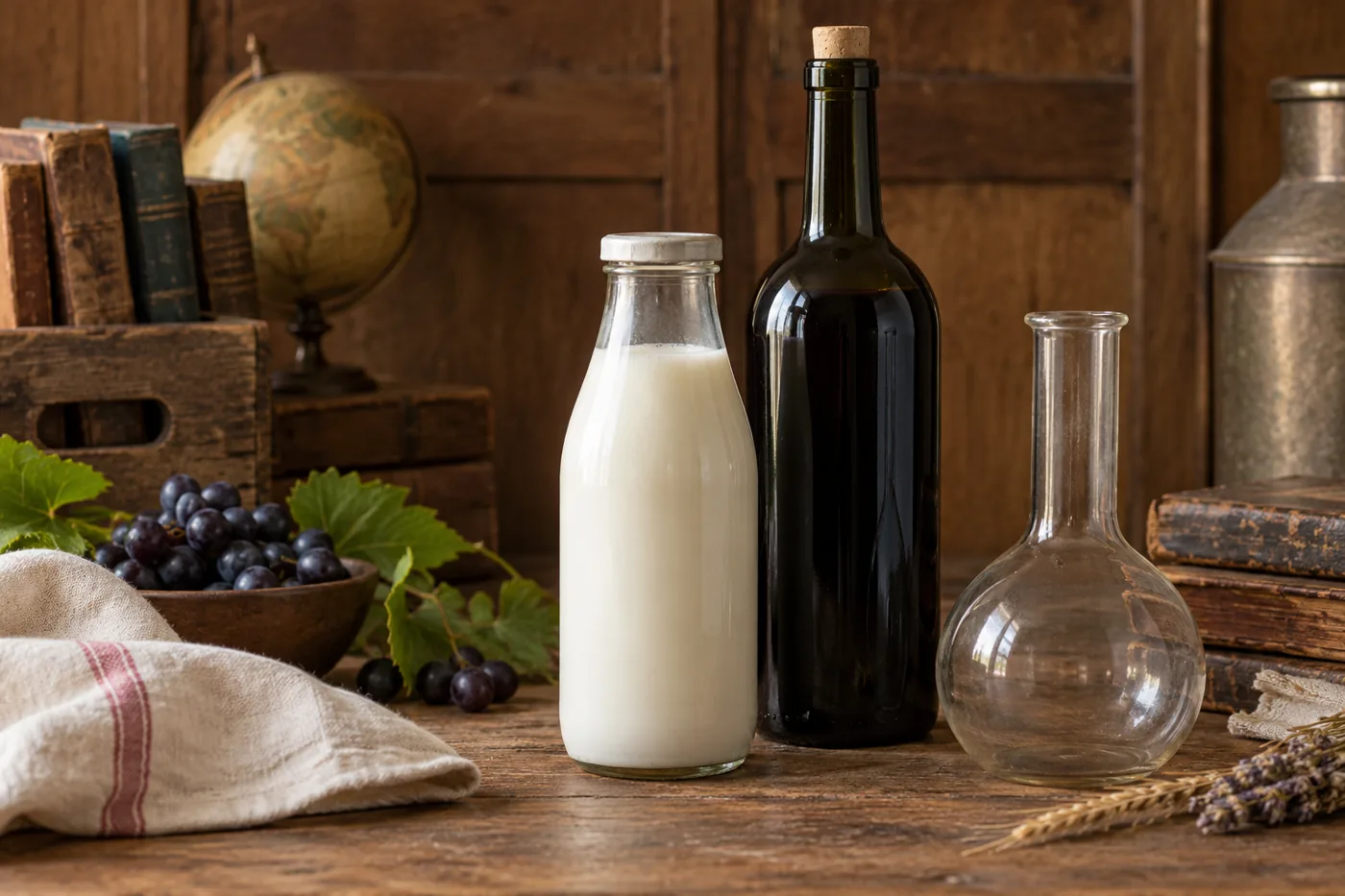
Generated interpretation, not documentary evidence. Invented milk and wine bottles beside a flask evoke food science; not Pasteur artifacts or a processing demonstration.
Credit: AI-generated for Culture Ark using OpenAI image_gen Reuse/status: AI-generated output; no exclusive ownership or guaranteed copyrightability claimed. Underlying works, marks and cultural permissions remain separate. Invented milk and wine bottles beside a flask evoke food science; not Pasteur artifacts or a processing demonstration. The original 1864 date remains unchanged, but the opened institutional account identifies the 1865 patent as a specific milestone. The original 'saved millions' is not independently quantified here. This cultural history supplies no treatment temperatures, times, home-processing instructions or guarantee that any pictured liquid is safe.
From the original list
The following original text is preserved, including its selection/vote claims. Preservation is not independent verification of every assertion.
Why: Heating to kill germs saved millions.
What to preserve: Process
Year and origin: 1864 · France
Vote: 6/9 (historian 3 · future kid 1 · curator 2)
Learn more: Pasteurization on Wikipedia
Supplemental context
Pasteurization belongs here as a change in the culture of food and trust, rather than as a practical processing manual. The Institut Pasteur traces the work to problems with spoiled French wine and records a wine-preservation patent filed on 11 April 1865. Its account also acknowledges that heating had been known before Pasteur supplied a systematic scientific explanation. Future readers could examine how an invisible cause of spoilage became something consumers expected institutions to manage. A bottle on a shop shelf thus carries a history of laboratories, manufacturers and public confidence, alongside the familiar act of buying something to drink.
Creator/community: Louis Pasteur and collaborators; later food producers, regulators and consumers Place/era: France; wine research in the 1860 s and subsequent wider food applications
Context and limits
The original 1864 date remains unchanged, but the opened institutional account identifies the 1865 patent as a specific milestone. The original 'saved millions' is not independently quantified here. This cultural history supplies no treatment temperatures, times, home-processing instructions or guarantee that any pictured liquid is safe.
Where to learn more
- https://apiarybee.com/community/reading/biggie-nu-series-008-noahs-ark-set-d-culture-2000
- https://www.pasteur.fr/en/whats-new/latest-news/features/louis-pasteur-universal-legacy
Apiary library | Original Culture Ark article
Public ID and individual routes: pending publisher allocation. Internal source ID: D-0691
Part of the Culture Ark: 2,000 things people should still be able to see in 2,000 years, picked by AI research teams. This page keeps the original list entry for D-0691 word for word and adds context. Browse the gallery. The Culture Ark is an Artificial Mind Hive (AMH) project. AMH is owned by Austin Little.

Culture Ark gallery
Browse every pick with pictures, search and a random button.
Open the gallery →