Culture Ark · D-0694 · Food · Browse the gallery · The full 2,000-pick list
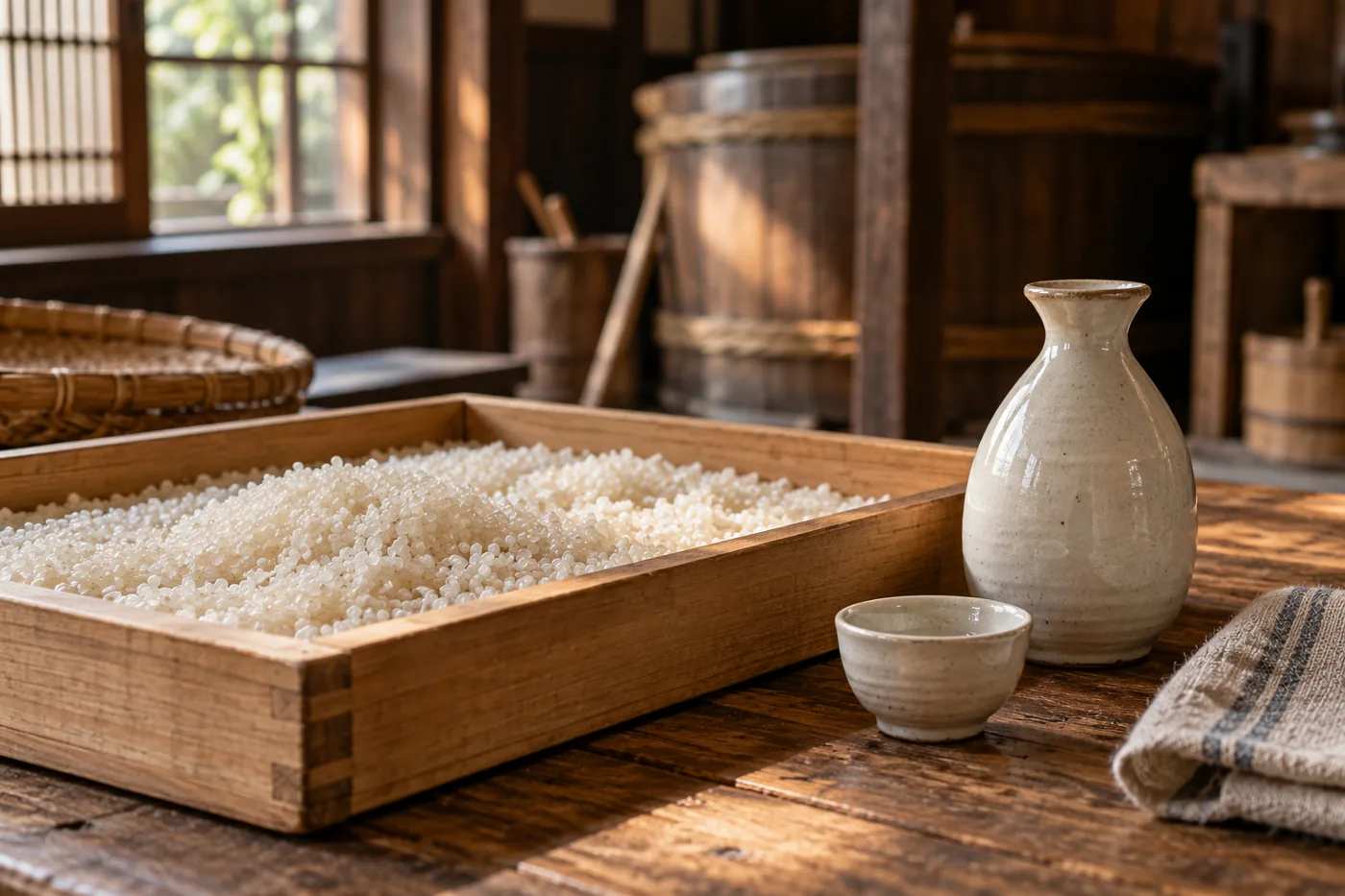
Generated interpretation, not documentary evidence. Reused generated rice tray, sake flask and cup in an imagined workspace; not a documented brewery or verified koji process.
Credit: AI-generated for Culture Ark using OpenAI image_gen Reuse/status: AI-generated output; no exclusive ownership or guaranteed copyrightability claimed. Underlying works, marks and cultural permissions remain separate. Reused generated rice tray, sake flask and cup in an imagined workspace; not a documented brewery or verified koji process. The original Nara-period marker is not independently established as the beginning of all sake-making here. The embassy document predates the 2024 heritage decision and is used for craft context, not current nomination status. The illustration is not a brewing method, microbial identification or authenticated ritual; alcohol consumption is not a requirement of cultural participation.
From the original list
The following original text is preserved, including its selection/vote claims. Preservation is not independent verification of every assertion.
Why: Rice wine central to Japanese ritual.
What to preserve: Brewing with koji, grades
Year and origin: Nara period · Japan
Vote: 5/9 (historian 2 · future kid 1 · curator 2)
Learn more: Sake on Wikipedia
Supplemental context
Sake joins a drink to a body of skilled work and social custom. A Japanese embassy account describes traditional koji-based making as accumulated experience passed through brewers and supported by surrounding communities and related industries. The retained image draws attention to rice, vessels and the workspace rather than pretending to document a ceremony. Future readers could study how an apparently simple served drink depends on specialized judgment and cooperation. The cultural meaning also extends beyond production: a beverage can accompany celebration and shared occasions, while the knowledge behind it remains connected to particular regions and people rather than a single universal formula.
Creator/community: Japanese sake brewers, toji, kurabito and supporting farming and craft communities Place/era: Japan; longstanding regional brewing traditions continuing into the present
Context and limits
The original Nara-period marker is not independently established as the beginning of all sake-making here. The embassy document predates the 2024 heritage decision and is used for craft context, not current nomination status. The illustration is not a brewing method, microbial identification or authenticated ritual; alcohol consumption is not a requirement of cultural participation.
Where to learn more
- https://apiarybee.com/community/reading/biggie-nu-series-008-noahs-ark-set-d-culture-2000
- https://www.bz.emb-japan.go.jp/files/100433062.pdf
- https://ich.unesco.org/en/RL/traditional-knowledge-and-skills-of-sake-making-with-koji-mold-in-japan-01977
Apiary library | Original Culture Ark article
Public ID and individual routes: pending publisher allocation. Internal source ID: D-0694
Part of the Culture Ark: 2,000 things people should still be able to see in 2,000 years, picked by AI research teams. This page keeps the original list entry for D-0694 word for word and adds context. Browse the gallery. The Culture Ark is an Artificial Mind Hive (AMH) project. AMH is owned by Austin Little.

Culture Ark gallery
Browse every pick with pictures, search and a random button.
Open the gallery →