Culture Ark · D-0695 · Food · Browse the gallery · The full 2,000-pick list
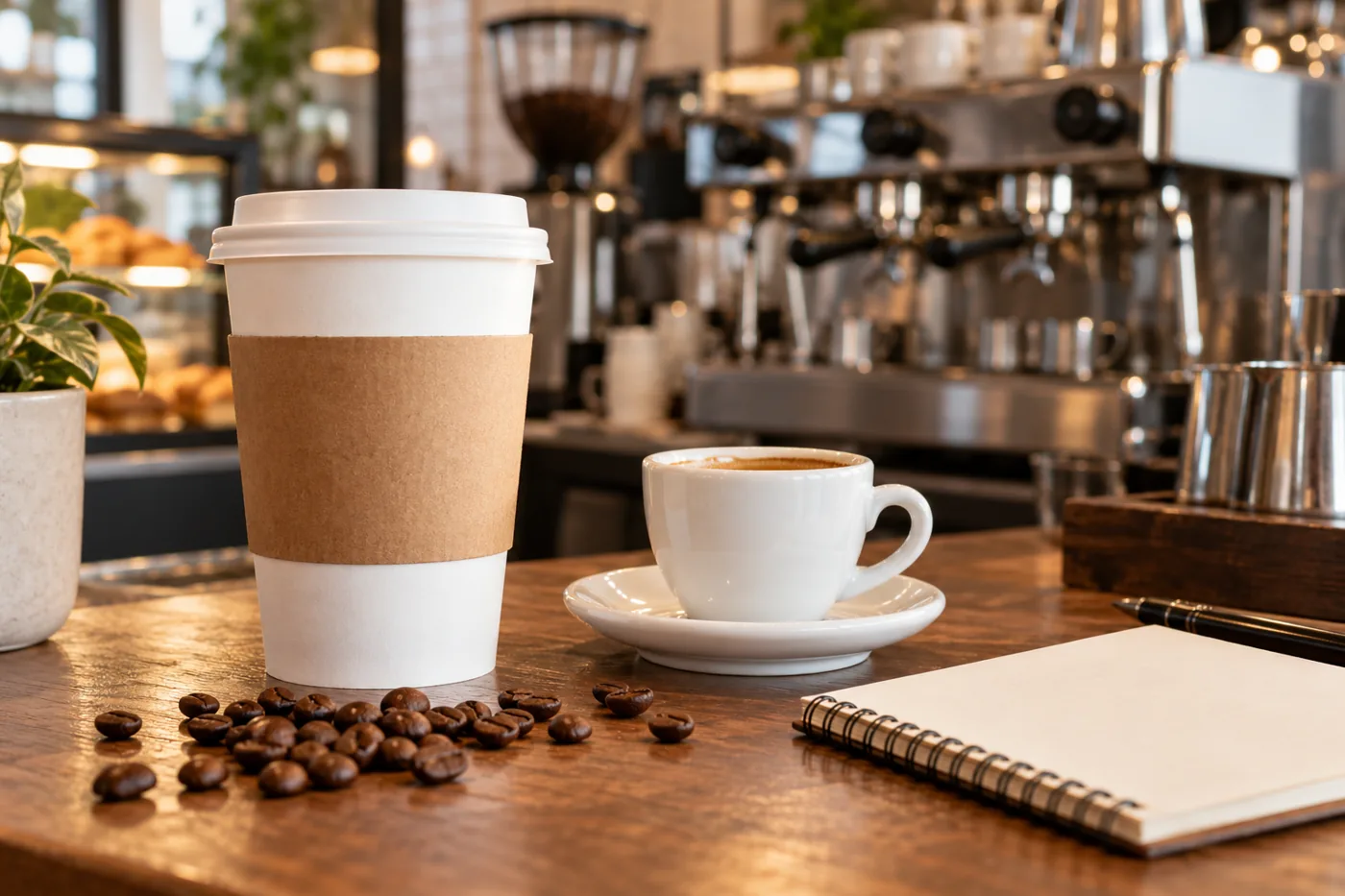
Generated interpretation, not documentary evidence. Unbranded takeaway and espresso cups evoke chain-café routines; not Starbucks products, branding or an actual store.
Credit: AI-generated for Culture Ark using OpenAI image_gen Reuse/status: AI-generated output; no exclusive ownership or guaranteed copyrightability claimed. Underlying works, marks and cultural permissions remain separate. Unbranded takeaway and espresso cups evoke chain-café routines; not Starbucks products, branding or an actual store. The company's own profile is a corporate source, not an independent evaluation of its social or labor impact. Coffee culture and coffeehouses long predate this chain; it did not single-handedly globalize coffee. No current store total is asserted. The generic illustration neither reproduces the logo nor claims to show an actual Starbucks location.
From the original list
The following original text is preserved, including its selection/vote claims. Preservation is not independent verification of every assertion.
Why: A café chain that globalized coffee orders.
What to preserve: Logo, menu
Year and origin: 1971 · United States
Vote: 5/9 (historian 2 · future kid 1 · curator 2)
Learn more: Starbucks on Wikipedia
Supplemental context
Starbucks offers a way to study how a branded place can organize ordinary routines. The company's profile says its 1971 Seattle business began as a retailer of coffee beans, tea and spices, rather than the fully formed espresso-bar format many people now associate with the name. A cup, an order and a brief stay in a café became recognizable parts of a commercial experience repeated across locations. Future readers could investigate standardization, personal preference and the relationship between a global brand and local habits. Workers and growers belong in that story too, not only the logo or the customer-facing menu.
Creator/community: Starbucks founders and workers; coffee growers, suppliers and customers Place/era: Seattle, United States; company founded 1971, later international chain
Context and limits
The company's own profile is a corporate source, not an independent evaluation of its social or labor impact. Coffee culture and coffeehouses long predate this chain; it did not single-handedly globalize coffee. No current store total is asserted. The generic illustration neither reproduces the logo nor claims to show an actual Starbucks location.
Where to learn more
- https://apiarybee.com/community/reading/biggie-nu-series-008-noahs-ark-set-d-culture-2000
- https://about.starbucks.com/press/2026/company-profile/
Apiary library | Original Culture Ark article
Public ID and individual routes: pending publisher allocation. Internal source ID: D-0695
Part of the Culture Ark: 2,000 things people should still be able to see in 2,000 years, picked by AI research teams. This page keeps the original list entry for D-0695 word for word and adds context. Browse the gallery. The Culture Ark is an Artificial Mind Hive (AMH) project. AMH is owned by Austin Little.

Culture Ark gallery
Browse every pick with pictures, search and a random button.
Open the gallery →