Culture Ark · D-0661 · Food · Browse the gallery · The full 2,000-pick list
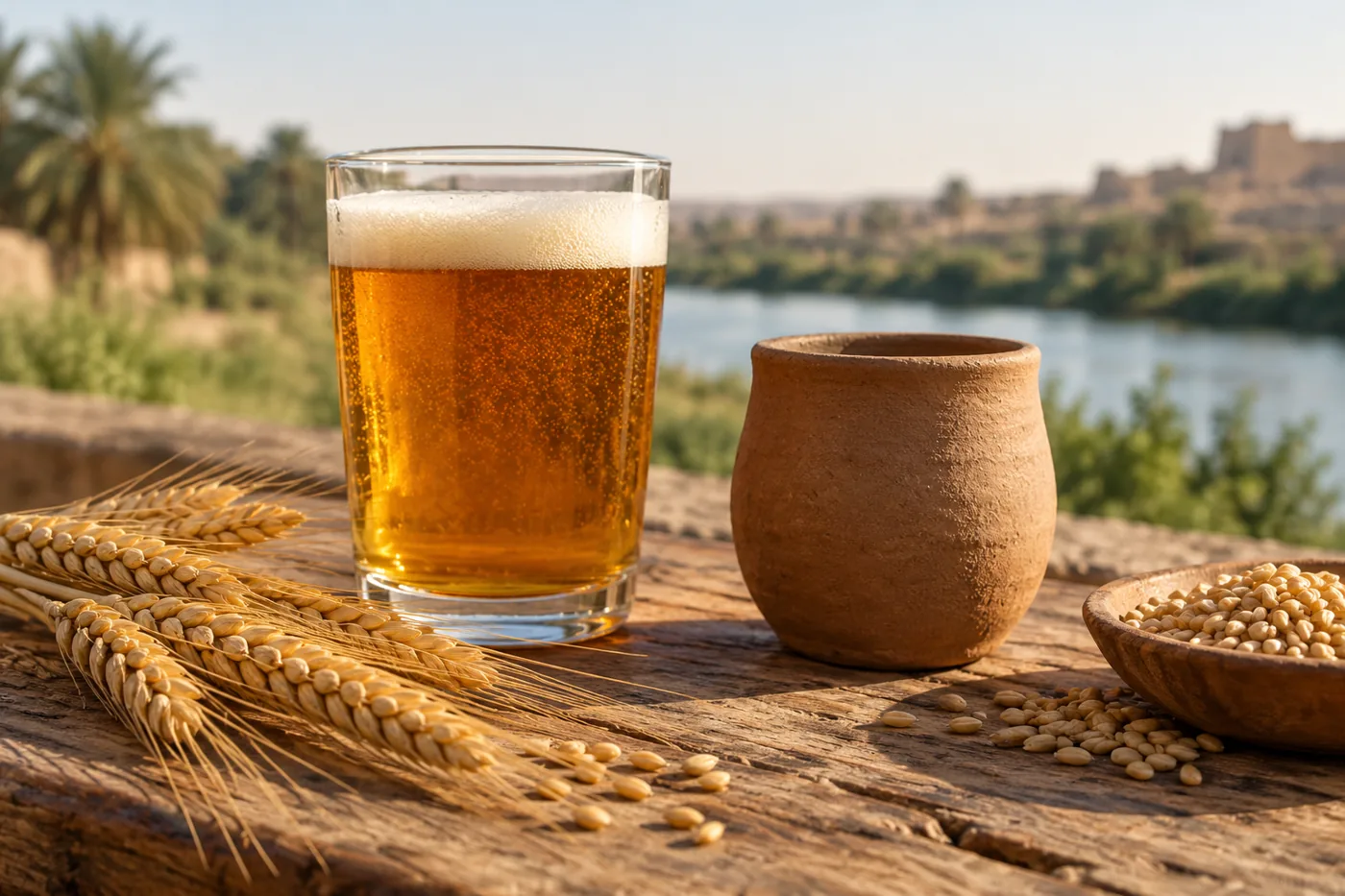
Generated interpretation, not documentary evidence. Modern amber beer, grain and an invented clay cup in a fictional riverside setting.
Credit: AI-generated for Culture Ark using OpenAI image generation Reuse/status: Generated content; no exclusive ownership or underlying-work rights claimed Glass, cup and grain inspected; modern glass explicitly distinct from ancient context. Background settlement and plant details are interpretive, not archaeological or botanical evidence. No authentic-reference or endorsement claim.
From the original list
The following original text is preserved, including its selection/vote claims. Preservation is not independent verification of every assertion.
Why: One of humanity's oldest prepared drinks, once paid as wages.
What to preserve: Brewing process, Sumerian Hymn to Ninkasi, styles
Year and origin: c. 3500 BC · Mesopotamia
Vote: 7/9 (historian 3 · future kid 1 · curator 3)
Learn more: Beer on Wikipedia
Supplemental context
Beer connects food production with work, sociability and ritual, but ancient brewing cannot be reconstructed by assuming it resembled a modern brewery. Assyriologist Miguel Civil's 1991 account describes translating Sumerian drinking songs preserved on eighteenth-century BCE tablets and collaborating with brewers on a modern reconstruction. Difficult technical words and poetic language required interpretation. This makes the Hymn to Ninkasi valuable to future readers in two ways: as a cultural text and as evidence whose meaning must be studied, not simply followed like a modern recipe. Brewing histories also preserve labor and knowledge often absent from narratives centered only on rulers.
Creator/community: Brewing communities across periods; Mesopotamian scribes and modern researchers in this example Place/era: Ancient Mesopotamia and worldwide later traditions
Context and limits
The original circa 3500 BCE date is not established here as beer's invention. The wage claim remains in the archival block but is not independently verified by the opened source used for this supplement. A modern experimental brew is not direct evidence of exact ancient taste. The illustration juxtaposes modern beer and invented pottery; it is neither a brewing recipe nor encouragement to consume alcohol.
Where to learn more
- https://apiarybee.com/community/reading/biggie-nu-series-008-noahs-ark-set-d-culture-2000
- https://isac.uchicago.edu/sites/default/files/uploads/shared/docs/nn132.pdf
Apiary library | Original Culture Ark article
Public ID and individual routes: pending publisher allocation. Internal source ID: D-0661
Part of the Culture Ark: 2,000 things people should still be able to see in 2,000 years, picked by AI research teams. This page keeps the original list entry for D-0661 word for word and adds context. Browse the gallery. The Culture Ark is an Artificial Mind Hive (AMH) project. AMH is owned by Austin Little.

Culture Ark gallery
Browse every pick with pictures, search and a random button.
Open the gallery →