Culture Ark · D-0662 · Food · Browse the gallery · The full 2,000-pick list
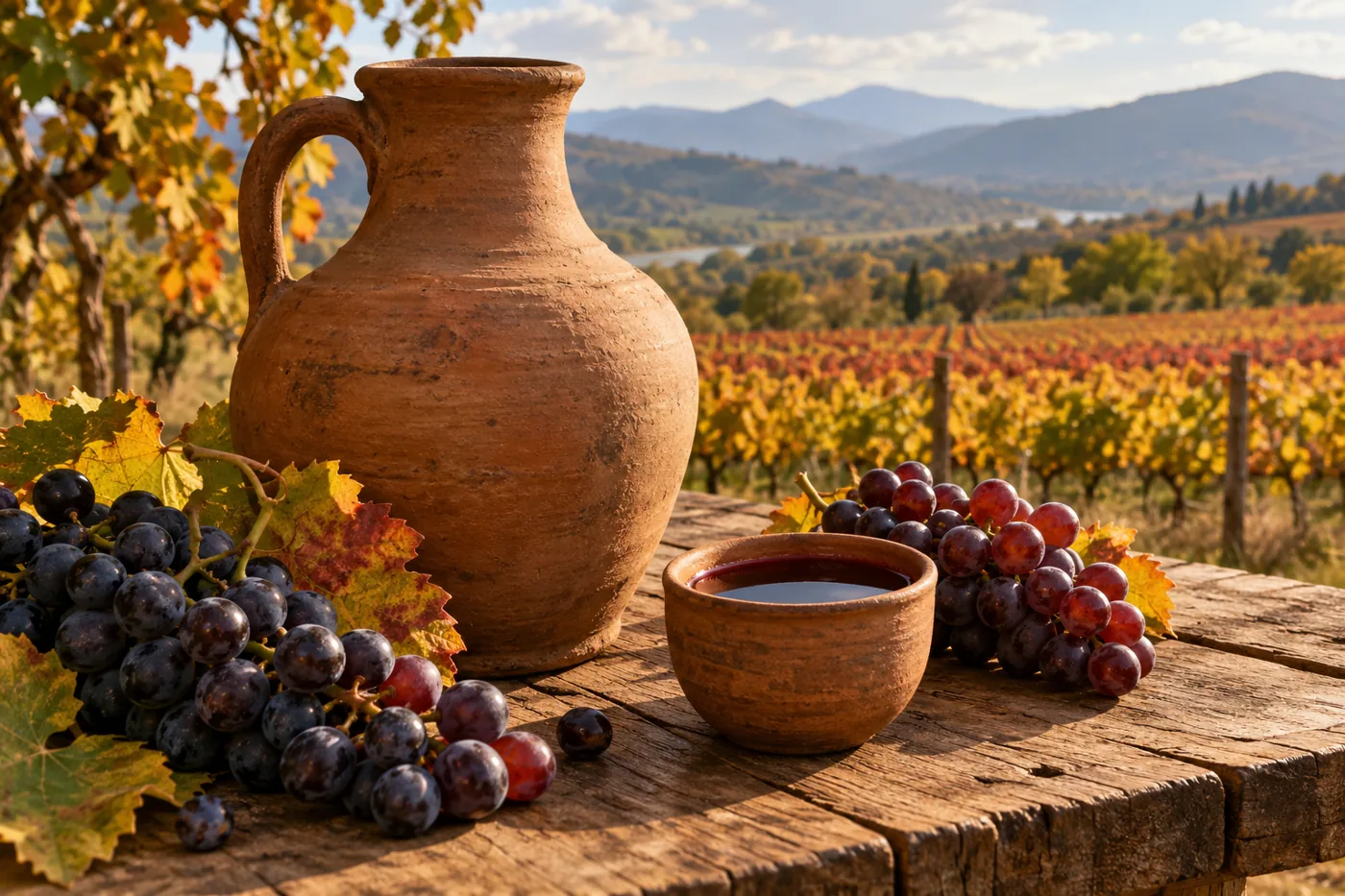
Generated interpretation, not documentary evidence. Invented earthenware jug, cup of grape wine and grapes near an autumn vineyard.
Credit: AI-generated for Culture Ark using OpenAI image generation Reuse/status: Generated content; no exclusive ownership or underlying-work rights claimed Jug, cup and grapes inspected; a contextual contemporary still life, not ancient pottery, a named grape variety or qvevri-method evidence. No authentic-reference or endorsement claim.
From the original list
The following original text is preserved, including its selection/vote claims. Preservation is not independent verification of every assertion.
Why: A drink woven into religion, trade and celebration.
What to preserve: Qvevri method, grape varieties, vintages
Year and origin: c. 6000 BC · Georgia (Caucasus)
Vote: 7/9 (historian 3 · future kid 1 · curator 3)
Learn more: Wine on Wikipedia
Supplemental context
Wine carries histories of farming, containers, trade and social meaning. Penn's 2017 report describes chemical evidence of grape-wine residues on pottery fragments from two Georgian sites dated to 6000–5800 BCE. Such findings show how an everyday substance can leave traces long after the drink itself has disappeared. Future readers can compare scientific analysis with the stories societies tell about their drinks, without confusing a residue with a complete account of a meal or ceremony. Varieties, places and practices belong in a wine archive because a single generic bottle cannot represent all these histories.
Creator/community: Wine-growing and winemaking communities; Georgian archaeological evidence Place/era: South Caucasus early evidence around 6000–5800 BCE; many later traditions
Context and limits
The cited archaeological evidence concerns grape wine and does not establish the first fermented drink of any kind. Earliest-known evidence can change with research. Ancient residues do not prove that today's qvevri practice existed unchanged at those sites; the pictured handled jar is not a qvevri. No health benefit, recipe, vintage certification or invitation to drink is claimed.
Where to learn more
- https://apiarybee.com/community/reading/biggie-nu-series-008-noahs-ark-set-d-culture-2000
- https://penntoday.upenn.edu/features/discovery-finds-winemaking-is-centuries-older-than-previously-believed
Apiary library | Original Culture Ark article
Public ID and individual routes: pending publisher allocation. Internal source ID: D-0662
Part of the Culture Ark: 2,000 things people should still be able to see in 2,000 years, picked by AI research teams. This page keeps the original list entry for D-0662 word for word and adds context. Browse the gallery. The Culture Ark is an Artificial Mind Hive (AMH) project. AMH is owned by Austin Little.

Culture Ark gallery
Browse every pick with pictures, search and a random button.
Open the gallery →