Culture Ark · D-0665 · Food · Browse the gallery · The full 2,000-pick list
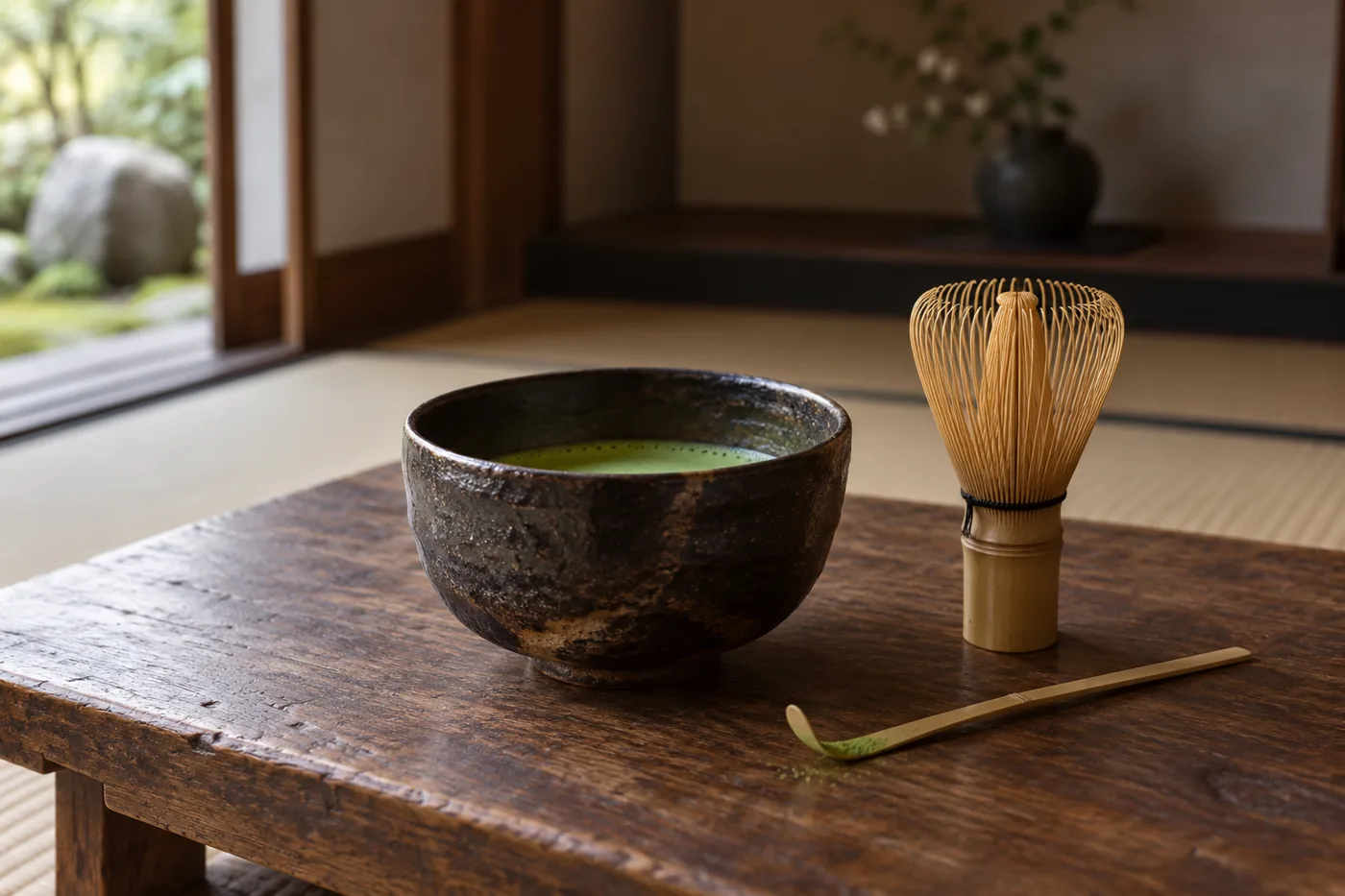
Generated interpretation, not documentary evidence. Invented tea bowl with matcha, bamboo whisk and scoop in a quiet room.
Credit: AI-generated for Culture Ark using OpenAI image generation Reuse/status: Generated content; no exclusive ownership or underlying-work rights claimed Bowl, whisk and scoop inspected; no calligraphy or named historic object. Placement and proportions are interpretive, not school-specific ceremonial instruction. No authentic-reference or endorsement claim.
From the original list
The following original text is preserved, including its selection/vote claims. Preservation is not independent verification of every assertion.
Why: A ritual of preparing tea as art and philosophy.
What to preserve: Procedures, utensils, Sen no Rikyū
Year and origin: 16th century · Japan
Vote: 6/9 (historian 2 · future kid 2 · curator 2)
Learn more: Japanese tea ceremony on Wikipedia
Supplemental context
Japanese tea practice makes utensils, setting and attention part of an encounter between people. Tokyo National Museum's account traces changing forms of tea drinking, from powdered tea associated with Zen monks to elite collecting and later approaches shaped by Sen no Rikyū. It describes his use of valued Chinese objects alongside simpler utensils and his emphasis on humility and imperfection. Future readers can study how ordinary preparation becomes aesthetic and social practice. A bowl is therefore not merely a container: its texture, history and use can help shape the character of a gathering.
Creator/community: Japanese tea practitioners and schools; Sen no Rikyū among influential historical masters Place/era: Japan; earlier tea histories and major sixteenth-century developments
Context and limits
The sixteenth-century label refers to major developments, not the first tea drinking in Japan. Schools, occasions and practitioners vary; the entry does not define one universal procedure or reduce the practice to a vague philosophy. Museum objects can also have Korean or Chinese origins. The generated bowl and tools are invented, not Rikyū's possessions or an authorized arrangement for instruction.
Where to learn more
- https://apiarybee.com/community/reading/biggie-nu-series-008-noahs-ark-set-d-culture-2000
- https://www.tnm.jp/modules/r_exhibition/index.php?controller=item&id=8546&lang=en
Apiary library | Original Culture Ark article
Public ID and individual routes: pending publisher allocation. Internal source ID: D-0665
Part of the Culture Ark: 2,000 things people should still be able to see in 2,000 years, picked by AI research teams. This page keeps the original list entry for D-0665 word for word and adds context. Browse the gallery. The Culture Ark is an Artificial Mind Hive (AMH) project. AMH is owned by Austin Little.

Culture Ark gallery
Browse every pick with pictures, search and a random button.
Open the gallery →