Culture Ark · D-0667 · Food · Browse the gallery · The full 2,000-pick list
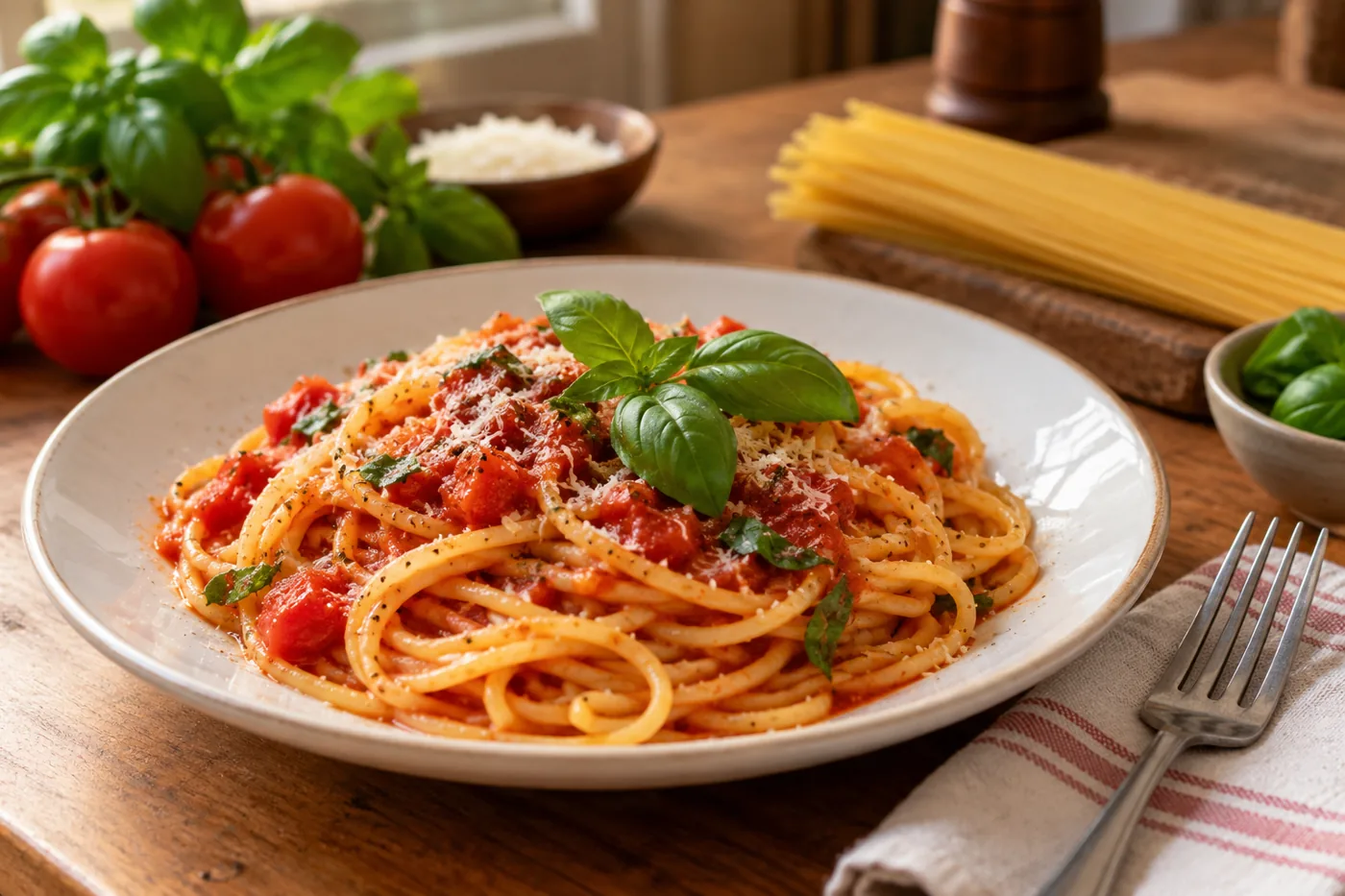
Generated interpretation, not documentary evidence. Invented contemporary spaghetti with tomato sauce and basil, beside dry pasta and a fork.
Credit: AI-generated for Culture Ark using OpenAI image generation Reuse/status: Generated content; no exclusive ownership or underlying-work rights claimed Long strands, sauce, herbs and fork inspected; contemporary illustrative serving, not exact recipe or historically dated dish. No authentic-reference or endorsement claim.
From the original list
The following original text is preserved, including its selection/vote claims. Preservation is not independent verification of every assertion.
Why: Long pasta twirled on forks.
What to preserve: Recipe
Year and origin: 12th century · Italy
Vote: 6/9 (historian 2 · future kid 2 · curator 2)
Learn more: Spaghetti on Wikipedia
Supplemental context
Spaghetti is one recognizable form within a much larger history of pasta. The Museo della Pasta guide documents pasta in Sicily in 1154 and Genoa in 1244, and explains how drying conditions shaped production. It describes coastal drying frames associated with long pasta and the later spread of controlled drying technology. Future readers can connect a familiar meal to preservation, manufacture and trade, rather than imagining that a modern plate appeared fully formed in the Middle Ages. Cooking, serving and eating gestures add another layer to the history of the dried strands.
Creator/community: Pasta makers and home cooks; Italian and wider food communities Place/era: Mediterranean pasta histories; later spaghetti manufacture and serving traditions
Context and limits
Evidence for medieval pasta is not proof that modern named spaghetti with tomato sauce existed then. The original twirling description is a familiar practice, not the only way all communities eat long noodles. The pictured tomato-and-basil serving is a contemporary invented example, not a recipe, a medieval reconstruction or an authoritative statement of Italian authenticity.
Where to learn more
- https://apiarybee.com/community/reading/biggie-nu-series-008-noahs-ark-set-d-culture-2000
- https://pasta.museidelcibo.it/informazioni-e-contatti/audioguida-del-museo-della-pasta/
Apiary library | Original Culture Ark article
Public ID and individual routes: pending publisher allocation. Internal source ID: D-0667
Part of the Culture Ark: 2,000 things people should still be able to see in 2,000 years, picked by AI research teams. This page keeps the original list entry for D-0667 word for word and adds context. Browse the gallery. The Culture Ark is an Artificial Mind Hive (AMH) project. AMH is owned by Austin Little.

Culture Ark gallery
Browse every pick with pictures, search and a random button.
Open the gallery →