Culture Ark · D-0659 · Food · Browse the gallery · The full 2,000-pick list
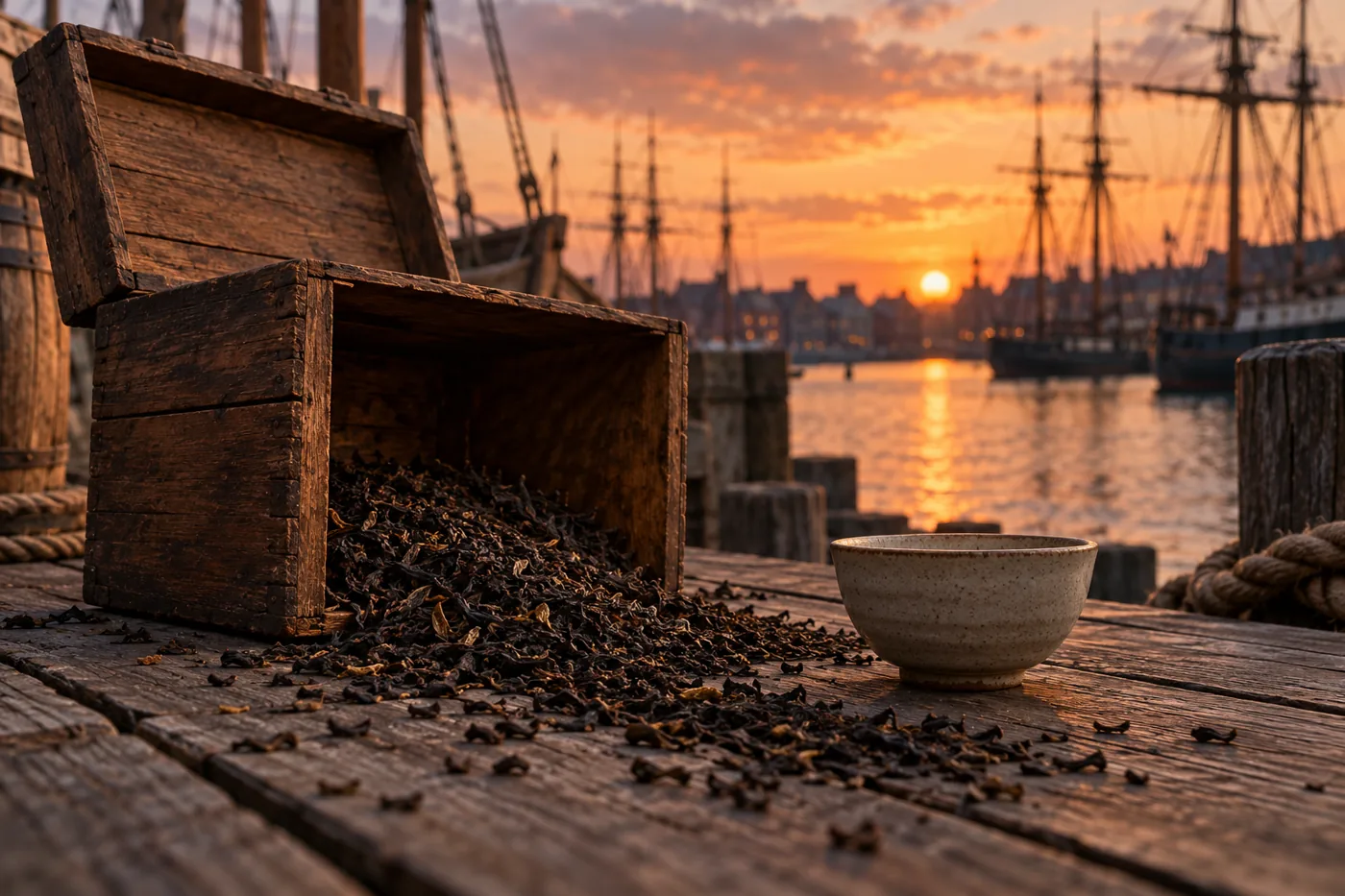
Generated interpretation, not documentary evidence. Invented tea chest and loose leaves at an imagined harbor evoke the 1773 protest; not an authentic artifact or reconstruction of the event.
Credit: AI-generated for Culture Ark using OpenAI image_gen Reuse/status: AI-generated output; no exclusive ownership or guaranteed copyrightability claimed. Underlying works, marks and cultural permissions remain separate. Invented tea chest and loose leaves at an imagined harbor evoke the 1773 protest; not an authentic artifact or reconstruction of the event. Boston was then in British North America, not an already independent United States. Some protesters used mock Indigenous disguises; that does not make the action an Indigenous protest or justify presenting stereotyped costumes as authentic. The National Archives notes the familiar name came later. The image is symbolic rather than eyewitness evidence.
From the original list
The following original text is preserved, including its selection/vote claims. Preservation is not independent verification of every assertion.
Why: Tea dumped in protest.
What to preserve: Accounts
Year and origin: 1773 · United States
Vote: 7/9 (historian 2 · future kid 2 · curator 3)
Learn more: Boston Tea Party on Wikipedia
Supplemental context
The Boston Tea Party made a traded commodity into a dramatic political message. The United States National Archives describes men boarding three ships on 16 December 1773 and destroying 342 chests of East India Company tea. It places the action within resistance to imperial policy and explains that the 1773 Tea Act imposed no new tea tax while favoring the company. Future readers could examine how consumption, corporate privilege and political representation became entangled, and how a destructive protest later acquired a memorable name and commemorative life. Preserving accounts from different positions matters more than reducing the episode to a single uncomplicated heroic picture.
Creator/community: Boston colonial protesters; British authorities and East India Company; later historians and commemorators Place/era: Boston, British North America;16 December 1773, before United States independence
Context and limits
Boston was then in British North America, not an already independent United States. Some protesters used mock Indigenous disguises; that does not make the action an Indigenous protest or justify presenting stereotyped costumes as authentic. The National Archives notes the familiar name came later. The image is symbolic rather than eyewitness evidence.
Where to learn more
- https://apiarybee.com/community/reading/biggie-nu-series-008-noahs-ark-set-d-culture-2000
- https://visit.archives.gov/whats-on/explore-exhibits/250th-anniversary-boston-tea-party
Apiary library | Original Culture Ark article
Public ID and individual routes: pending publisher allocation. Internal source ID: D-0659
Part of the Culture Ark: 2,000 things people should still be able to see in 2,000 years, picked by AI research teams. This page keeps the original list entry for D-0659 word for word and adds context. Browse the gallery. The Culture Ark is an Artificial Mind Hive (AMH) project. AMH is owned by Austin Little.

Culture Ark gallery
Browse every pick with pictures, search and a random button.
Open the gallery →