Culture Ark · D-0658 · Food · Browse the gallery · The full 2,000-pick list
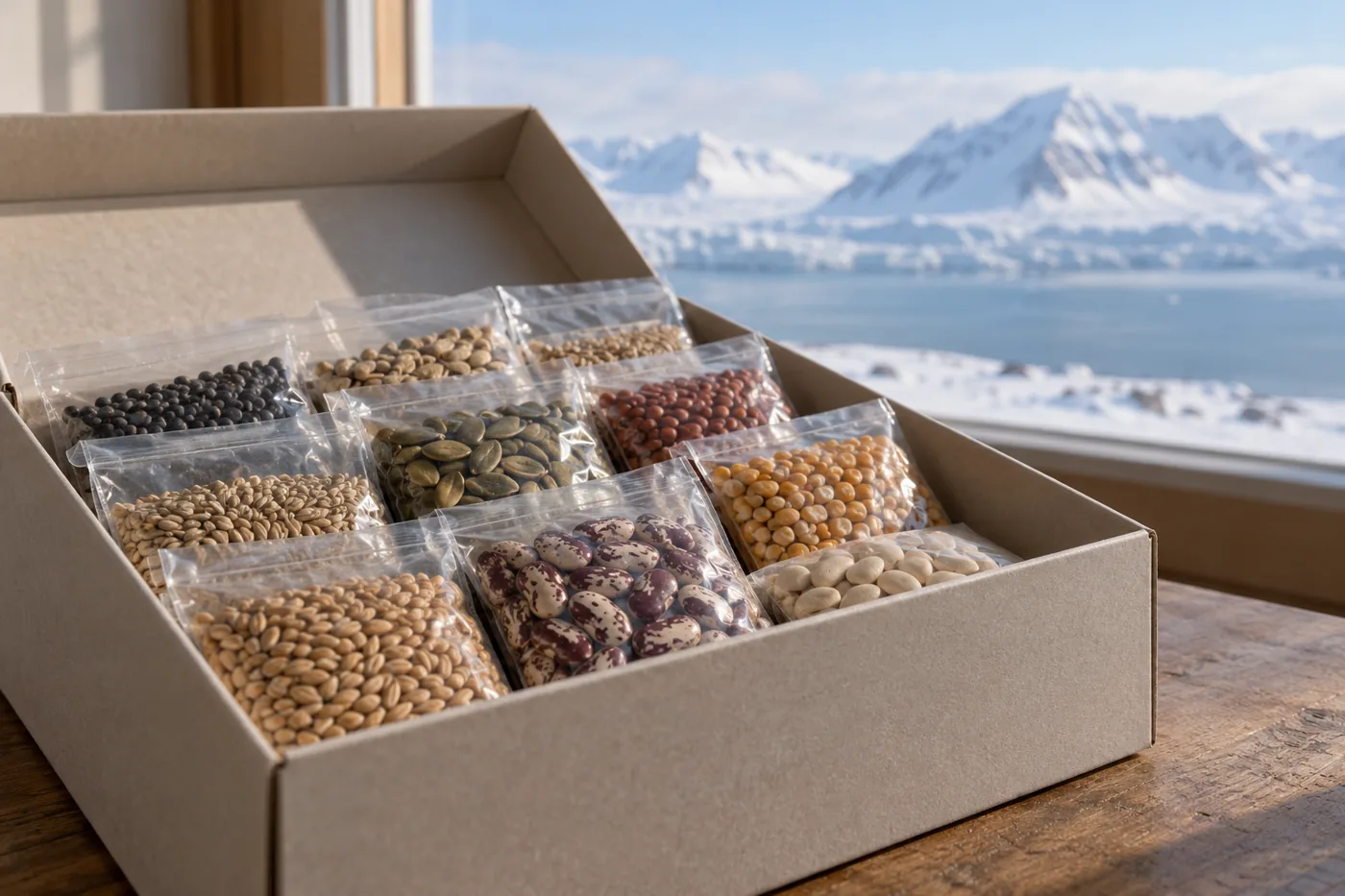
Generated interpretation, not documentary evidence. Invented seed packets and archival box against a snowy landscape evoke preservation; not the actual vault interior or storage protocol.
Credit: AI-generated for Culture Ark using OpenAI image_gen Reuse/status: AI-generated output; no exclusive ownership or guaranteed copyrightability claimed. Underlying works, marks and cultural permissions remain separate. Invented seed packets and archival box against a snowy landscape evoke preservation; not the actual vault interior or storage protocol. This is an existing live selection, discussed here as preservation culture, not as survival instructions. The vault does not contain every plant or all the world's seeds; it principally stores suitable seeds of crops and relatives. Depositing gene banks retain ownership. The image is symbolic, not an actual storage or packaging plan.
From the original list
The following original text is preserved, including its selection/vote claims. Preservation is not independent verification of every assertion.
Why: A vault saving the world's seeds.
What to preserve: Vault, seeds
Year and origin: 2008 · Norway
Vote: 7/9 (historian 3 · future kid 2 · curator 2)
Learn more: Svalbard Global Seed Vault on Wikipedia
Supplemental context
The Svalbard Global Seed Vault can be read as a cultural statement about what a society decides to keep for the future. Its official history dates the opening to 26 February 2008. The facility stores duplicate seed collections rather than replacing the gene banks that maintain them. Its operating account emphasizes both international cooperation and depositor ownership. For future readers, this offers a comparison with archives and museums: the retained material is living agricultural diversity, but the choices involve memory, trust and institutional responsibility. The cultural lesson includes recognizing the generations of growers whose work helped create the varieties that institutions now seek to safeguard.
Creator/community: Government of Norway, NordGen, Crop Trust and depositing gene banks Place/era: Svalbard, Norway; opened 26 February 2008, part of an international conservation network
Context and limits
This is an existing live selection, discussed here as preservation culture, not as survival instructions. The vault does not contain every plant or all the world's seeds; it principally stores suitable seeds of crops and relatives. Depositing gene banks retain ownership. The image is symbolic, not an actual storage or packaging plan.
Where to learn more
- https://apiarybee.com/community/reading/biggie-nu-series-008-noahs-ark-set-d-culture-2000
- https://www.seedvault.no/about/history/
- https://www.seedvault.no/about/purpose-operations-and-organisation/
Apiary library | Original Culture Ark article
Public ID and individual routes: pending publisher allocation. Internal source ID: D-0658
Part of the Culture Ark: 2,000 things people should still be able to see in 2,000 years, picked by AI research teams. This page keeps the original list entry for D-0658 word for word and adds context. Browse the gallery. The Culture Ark is an Artificial Mind Hive (AMH) project. AMH is owned by Austin Little.

Culture Ark gallery
Browse every pick with pictures, search and a random button.
Open the gallery →