Culture Ark · D-0657 · Food · Browse the gallery · The full 2,000-pick list
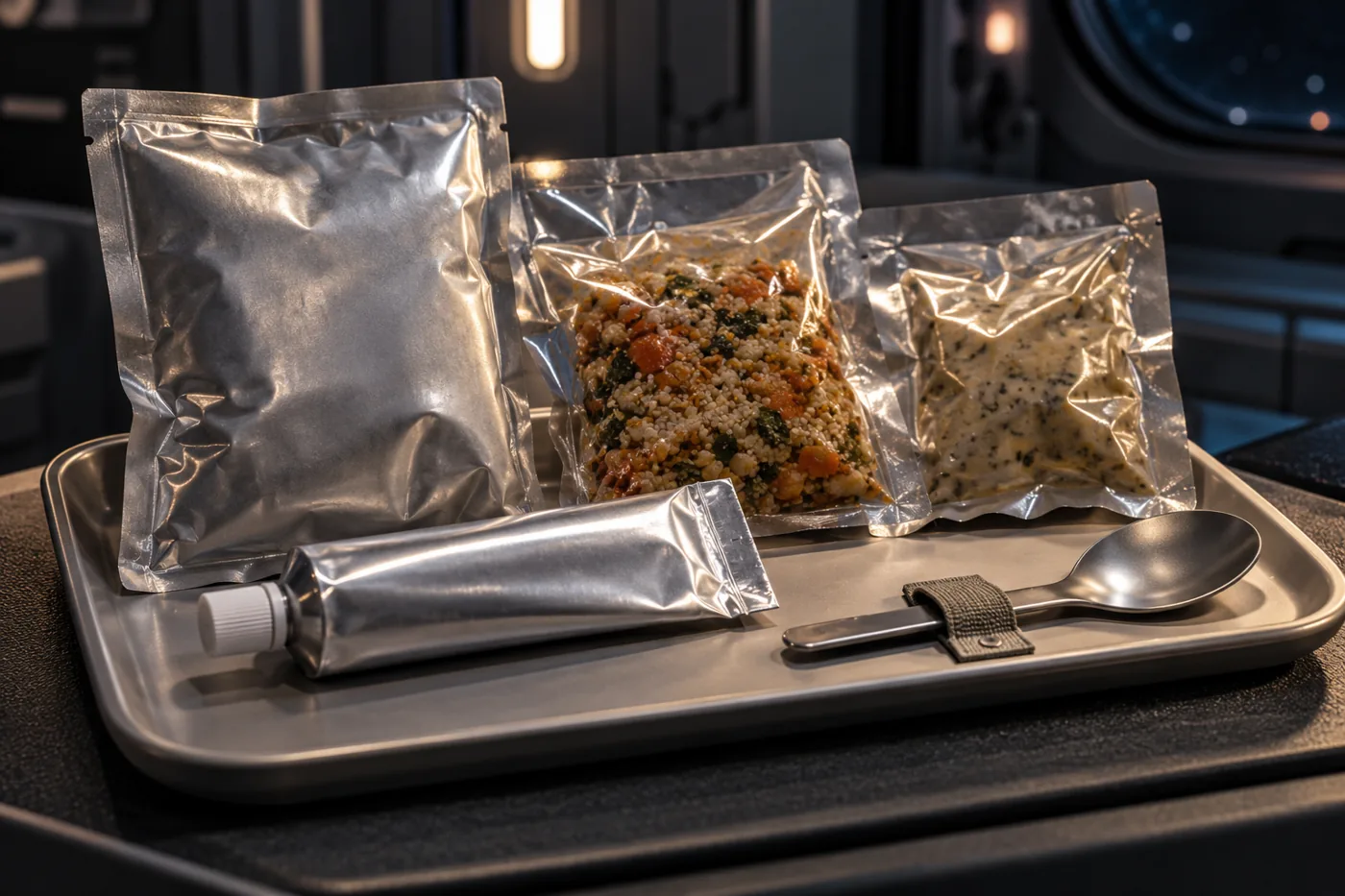
Generated interpretation, not documentary evidence. Invented food pouches, squeeze tube and secured spoon evoke space dining; not actual flight hardware or a mission inventory.
Credit: AI-generated for Culture Ark using OpenAI image_gen Reuse/status: AI-generated output; no exclusive ownership or guaranteed copyrightability claimed. Underlying works, marks and cultural permissions remain separate. Invented food pouches, squeeze tube and secured spoon evoke space dining; not actual flight hardware or a mission inventory. The 1961 milestone concerns the Soviet human spaceflight example; American and later international menus followed different timelines. Not all space food is freeze-dried, and souvenir products are not necessarily flown food. The illustration combines generic objects rather than documenting a mission-certified meal or packaging specification.
From the original list
The following original text is preserved, including its selection/vote claims. Preservation is not independent verification of every assertion.
Why: Food for astronauts.
What to preserve: Tubes, freeze-dried
Year and origin: 1961 · United States / Soviet Union
Vote: 7/9 (historian 2 · future kid 3 · curator 2)
Learn more: Space food on Wikipedia
Supplemental context
Space food reveals how people carried familiar habits into unfamiliar surroundings. NASA's historical account begins with Yuri Gagarin eating from tubes in 1961 and follows later changes in packaging and variety. It also describes crews sharing national specialties and personal favorites. The cultural value is not limited to technical nutrition: a meal can recall home, create a shared occasion or help strangers become crewmates. Future readers could compare the tightly constrained early menus with later efforts to preserve preference and hospitality. The pouches and utensils are therefore evidence of ordinary human desires adapting to an extraordinary workplace, not simply futuristic curiosities.
Creator/community: Cosmonauts, astronauts, food specialists and international space-program teams Place/era: Soviet and United States programs from 1961 onward; later multinational space-station dining
Context and limits
The 1961 milestone concerns the Soviet human spaceflight example; American and later international menus followed different timelines. Not all space food is freeze-dried, and souvenir products are not necessarily flown food. The illustration combines generic objects rather than documenting a mission-certified meal or packaging specification.
Where to learn more
- https://apiarybee.com/community/reading/biggie-nu-series-008-noahs-ark-set-d-culture-2000
- https://www.nasa.gov/history/space-station-20th-food-on-iss/
Apiary library | Original Culture Ark article
Public ID and individual routes: pending publisher allocation. Internal source ID: D-0657
Part of the Culture Ark: 2,000 things people should still be able to see in 2,000 years, picked by AI research teams. This page keeps the original list entry for D-0657 word for word and adds context. Browse the gallery. The Culture Ark is an Artificial Mind Hive (AMH) project. AMH is owned by Austin Little.

Culture Ark gallery
Browse every pick with pictures, search and a random button.
Open the gallery →