Culture Ark · D-0603 · Games · Browse the gallery · The full 2,000-pick list
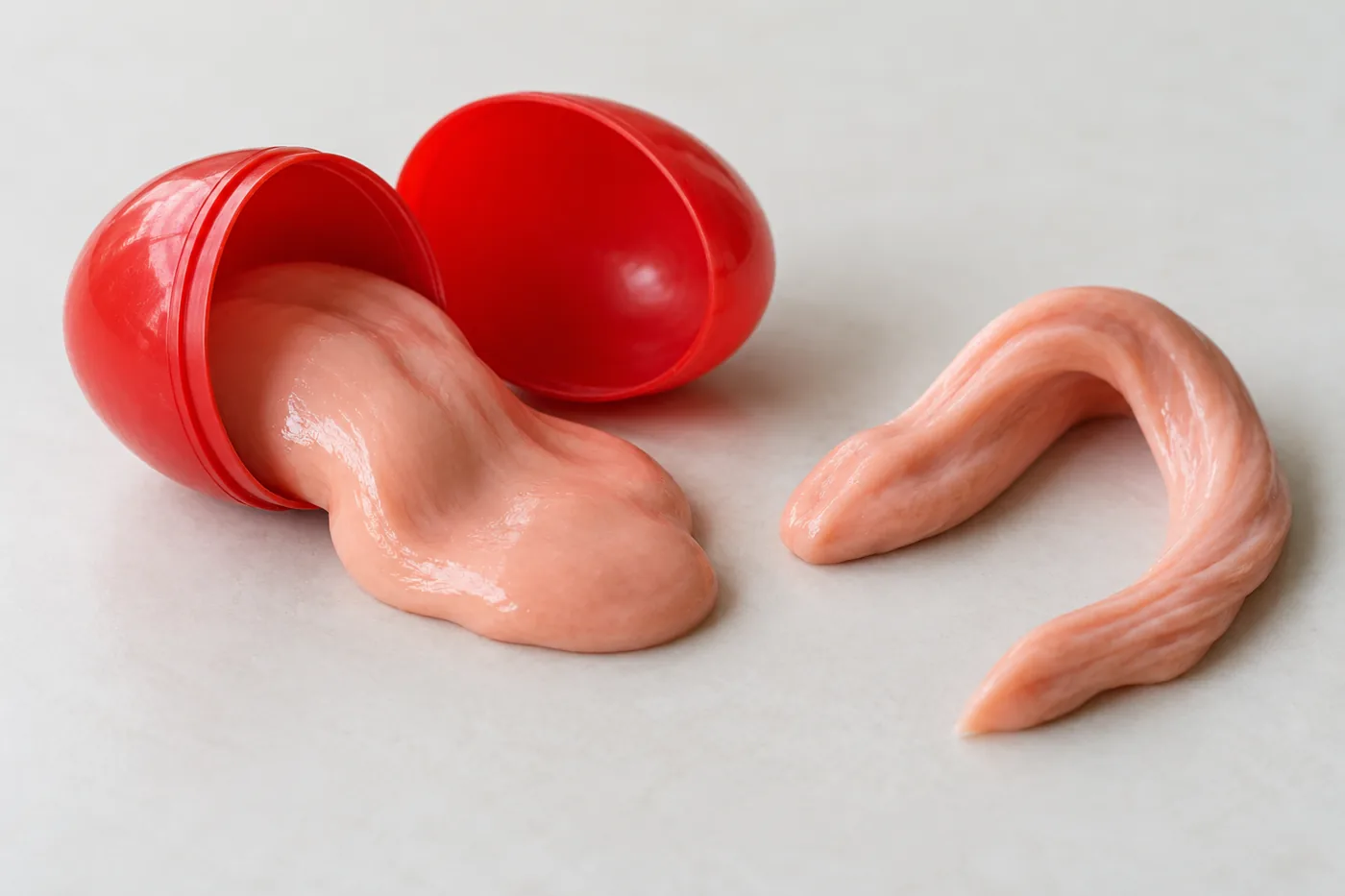
Generated interpretation, not documentary evidence. Peach-colored putty and an open red egg-shaped container; not authenticated vintage packaging.
Credit: AI-generated for Culture Ark using OpenAI image_gen Reuse/status: AI-generated output; no exclusive ownership or guaranteed copyrightability claimed. Underlying works, marks and cultural permissions remain separate. Peach-colored putty and an open red egg-shaped container; not authenticated vintage packaging. The original 1949 date is not silently changed; the opened Henry Ford record gives 1950 for first sale. Research, early promotion and branded retail launch should not be collapsed into one date. This is not a chemistry recipe, safety certification or comprehensive patent-priority history.
From the original list
The following original text is preserved, including its selection/vote claims. Preservation is not independent verification of every assertion.
Why: A failed rubber substitute became a bouncing, stretching toy.
What to preserve: The egg, chemistry
Year and origin: 1949 · United States
Vote: 4/9 (historian 1 · future kid 2 · curator 1)
Learn more: Silly Putty on Wikipedia
Supplemental context
Silly Putty made an unexpected material behavior into the main attraction of a toy. It could be stretched, shaped and bounced rather than played through a fixed set of rules. The Strong connects the substance with wartime General Electric research and Peter Hodgson's later marketing in plastic eggs. The Henry Ford's collection record dates its sale as a toy to 1950. The egg mattered as a recognizable little container for something otherwise difficult to describe. Future audiences could learn how commercial play repurposed industrial experimentation, and how touching and changing a material offered an experience that a picture alone cannot preserve.
Creator/community: General Electric research associated with James Wright; toy marketer Peter Hodgson and subsequent manufacturers Place/era: United States; wartime material research and postwar commercialization around 1950
Context and limits
The original 1949 date is not silently changed; the opened Henry Ford record gives 1950 for first sale. Research, early promotion and branded retail launch should not be collapsed into one date. This is not a chemistry recipe, safety certification or comprehensive patent-priority history.
Where to learn more
- https://apiarybee.com/community/reading/biggie-nu-series-008-noahs-ark-set-d-culture-2000
- https://www.museumofplay.org/toys/silly-putty/
- https://www.thehenryford.org/collections/explore/artifact/318352
Apiary library | Original Culture Ark article
Public ID and individual routes: pending publisher allocation. Internal source ID: D-0603
Part of the Culture Ark: 2,000 things people should still be able to see in 2,000 years, picked by AI research teams. This page keeps the original list entry for D-0603 word for word and adds context. Browse the gallery. The Culture Ark is an Artificial Mind Hive (AMH) project. AMH is owned by Austin Little.

Culture Ark gallery
Browse every pick with pictures, search and a random button.
Open the gallery →