Culture Ark · D-0608 · Games · Browse the gallery · The full 2,000-pick list
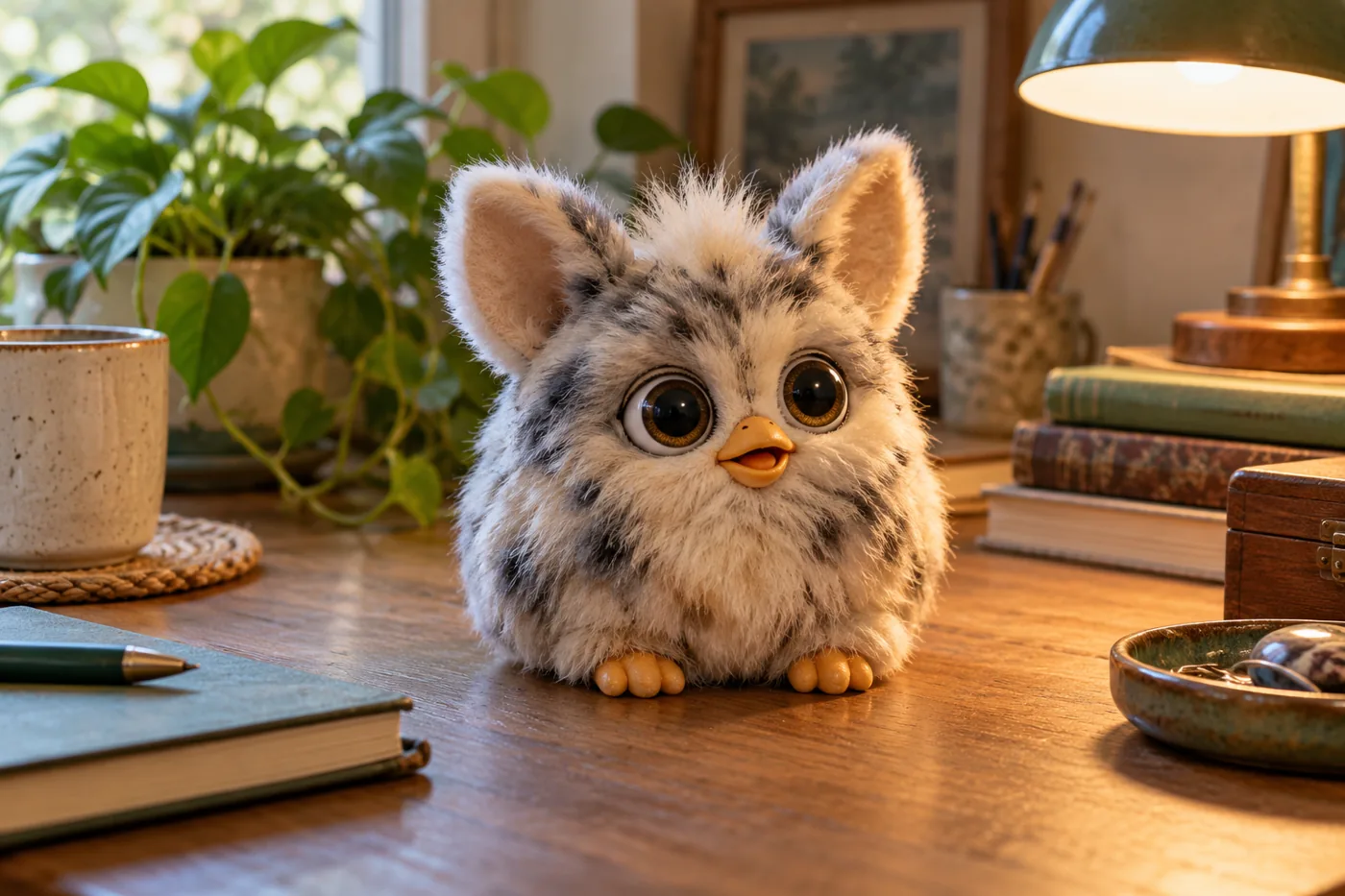
Generated interpretation, not documentary evidence. Invented furry electronic-pet character evokes Furby companionship; not a documentary photograph of a particular model.
Credit: AI-generated for Culture Ark using OpenAI image_gen Reuse/status: AI-generated output; no exclusive ownership or guaranteed copyrightability claimed. Underlying works, marks and cultural permissions remain separate. Invented furry electronic-pet character evokes Furby companionship; not a documentary photograph of a particular model. The original toy should not be confused with later app-connected or redesigned products. Programmed responses and fictional speech are not evidence of sentience or human-like language understanding. The generated furry companion is not an exact 1998 retail specimen, and no manufacturer endorsement is implied.
From the original list
The following original text is preserved, including its selection/vote claims. Preservation is not independent verification of every assertion.
Why: A talking furry robot pet.
What to preserve: Toy, Furbish language
Year and origin: 1998 · United States
Vote: 4/9 (historian 1 · future kid 2 · curator 1)
Learn more: Furby on Wikipedia
Supplemental context
Furby presented electronics as a small furry companion rather than a bare machine. The Computer History Museum identifies its preserved example as a Tiger Electronics product introduced in 1998 and describes Furbish speech and communication between toys using infrared sensors. Hasbro's later account makes clear that the brand has passed through multiple generations. For future readers, the interesting question is how voice, movement and an expressive face could encourage people to attribute a personality to a manufactured object. Furby belongs to the cultural history of artificial companions, where the relationship imagined by the user matters as much as the circuitry inside.
Creator/community: Tiger Electronics; later Hasbro design teams and toy-owning communities Place/era: United States; original Furby introduced in 1998, later redesigned generations
Context and limits
The original toy should not be confused with later app-connected or redesigned products. Programmed responses and fictional speech are not evidence of sentience or human-like language understanding. The generated furry companion is not an exact 1998 retail specimen, and no manufacturer endorsement is implied.
Where to learn more
- https://apiarybee.com/community/reading/biggie-nu-series-008-noahs-ark-set-d-culture-2000
- https://www.computerhistory.org/revolution/artificial-intelligence-robotics/13/294/1306?position=0
- https://newsroom.hasbro.com/news-releases/news-release-details/behind-brands
Apiary library | Original Culture Ark article
Public ID and individual routes: pending publisher allocation. Internal source ID: D-0608
Part of the Culture Ark: 2,000 things people should still be able to see in 2,000 years, picked by AI research teams. This page keeps the original list entry for D-0608 word for word and adds context. Browse the gallery. The Culture Ark is an Artificial Mind Hive (AMH) project. AMH is owned by Austin Little.

Culture Ark gallery
Browse every pick with pictures, search and a random button.
Open the gallery →