Culture Ark · D-0604 · Games · Browse the gallery · The full 2,000-pick list
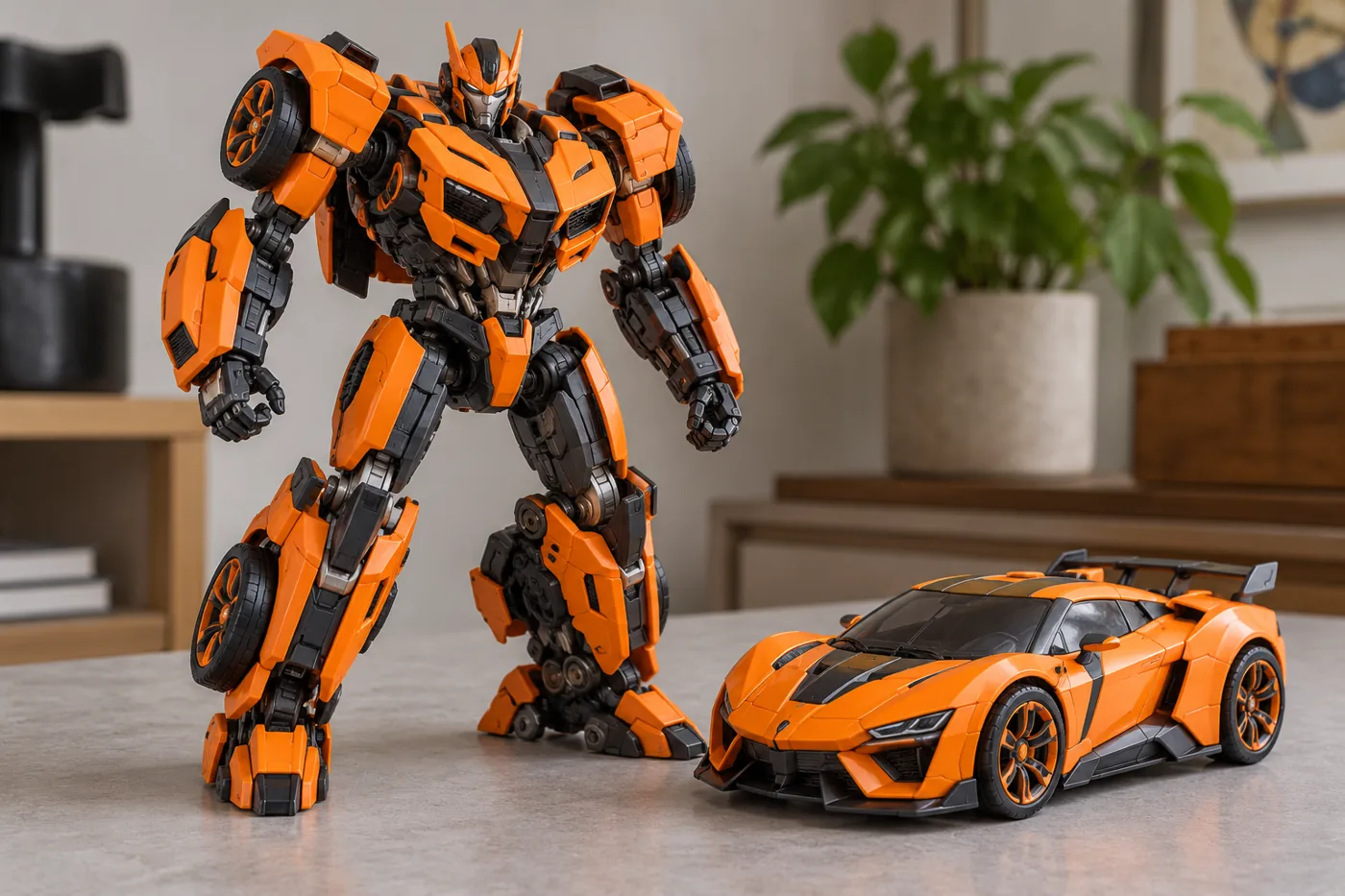
Generated interpretation, not documentary evidence. Invented orange robot and matching vehicle evoke shape-changing toy play; not an official Transformers character or product.
Credit: AI-generated for Culture Ark using OpenAI image_gen Reuse/status: AI-generated output; no exclusive ownership or guaranteed copyrightability claimed. Underlying works, marks and cultural permissions remain separate. Invented orange robot and matching vehicle evoke shape-changing toy play; not an official Transformers character or product. The franchise is not identical to any one film, cartoon continuity or toy generation. TOMY distinguishes the 1984 release from Japan's 1985 release. The illustration uses an invented robot and vehicle, not a named character, licensed product photograph or mechanically verified transformation sequence.
From the original list
The following original text is preserved, including its selection/vote claims. Preservation is not independent verification of every assertion.
Why: Robots in disguise, a toy line turned film franchise.
What to preserve: Toys, cartoon, conversion mechanics
Year and origin: 1984 · United States / Japan
Vote: 4/9 (historian 1 · future kid 2 · curator 1)
Learn more: Transformers on Wikipedia
Supplemental context
Transformers links the physical puzzle of changing a toy's form with stories about intelligent machines. TOMY's anniversary account emphasizes Japanese toy origins and its long partnership with Hasbro; Hasbro's retrospective describes the 1984 animated series and the franchise's movement across toys, comics, television and films. That combination lets a child handle an object and imagine it as a character with allegiances and adventures. Future readers could study a transnational entertainment system in which manufacturing design, serialized storytelling and collecting reinforce one another. The toys' changing shapes are only one part of the culture built around them.
Creator/community: Takara/TOMY and Hasbro; toy designers, animation makers, writers and international fan communities Place/era: Japan and United States; franchise launched in 1984, Japanese brand release in 1985
Context and limits
The franchise is not identical to any one film, cartoon continuity or toy generation. TOMY distinguishes the 1984 release from Japan's 1985 release. The illustration uses an invented robot and vehicle, not a named character, licensed product photograph or mechanically verified transformation sequence.
Where to learn more
- https://apiarybee.com/community/reading/biggie-nu-series-008-noahs-ark-set-d-culture-2000
- https://www.takaratomy.co.jp/english/product_release/pdf/p240410_en.pdf
- https://newsroom.hasbro.com/news-releases/news-release-details/hasbro-announces-til-all-are-one-transformers-40th-anniversary
Apiary library | Original Culture Ark article
Public ID and individual routes: pending publisher allocation. Internal source ID: D-0604
Part of the Culture Ark: 2,000 things people should still be able to see in 2,000 years, picked by AI research teams. This page keeps the original list entry for D-0604 word for word and adds context. Browse the gallery. The Culture Ark is an Artificial Mind Hive (AMH) project. AMH is owned by Austin Little.

Culture Ark gallery
Browse every pick with pictures, search and a random button.
Open the gallery →