Culture Ark · D-0609 · Games · Browse the gallery · The full 2,000-pick list
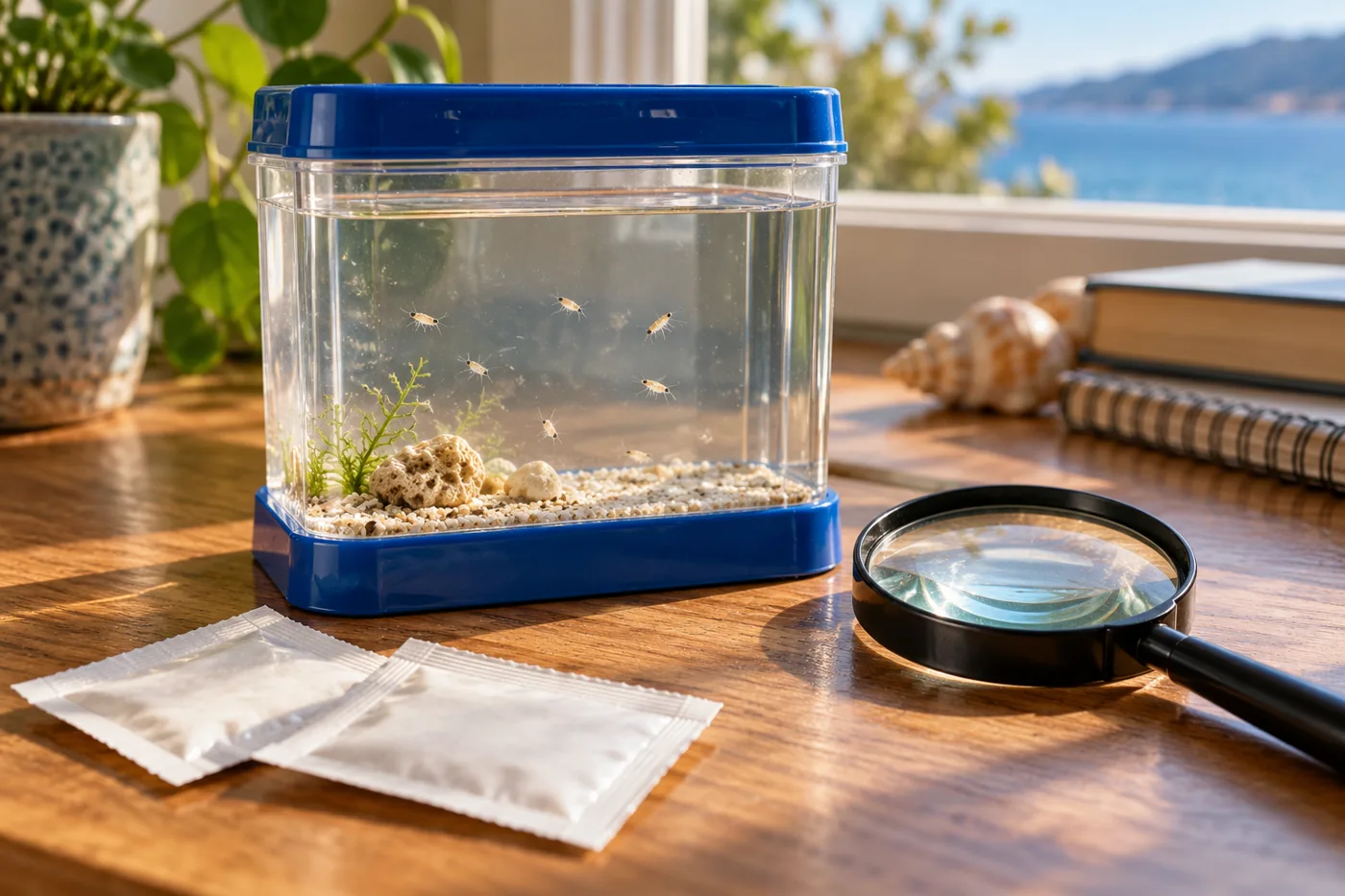
Generated interpretation, not documentary evidence. Invented observation aquarium, tiny shrimp-like forms, blank sachets and magnifier; not an actual Sea-Monkeys kit or husbandry recommendation.
Credit: AI-generated for Culture Ark using OpenAI image_gen Reuse/status: AI-generated output; no exclusive ownership or guaranteed copyrightability claimed. Underlying works, marks and cultural permissions remain separate. Invented observation aquarium, tiny shrimp-like forms, blank sachets and magnifier; not an actual Sea-Monkeys kit or husbandry recommendation. The brand's celebratory origin narrative is not a comprehensive independent biography. The original 1957 date is a development story, not necessarily retail launch or name adoption. These are living animals, not magical creatures or monkeys. The illustration is neither an anatomical diagram nor a suitable-habitat or animal-care guide.
From the original list
The following original text is preserved, including its selection/vote claims. Preservation is not independent verification of every assertion.
Why: Brine shrimp sold as instant pets.
What to preserve: Packets, comic-book ads
Year and origin: 1957 · United States
Vote: 4/9 (historian 1 · future kid 2 · curator 1)
Learn more: Sea-Monkeys on Wikipedia
Supplemental context
Sea-Monkeys packaged the emergence of living brine shrimp as a small domestic spectacle. The brand's history dates von Braunhut's inspiration to 1957 and its Instant Life introduction to 1960, then emphasizes comic-book mail-order advertising. Western Australia's fisheries education material independently explains that Artemia are small crustaceans whose dormant cysts can survive dry periods. The cultural contrast is striking: imaginative advertising promised a tiny world, while the actual organisms offered a different kind of fascination. Future readers could study the meeting of popular illustration, mail-order commerce and everyday encounters with living things, without mistaking the fictional marketing characters for biological reality.
Creator/community: Harold von Braunhut and the Sea-Monkeys business; aquarium hobbyists and novelty-pet audiences Place/era: United States; late 1950 s development story and early 1960 s commercialization
Context and limits
The brand's celebratory origin narrative is not a comprehensive independent biography. The original 1957 date is a development story, not necessarily retail launch or name adoption. These are living animals, not magical creatures or monkeys. The illustration is neither an anatomical diagram nor a suitable-habitat or animal-care guide.
Where to learn more
- https://apiarybee.com/community/reading/biggie-nu-series-008-noahs-ark-set-d-culture-2000
- https://sea-monkeys.com/pages/historyofsea-monkeys
- https://marinewaters.fish.wa.gov.au/resource/artemia/?pdf_export=1
Apiary library | Original Culture Ark article
Public ID and individual routes: pending publisher allocation. Internal source ID: D-0609
Part of the Culture Ark: 2,000 things people should still be able to see in 2,000 years, picked by AI research teams. This page keeps the original list entry for D-0609 word for word and adds context. Browse the gallery. The Culture Ark is an Artificial Mind Hive (AMH) project. AMH is owned by Austin Little.

Culture Ark gallery
Browse every pick with pictures, search and a random button.
Open the gallery →