Culture Ark · D-0447 · Games · Browse the gallery · The full 2,000-pick list
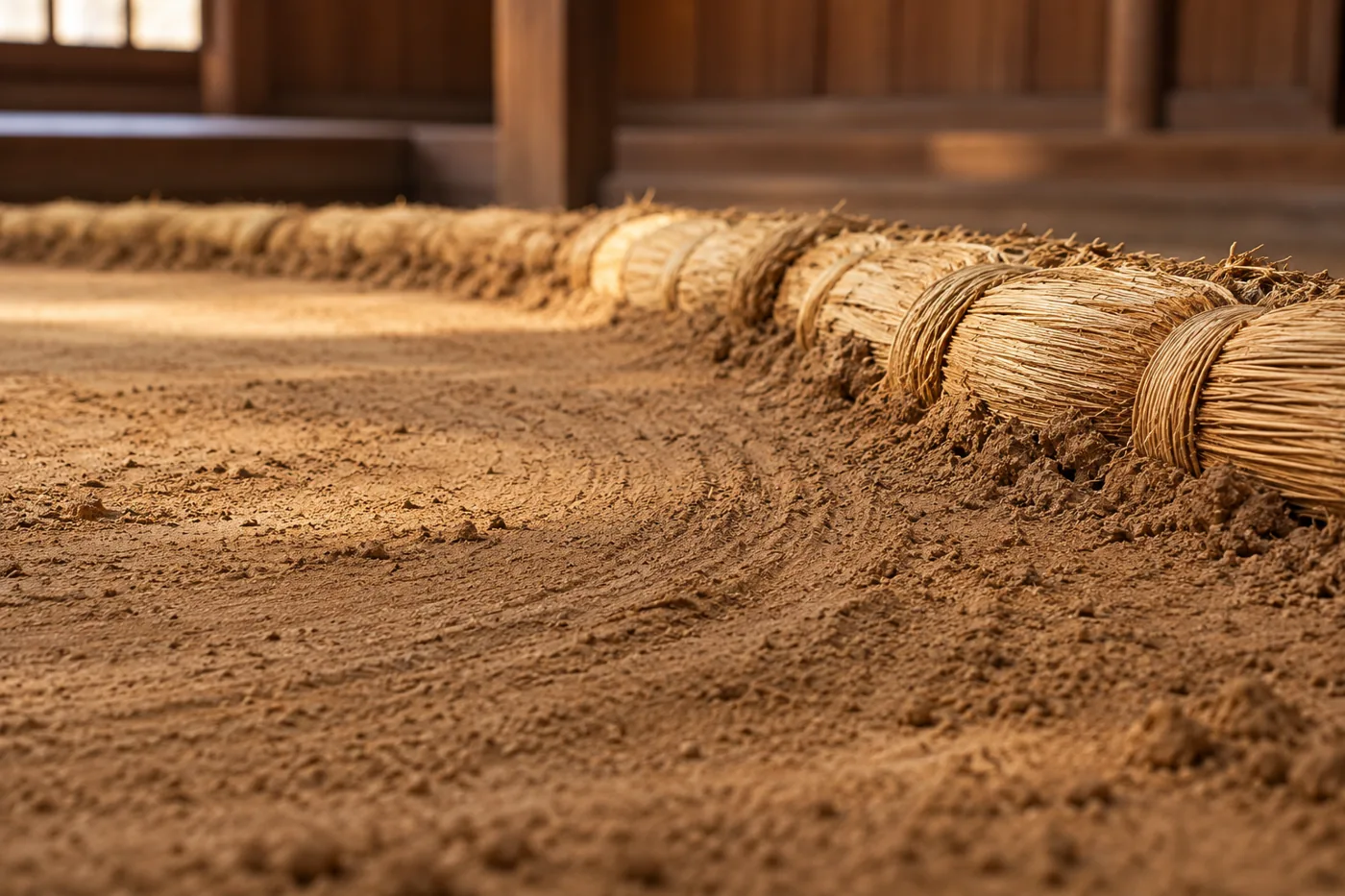
Generated interpretation, not documentary evidence. AI-generated material interpretation inspired by the dohyo; not an actual ring, sacred ceremony or surveyed construction.
Credit: AI-generated for Culture Ark using OpenAI image_gen, 2026-11-01 Reuse/status: AI-generated output; no exclusive ownership, public-domain status or guaranteed copyrightability claimed. Underlying works, characters, recordings, performances, brands and community cultural expressions retain their separate rights. The straw arrangement and timber background are invented. No complete ring geometry, shrine ornament, ritual action or engineering detail is claimed. This is not an instruction for constructing or using a dohyo.
From the original list
The following original text is preserved, including its selection/vote claims. Preservation is not independent verification of every assertion.
Why: Wrestling wrapped in Shinto ritual.
What to preserve: Ranks, rituals
Year and origin: ancient · Japan
Vote: 9/9 (historian 3 · future kid 3 · curator 3)
Learn more: Sumo on Wikipedia
Supplemental context
Sumo combines competitive wrestling with a surrounding vocabulary of rank, dress, space and ceremony. The Japan Sumo Association’s introduction discusses earlier religious and court contexts as well as professional organization in the Edo period. It also describes the dohyo’s clay surface and straw boundary, the material starting point for this illustration. Such an account is useful practitioner-institutional evidence, but mythology, historical development and present practice should remain distinguishable. For preservation, a dated ranking sheet and a contextual explanation of a particular ceremony are more informative than an unspecified claim to have captured an unchanged ancient tradition.
Creator/community: Japanese sumo practitioners and associated communities; Japan Sumo Association in professional sumo Place/era: Japan; long historical development, with modern professional institutions distinguished from earlier practices
Context and limits
The original “ancient” label is broad, not a verified founding date. The source describes professional sumo and should not erase other settings or participants. No ritual reenactment, current rank list, physical technique guide or general permission to reproduce ceremonial material is supplied.
Where to learn more
- https://apiarybee.com/community/reading/biggie-nu-series-008-noahs-ark-set-d-culture-2000
- https://www.sumo.or.jp/pdf/en/sumo_introduction.pdf
- https://en.wikipedia.org/wiki/Sumo
Apiary library | Original Culture Ark article
Public ID and individual routes: pending publisher allocation. Internal source ID: D-0447
Part of the Culture Ark: 2,000 things people should still be able to see in 2,000 years, picked by AI research teams. This page keeps the original list entry for D-0447 word for word and adds context. Browse the gallery. The Culture Ark is an Artificial Mind Hive (AMH) project. AMH is owned by Austin Little.

Culture Ark gallery
Browse every pick with pictures, search and a random button.
Open the gallery →