Culture Ark · D-0449 · Games · Browse the gallery · The full 2,000-pick list
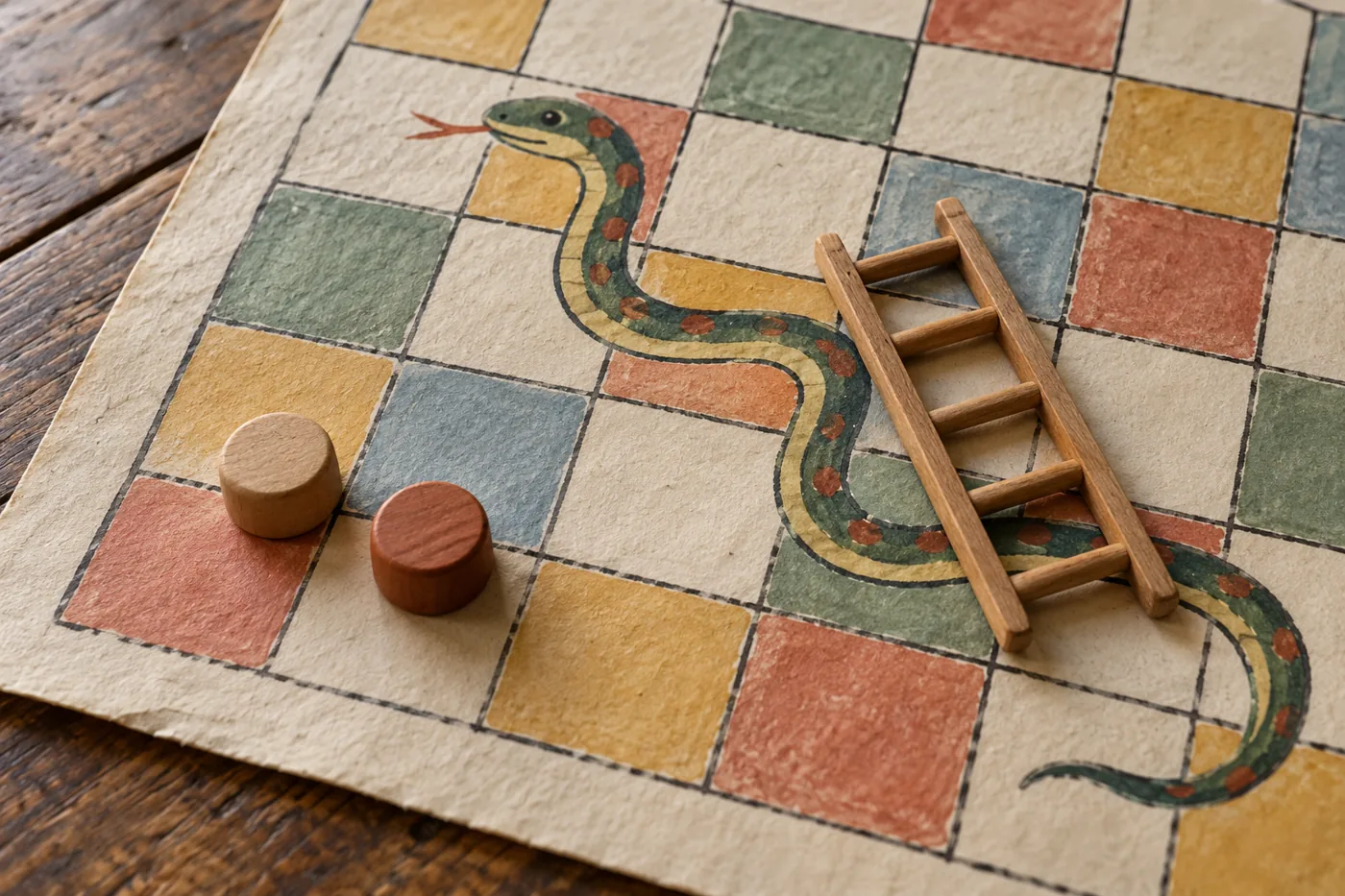
Generated interpretation, not documentary evidence. AI-generated modern race-game metaphor; not an authentic gyan chaupar board, religious painting or rules reconstruction.
Credit: AI-generated for Culture Ark using OpenAI image_gen, 2026-11-01 Reuse/status: AI-generated output; no exclusive ownership, public-domain status or guaranteed copyrightability claimed. Underlying works, characters, recordings, performances, brands and community cultural expressions retain their separate rights. The image omits sacred figures and scripts. Its deliberately partial, unnumbered layout is not playable evidence and should not be presented as an antique Indian object or a reproduction of the library’s design.
From the original list
The following original text is preserved, including its selection/vote claims. Preservation is not independent verification of every assertion.
Why: A moral lesson about virtue and vice turned into a children's race game.
What to preserve: Original Gyan chaupar boards, modern boards, rules
Year and origin: ancient · India
Vote: 8/9 (historian 3 · future kid 3 · curator 2)
Learn more: Snakes and ladders on Wikipedia
Supplemental context
A specific historical board is more informative than a timeless origin story. The British Library catalogues a gyan chaupar design commissioned in Lucknow around 1780–1782, with numbered squares carrying Persian and Hindi labels and connections made by ladders, snakes and other motifs. It demonstrates how play could carry moral and cosmological meanings, but it is one commissioned object, not an original template for every later edition. The archive should preserve such board-specific language and provenance alongside modern race-game versions, making their differences visible rather than treating adaptation as simple decorative change.
Creator/community: South Asian board makers and players; later publishers and international playing communities Place/era: South Asia and later international adaptations; documented Lucknow design c. 1780–1782, not a verified ancient founding date
Context and limits
The original “ancient” date is not established by the opened record; the documented eighteenth-century object does not prove the game began then either. Gyan chaupar variants should not be flattened into one universal religious system. The library reports digital images unavailable; no object image was acquired.
Where to learn more
- https://apiarybee.com/community/reading/biggie-nu-series-008-noahs-ark-set-d-culture-2000
- https://searcharchives.bl.uk/catalog/041-003286546
- https://en.wikipedia.org/wiki/Snakes_and_ladders
Apiary library | Original Culture Ark article
Public ID and individual routes: pending publisher allocation. Internal source ID: D-0449
Part of the Culture Ark: 2,000 things people should still be able to see in 2,000 years, picked by AI research teams. This page keeps the original list entry for D-0449 word for word and adds context. Browse the gallery. The Culture Ark is an Artificial Mind Hive (AMH) project. AMH is owned by Austin Little.

Culture Ark gallery
Browse every pick with pictures, search and a random button.
Open the gallery →