Culture Ark · D-0451 · Games · Browse the gallery · The full 2,000-pick list
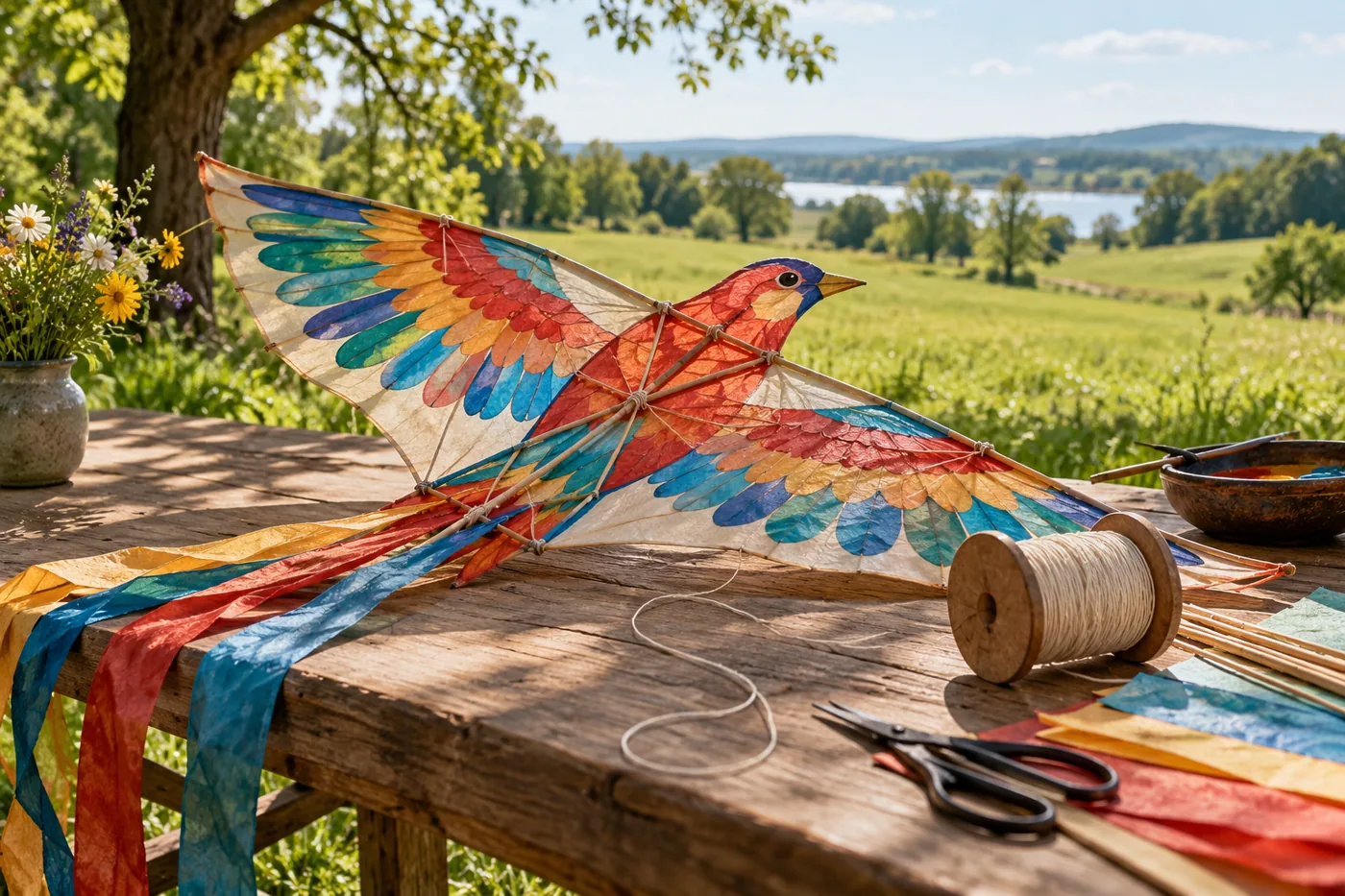
Generated interpretation, not documentary evidence. Invented bird-shaped craft kite and string spool, not an authenticated ancient Chinese kite or flight instruction.
Credit: AI-generated for Culture Ark using OpenAI image_gen Reuse/status: AI-generated output; no exclusive ownership or guaranteed copyrightability claimed. Underlying works, marks and cultural permissions remain separate. Invented bird-shaped craft kite and string spool, not an authenticated ancient Chinese kite or flight instruction. The original fifth-century BCE date is a historical attribution, not a securely established invention date. The museum distinguishes tradition from written evidence around 200 BCE. Franklin's electrical experiment is not reenacted here; this is cultural context, not instructions for risky kite flying or electrical experiments.
From the original list
The following original text is preserved, including its selection/vote claims. Preservation is not independent verification of every assertion.
Why: Flown for war, science and celebration.
What to preserve: Kites, kite festivals, Franklin's experiment
Year and origin: c. 5th century BC · China
Vote: 8/9 (historian 3 · future kid 2 · curator 3)
Learn more: Kite on Wikipedia
Supplemental context
A kite makes wind visible through a designed object held by a line. The Strong's National Toy Hall of Fame describes a history that includes recreational flying, festivals and practical investigation, with changing materials and shapes rather than one universal design. Its account carefully distinguishes traditional claims of very early Chinese origins from later written evidence. That distinction is useful for future readers: stories of invention and surviving records are different kinds of knowledge. Preserving kites alongside accounts of how people made, displayed and flew them would reveal relationships between craft, outdoor leisure, local identity and curiosity about the air.
Creator/community: Kite makers and flying communities across many cultures Place/era: Early traditions associated with China; later widespread international practices
Context and limits
The original fifth-century BCE date is a historical attribution, not a securely established invention date. The museum distinguishes tradition from written evidence around 200 BCE. Franklin's electrical experiment is not reenacted here; this is cultural context, not instructions for risky kite flying or electrical experiments.
Where to learn more
- https://apiarybee.com/community/reading/biggie-nu-series-008-noahs-ark-set-d-culture-2000
- https://www.toyhalloffame.org/toys/kite/
Apiary library | Original Culture Ark article
Public ID and individual routes: pending publisher allocation. Internal source ID: D-0451
Part of the Culture Ark: 2,000 things people should still be able to see in 2,000 years, picked by AI research teams. This page keeps the original list entry for D-0451 word for word and adds context. Browse the gallery. The Culture Ark is an Artificial Mind Hive (AMH) project. AMH is owned by Austin Little.

Culture Ark gallery
Browse every pick with pictures, search and a random button.
Open the gallery →