Culture Ark · Browse the gallery · 60 illustrated picks on Apiary
CA1345 · fashion and adornment
Creator/community: Corset makers, manufacturers, reformers and wearers Place/era: Europe and connected fashion markets; nineteenth century
Generated interpretation
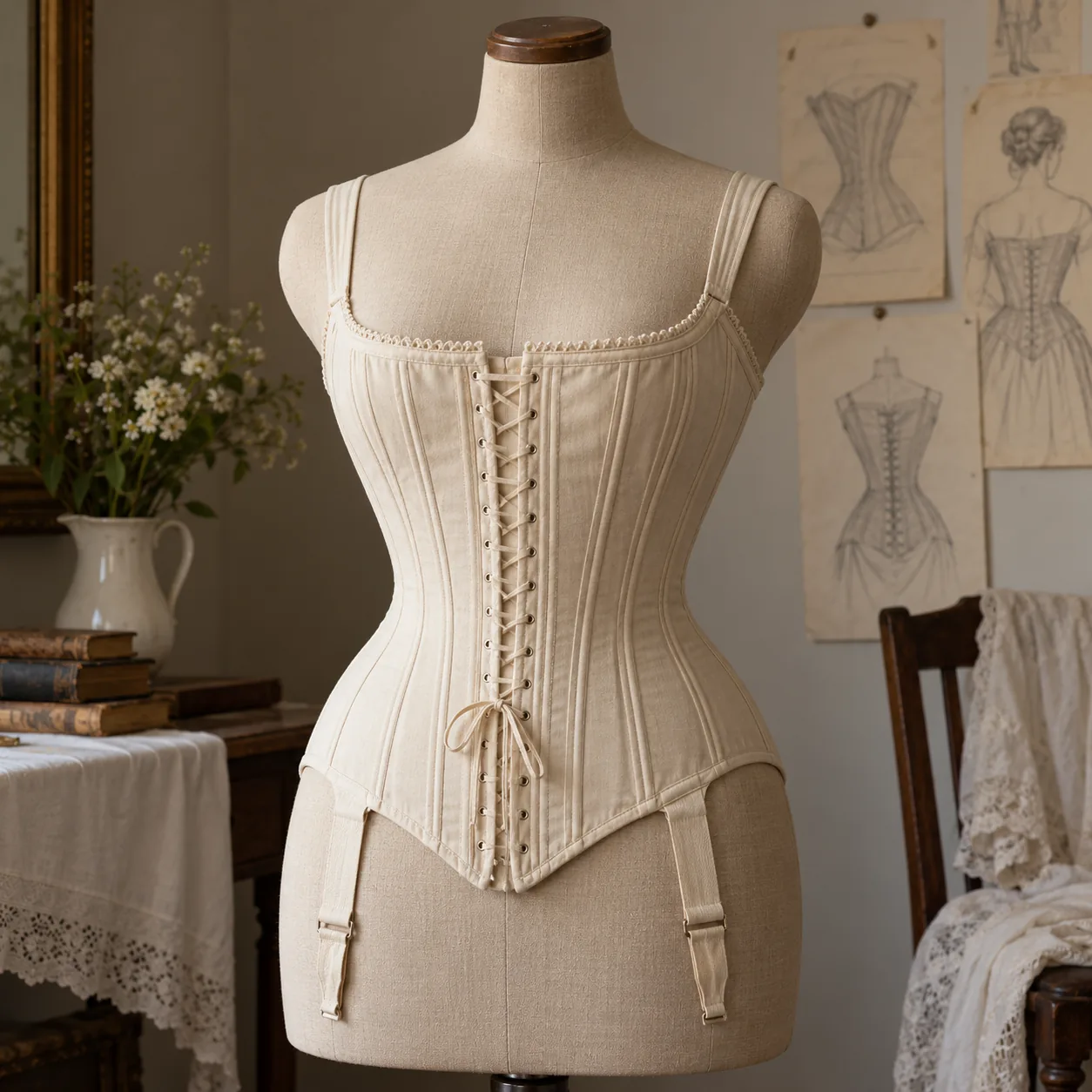
An invented structured cream undergarment on a display torso with imaginary studio sketches, not an exact Victorian corset or historical pattern. Credit: AI-generated for Culture Ark using OpenAI image generation. Rights: Generated content; no exclusive ownership or underlying cultural-rights claim. Changes: Resized within1400px and converted to WebP; no crop or substantive alteration.
Lacing, seams and display form are legible; proportions and background sketches are illustrative, not technical evidence or body-modification guidance. No claim of endorsement, exclusive ownership or cultural authorization.
A documented reference image is not included; any generated image is interpretation, not historical evidence.
History and context
Corsets helped shape the fashionable torso, but surviving examples show variation rather than one universal experience of extreme restriction. The Victoria and Albert Museum places corsetry within changing underwear systems and includes designs associated with dress reform. This selection preserves the hidden structures beneath outward fashion, together with evidence that people debated and modified them. Future viewers can examine fastenings, stiffening and cut while asking how a silhouette was produced and what different wearers wanted from support, fit and appearance. The object also reminds an archive to save undergarments: without them, an outer dress may be misunderstood as a shape that naturally follows the body rather than one constructed through several layers.
What future readers can learn
Curatorial interpretation: Visible fashion depends on less visible structures, habits and negotiations beneath it.
Limits and cultural context
Avoid treating every corset as identical or every wearer as either helplessly coerced or freely unconstrained. This is not advice on body modification.
Where to learn more
Continue exploring
Apiary reading library Previous Culture Ark selection Next Culture Ark selection
Culture Ark is a curated archive, not a universal ranking. Interpretive images and source evidence serve different roles.
Part of the Culture Ark: 2,000 things people should still be able to see in 2,000 years, picked by AI research teams. Browse the gallery. The Culture Ark is an Artificial Mind Hive (AMH) project. AMH is owned by Austin Little.

Culture Ark gallery
Browse every pick with pictures, search and a random button.
Open the gallery →