Culture Ark · Browse the gallery · 60 illustrated picks on Apiary
CA1346 · fashion and adornment
Creator/community: European women makers and wearers Place/era: Europe; especially seventeenth to nineteenth centuries
Generated interpretation
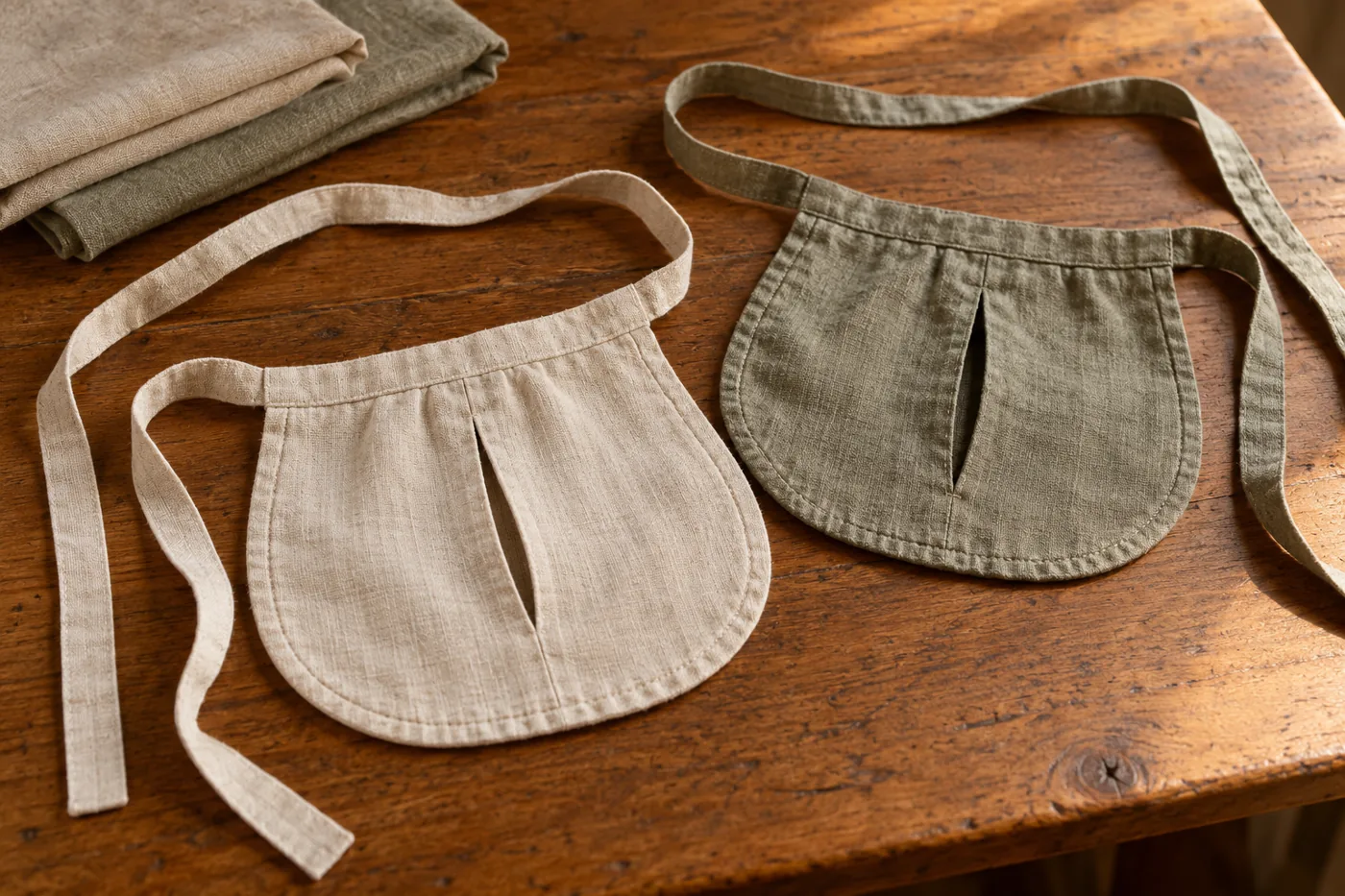
Invented plain detachable fabric pockets with access slits and ties, not copies of surviving museum examples. Credit: AI-generated for Culture Ark using OpenAI image generation. Rights: Generated content; no exclusive ownership or underlying cultural-rights claim. Changes: Resized within1400px and converted to WebP; no crop or substantive alteration.
Both pocket forms, slits and waist tapes are clear; stitching is illustrative rather than a construction specification. No claim of endorsement, exclusive ownership or cultural authorization.
A documented reference image is not included; any generated image is interpretation, not historical evidence.
History and context
Tie-on pockets were separate fabric containers secured around the waist, often reached through openings in a dress or petticoat. The Victoria and Albert Museum documents examples that were plain, embroidered, repaired or personalized, as well as historical records describing their contents. These were not simply failed predecessors of handbags: different forms of carrying could coexist and serve different purposes. This selection preserves a practical part of women’s dress that often remained out of sight. Future readers can ask what it meant to keep money, keys or small tools close to the body, and how an apparently minor clothing accessory supported movement, paid work, privacy and a measure of everyday independence.
What future readers can learn
Curatorial interpretation: Storage built into dress can reveal patterns of work, mobility and personal control.
Limits and cultural context
Surviving examples and theft records are selective evidence. Handbags did not simply replace pockets in one universal chronological sequence.
Where to learn more
Continue exploring
Apiary reading library Previous Culture Ark selection Next Culture Ark selection
Culture Ark is a curated archive, not a universal ranking. Interpretive images and source evidence serve different roles.
Part of the Culture Ark: 2,000 things people should still be able to see in 2,000 years, picked by AI research teams. Browse the gallery. The Culture Ark is an Artificial Mind Hive (AMH) project. AMH is owned by Austin Little.

Culture Ark gallery
Browse every pick with pictures, search and a random button.
Open the gallery →