Culture Ark · Browse the gallery · 60 illustrated picks on Apiary
CA1355 · fashion and adornment
Creator/community: Linen workers, laundresses, dressmakers and elite wearers Place/era: Europe; sixteenth and seventeenth centuries
Generated interpretation
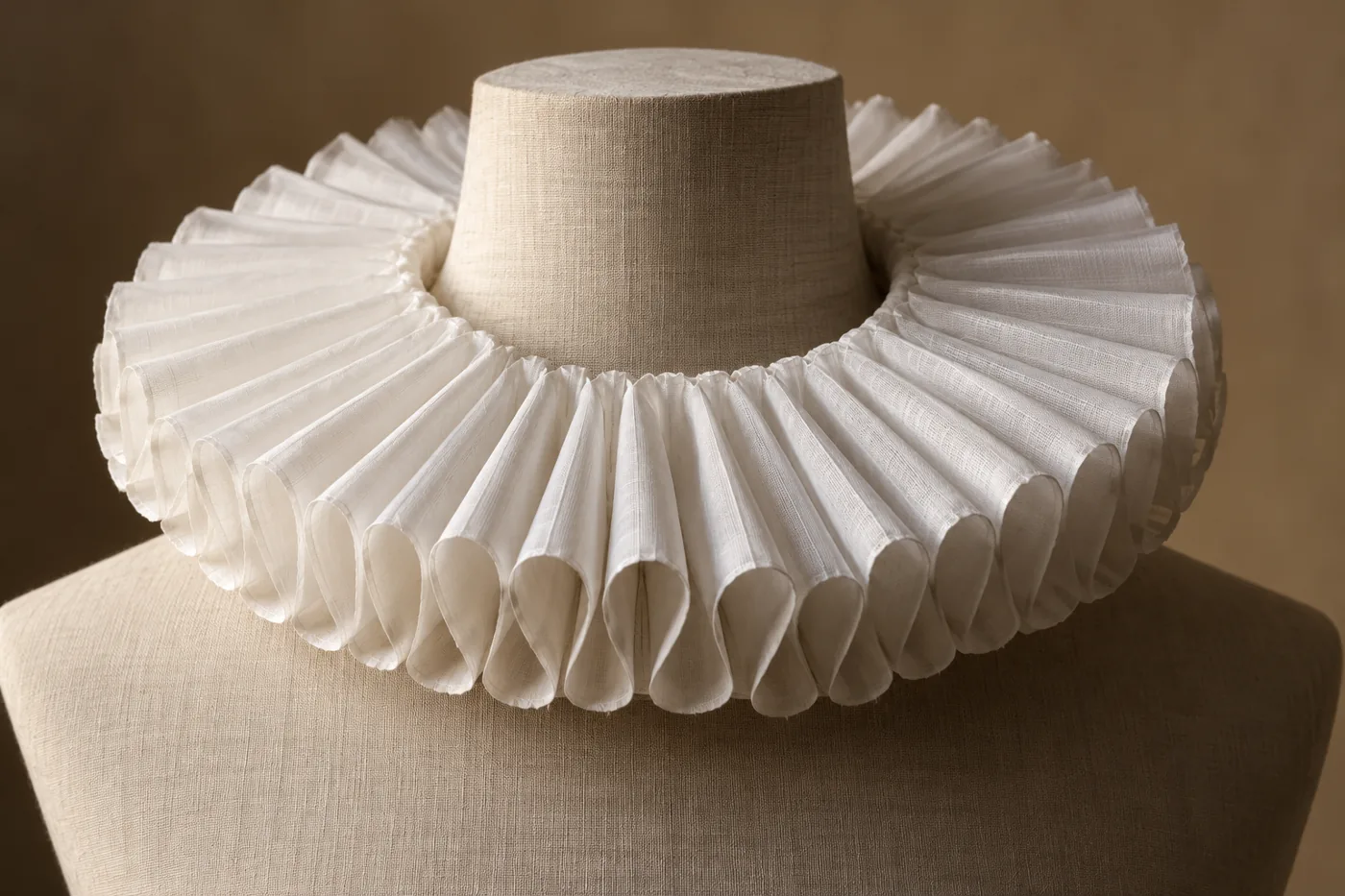
An invented white pleated ruff on a display bust, not a surviving collar or a copied elite portrait. Credit: AI-generated for Culture Ark using OpenAI image generation. Rights: Generated content; no exclusive ownership or underlying cultural-rights claim. Changes: Resized within1400px and converted to WebP; no crop or substantive alteration.
Repeated folds and collar volume are legible; construction and stiffness are illustrative, not a historical sewing specification. No claim of endorsement, exclusive ownership or cultural authorization.
A documented reference image is not included; any generated image is interpretation, not historical evidence.
History and context
A ruff frames the face with an elaborate collar, making the boundary between head and clothed body into a conspicuous design feature. The Norton Simon Museum identifies it with wealthy men, women and children in sixteenth- and seventeenth-century Europe. This selection preserves an accessory whose visual prominence is disproportionate to the small area of the body it covers. Future viewers can study portraits for differences in size and arrangement, while asking what resources were required to create and maintain such a crisp appearance. The ruff also provides a useful reminder that fashions now perceived as unusual were once intelligible signs within social worlds that connected dress, status and expectations of respectable presentation.
What future readers can learn
Curatorial interpretation: A small accessory can dominate a portrait and communicate status through conspicuous maintenance.
Limits and cultural context
Portraits disproportionately preserve elite dress and can idealize appearance. This entry does not claim that every European wore ruffs or that all examples were constructed alike.
Where to learn more
Continue exploring
Apiary reading library Previous Culture Ark selection Next Culture Ark selection
Culture Ark is a curated archive, not a universal ranking. Interpretive images and source evidence serve different roles.
Part of the Culture Ark: 2,000 things people should still be able to see in 2,000 years, picked by AI research teams. Browse the gallery. The Culture Ark is an Artificial Mind Hive (AMH) project. AMH is owned by Austin Little.

Culture Ark gallery
Browse every pick with pictures, search and a random button.
Open the gallery →