Culture Ark · Browse the gallery · 60 illustrated picks on Apiary
CA1344 · fashion and adornment
Creator/community: Lisa Lindahl, Hinda Miller and Polly Smith Place/era: United States; 1977 development and later sportswear
Generated interpretation
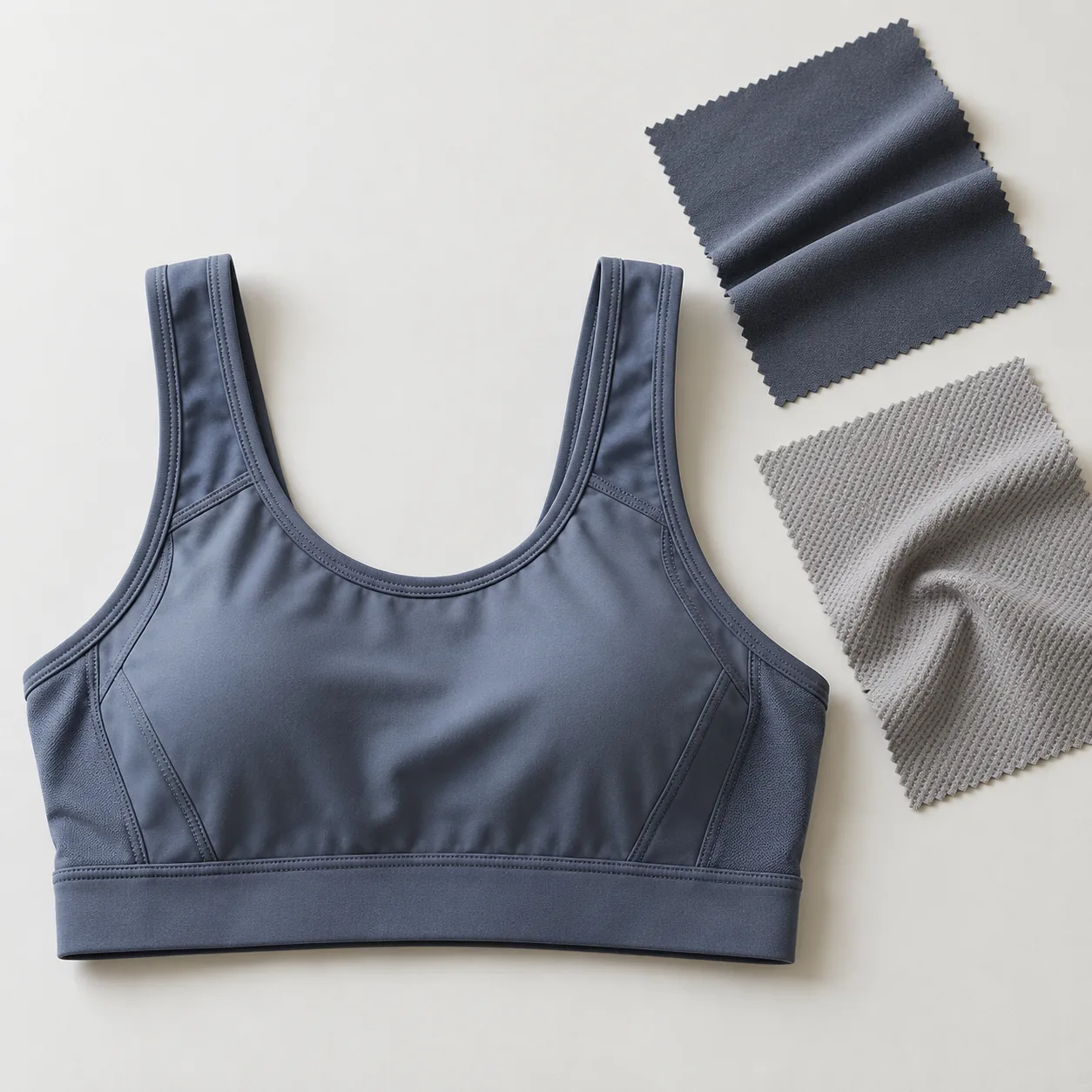
A generic contemporary gray athletic top and fabric swatches, not the original Jogbra prototype or a fit guide. Credit: AI-generated for Culture Ark using OpenAI image generation. Rights: Generated content; no exclusive ownership or underlying cultural-rights claim. Changes: Resized within1400px and converted to WebP; no crop or substantive alteration.
Fabric and seams are clear; the image does not depict a historical prototype, body or medical recommendation. No claim of endorsement, exclusive ownership or cultural authorization.
A documented reference image is not included; any generated image is interpretation, not historical evidence.
History and context
The Jogbra connects clothing design with the practical experience of participating in sport. Smithsonian accounts describe a prototype developed from two men’s athletic supporters and identify Lisa Lindahl, Hinda Miller and Polly Smith with the resulting athletic brassiere. A production example preserves the movement from improvised experiment to a garment made for wider use. This selection focuses on what people can learn about listening to needs that existing products had not adequately met. Future viewers can compare a seemingly small item of clothing with the broader conditions of participation, asking how comfort, confidence, available equipment and cultural expectations influence who feels able to join an activity and continue doing it.
What future readers can learn
Curatorial interpretation: Attention to an overlooked everyday need can change the experience of participation.
Limits and cultural context
This is a particular influential design history, not a claim that no earlier athletic support garments existed. No health or performance advice is implied.
Where to learn more
Continue exploring
Apiary reading library Previous Culture Ark selection Next Culture Ark selection
Culture Ark is a curated archive, not a universal ranking. Interpretive images and source evidence serve different roles.
Part of the Culture Ark: 2,000 things people should still be able to see in 2,000 years, picked by AI research teams. Browse the gallery. The Culture Ark is an Artificial Mind Hive (AMH) project. AMH is owned by Austin Little.

Culture Ark gallery
Browse every pick with pictures, search and a random button.
Open the gallery →