Culture Ark · Browse the gallery · 60 illustrated picks on Apiary
CA1333 · fashion and adornment
Creator/community: Guna women textile makers Place/era: Guna Yala, Panama, and related communities; modern continuing tradition
Generated interpretation
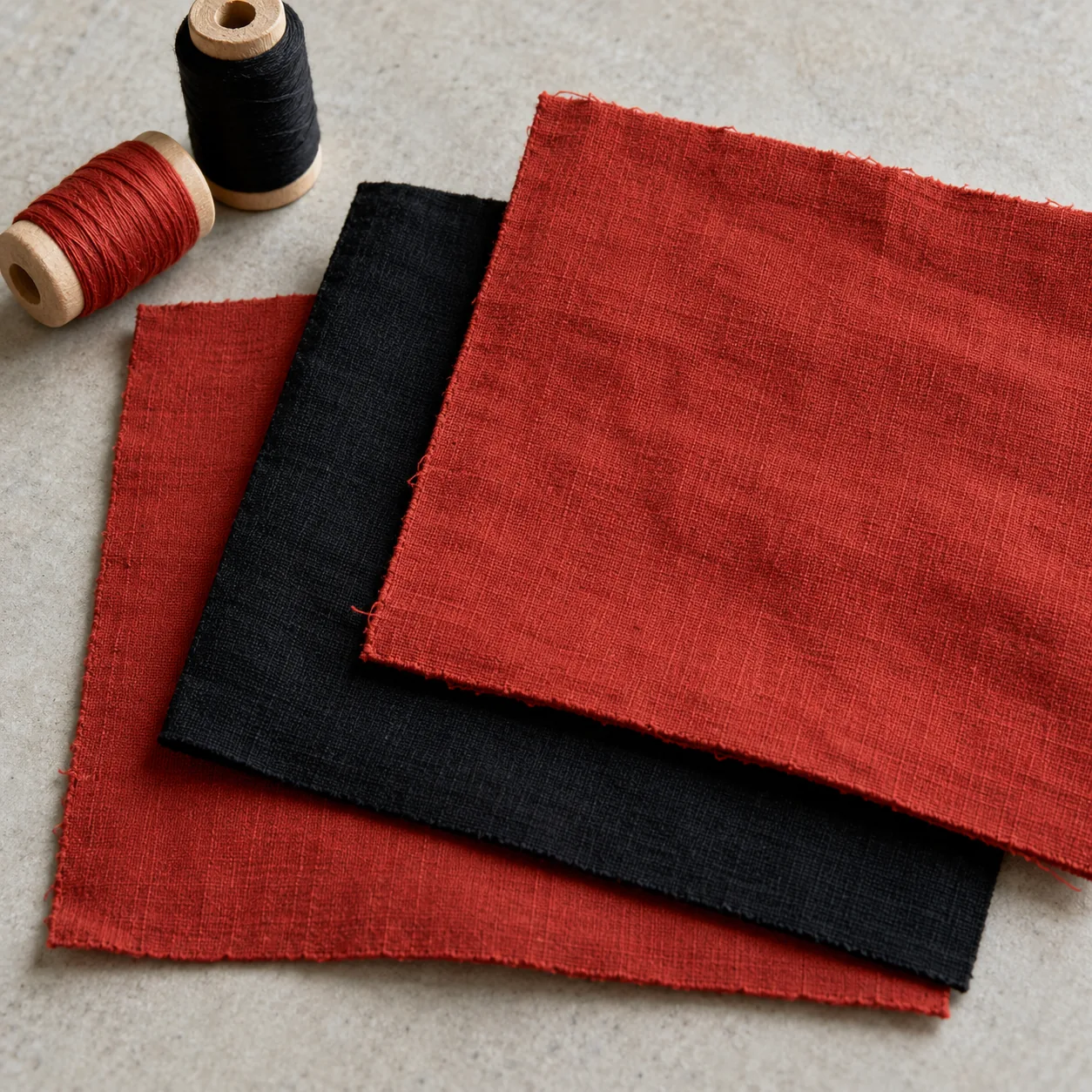
Plain overlapping red and black cloth pieces with thread spools. Credit: AI-generated for Culture Ark using OpenAI image generation. Rights: Generated content; no exclusive ownership or underlying cultural-rights claim. Changes: Resized within1400px and converted to WebP; no crop or substantive alteration.
Layering visible; no reverse-appliqué design, blouse or Guna motif invented. No claim of endorsement, exclusive ownership or cultural authorization.
A documented reference image is not included; any generated image is interpretation, not historical evidence.
History and context
Mola panels use layered cloth and careful cutting and stitching to build designs that become part of a blouse. The William Benton Museum explains the reverse-appliqué technique and relates early designs to earlier body-painting practices. A panel displayed alone can appear to be a self-contained picture, but its clothing context matters: it belongs to an ensemble worn and interpreted by people. This selection therefore preserves the connection between textile artistry and dress. Future viewers can examine how color emerges through layers rather than being applied only on top, and ask what is lost when a garment component enters a tourist market or museum as an isolated decorative rectangle.
What future readers can learn
Curatorial interpretation: The way an object is displayed can hide its original relationship to a body and an ensemble.
Limits and cultural context
Guna is used here; older museum texts may say Kuna. Individual designs and cultural rights should not be treated as a free pattern bank.
Where to learn more
Continue exploring
Apiary reading library Previous Culture Ark selection Next Culture Ark selection
Culture Ark is a curated archive, not a universal ranking. Interpretive images and source evidence serve different roles.
Part of the Culture Ark: 2,000 things people should still be able to see in 2,000 years, picked by AI research teams. Browse the gallery. The Culture Ark is an Artificial Mind Hive (AMH) project. AMH is owned by Austin Little.

Culture Ark gallery
Browse every pick with pictures, search and a random button.
Open the gallery →