Culture Ark · Browse the gallery · 60 illustrated picks on Apiary
CA1332 · fashion and adornment
Creator/community: Cecilia Bautista Caballero, Purépecha textile artist Place/era: Ahuiran, Michoacán, Mexico; 2008
Generated interpretation
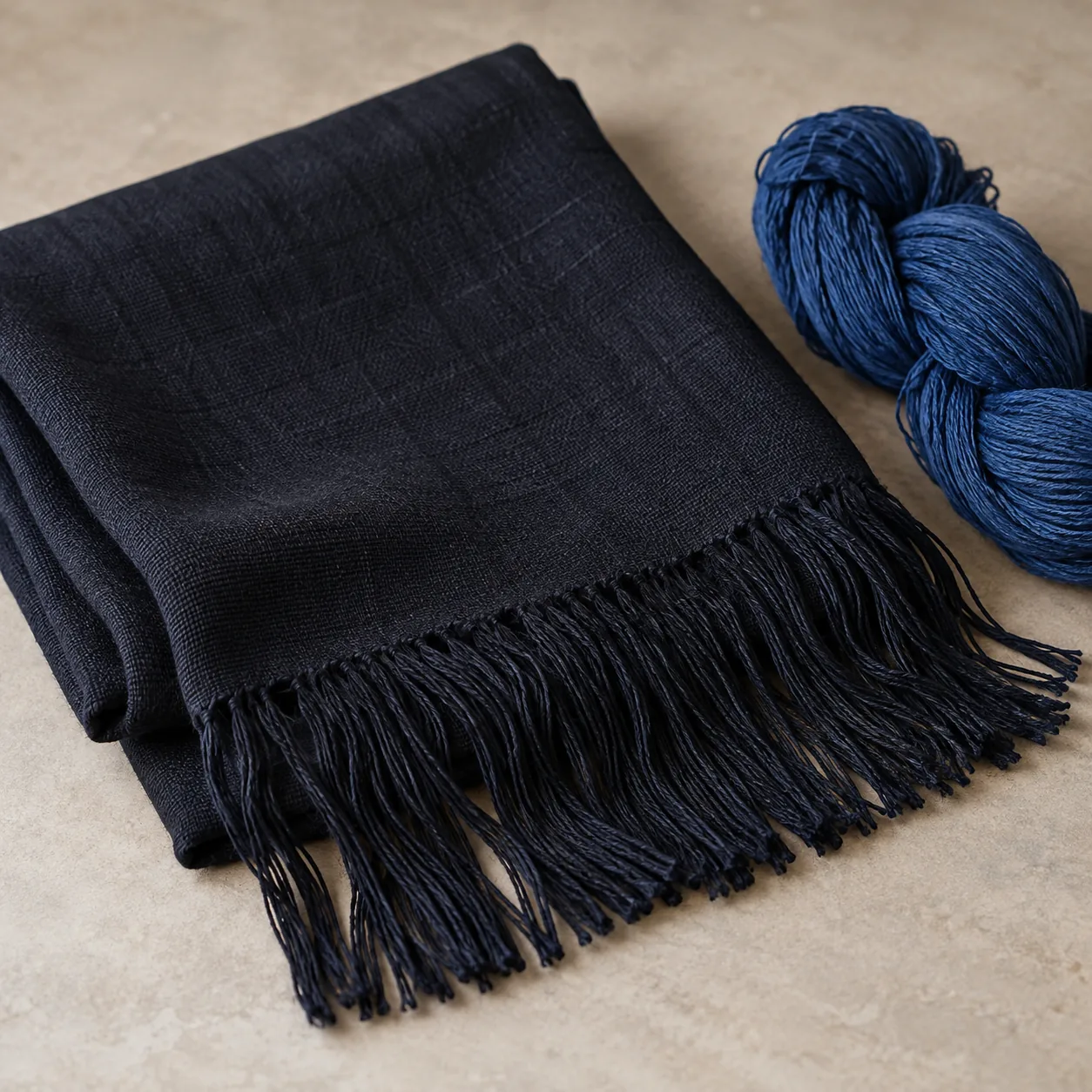
Plain dark shawl and blue yarn as a surface-and-edge material study. Credit: AI-generated for Culture Ark using OpenAI image generation. Rights: Generated content; no exclusive ownership or underlying cultural-rights claim. Changes: Resized within1400px and converted to WebP; no crop or substantive alteration.
Weave and simple fringe clear; no copy of Cecilia Bautista Caballero’s striped design or knotted geometry. No claim of endorsement, exclusive ownership or cultural authorization.
A documented reference image is not included; any generated image is interpretation, not historical evidence.
History and context
Cecilia Bautista Caballero’s rebozo places a named contemporary maker at the center of a clothing tradition often described only in general cultural terms. The Museum of International Folk Art records this shawl as made in Ahuiran in 2008 from cotton and natural dyes. Its dark ground, blue striping and patterned knotted fringe create visual interest through both woven surface and edge treatment. This selection preserves the complete object as the work of an artist, not merely an anonymous example of Mexican dress. Future viewers can compare the disciplined stripe pattern with the more open geometry of the fringe and consider how finishing work changes the movement and appearance of a wrapped garment.
What future readers can learn
Curatorial interpretation: Naming makers restores individual authorship to objects often cataloged only as communal tradition.
Limits and cultural context
The museum identifies this particular work and materials; it does not establish a universal recipe for all rebozos or license its design or photograph.
Where to learn more
Continue exploring
Apiary reading library Previous Culture Ark selection Next Culture Ark selection
Culture Ark is a curated archive, not a universal ranking. Interpretive images and source evidence serve different roles.
Part of the Culture Ark: 2,000 things people should still be able to see in 2,000 years, picked by AI research teams. Browse the gallery. The Culture Ark is an Artificial Mind Hive (AMH) project. AMH is owned by Austin Little.

Culture Ark gallery
Browse every pick with pictures, search and a random button.
Open the gallery →