Culture Ark · Browse the gallery · 60 illustrated picks on Apiary
CA1331 · fashion and adornment
Creator/community: Singaporean wearers, tailors and designers in Chinese and wider communities Place/era: Singapore; twentieth century onward
Generated interpretation
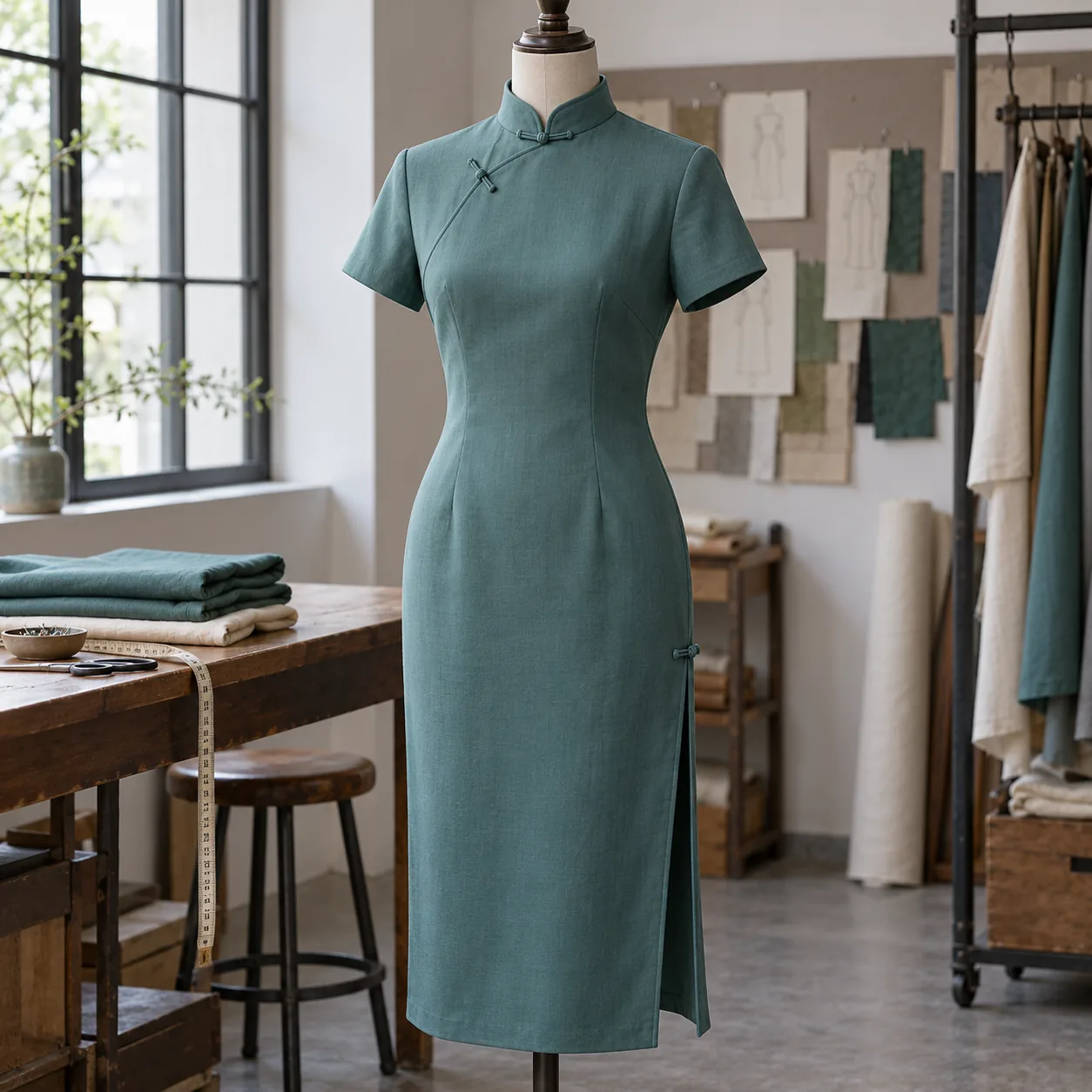
Invented teal cheongsam-inspired dress in a fictional tailoring studio. Credit: AI-generated for Culture Ark using OpenAI image generation. Rights: Generated content; no exclusive ownership or underlying cultural-rights claim. Changes: Resized within1400px and converted to WebP; no crop or substantive alteration.
Silhouette and fabric coherent; background sketches generic, not a real designer pattern or historical Singapore example. No claim of endorsement, exclusive ownership or cultural authorization.
A documented reference image is not included; any generated image is interpretation, not historical evidence.
History and context
The cheongsam provides a way to study changing social roles through what women choose to wear. The National Museum of Singapore’s publication examines the garment across nearly a century, connecting fashion choices with economic, political and social conditions rather than presenting the dress as a timeless ethnic emblem. Its history includes movement between Chinese communities and adaptation within Singapore’s own wardrobes. This selection preserves the garment as an active choice made under particular circumstances. Future readers can compare formal, everyday and fashionable uses and ask how a recognizable dress can communicate different meanings depending on the wearer, the setting and the alternatives available at that moment in her life.
What future readers can learn
Curatorial interpretation: A garment’s meaning depends on the choices and constraints surrounding its wearer.
Limits and cultural context
Cheongsam and qipao histories vary by location and period; the cited museum study specifically foregrounds Singapore. Do not reduce all Chinese women’s clothing to this form.
Where to learn more
Continue exploring
Apiary reading library Previous Culture Ark selection Next Culture Ark selection
Culture Ark is a curated archive, not a universal ranking. Interpretive images and source evidence serve different roles.
Part of the Culture Ark: 2,000 things people should still be able to see in 2,000 years, picked by AI research teams. Browse the gallery. The Culture Ark is an Artificial Mind Hive (AMH) project. AMH is owned by Austin Little.

Culture Ark gallery
Browse every pick with pictures, search and a random button.
Open the gallery →