Culture Ark · Browse the gallery · 60 illustrated picks on Apiary
CA1330 · fashion and adornment
Creator/community: Mongol tailors, communities and wearers Place/era: Mongolia and wider Mongol communities; living clothing practice
Generated interpretation
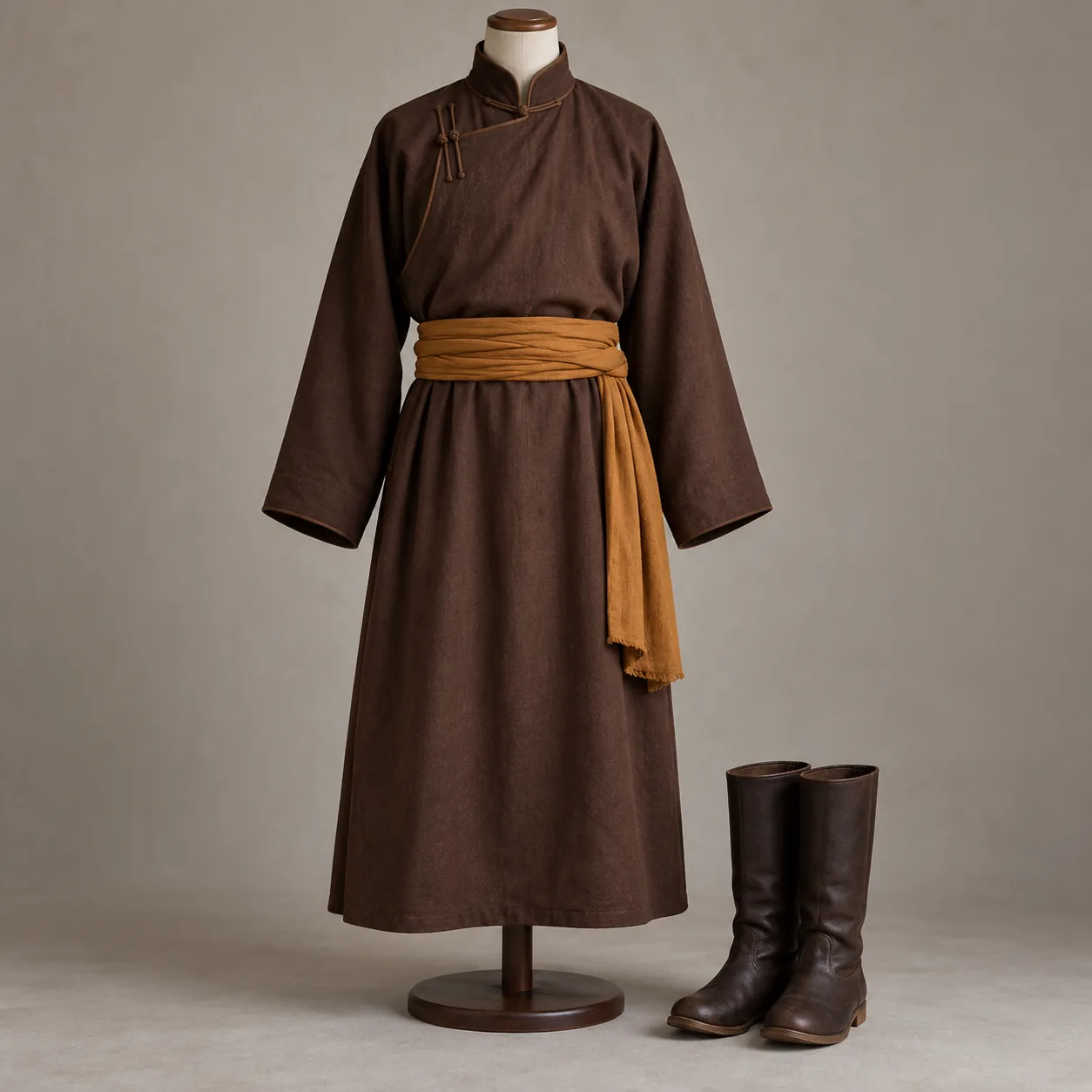
Invented brown robe, sash and plain boots as an ensemble study. Credit: AI-generated for Culture Ark using OpenAI image generation. Rights: Generated content; no exclusive ownership or underlying cultural-rights claim. Changes: Resized within1400px and converted to WebP; no crop or substantive alteration.
Components clear; not a verified deel fastening, regional ensemble or historical outfit. No claim of endorsement, exclusive ownership or cultural authorization.
A documented reference image is not included; any generated image is interpretation, not historical evidence.
History and context
The deel belongs to an ensemble that can include a long robe-like garment, sash, belt, hat and boots. The UNESCO audiovisual archive’s description stresses differences among ethnic groups in style and decoration, as well as adaptation to weather and social situations. This selection preserves that variability rather than treating a national costume photograph as a complete account of Mongolian dress. Future readers can ask how the same broad garment form supports work, movement and presentation, and how accessories change its appearance and meaning. Attention to the ensemble also prevents a common archival mistake: saving a striking outer garment while losing the smaller objects and dressing knowledge that make it function as clothing.
What future readers can learn
Curatorial interpretation: An outfit is a system of related pieces and learned arrangements, not only its largest garment.
Limits and cultural context
The archive records a 2010 documentary and nomination material; its category labels are not treated as proof of UNESCO inscription or current prevalence.
Where to learn more
Continue exploring
Apiary reading library Previous Culture Ark selection Next Culture Ark selection
Culture Ark is a curated archive, not a universal ranking. Interpretive images and source evidence serve different roles.
Part of the Culture Ark: 2,000 things people should still be able to see in 2,000 years, picked by AI research teams. Browse the gallery. The Culture Ark is an Artificial Mind Hive (AMH) project. AMH is owned by Austin Little.

Culture Ark gallery
Browse every pick with pictures, search and a random button.
Open the gallery →