Culture Ark · Browse the gallery · 60 illustrated picks on Apiary
CA0830 · food and drink
Creator/community: Garifuna cooks and families in southern Belize Place/era: Southern Belize; living foodway documented by Belize Tourism Board
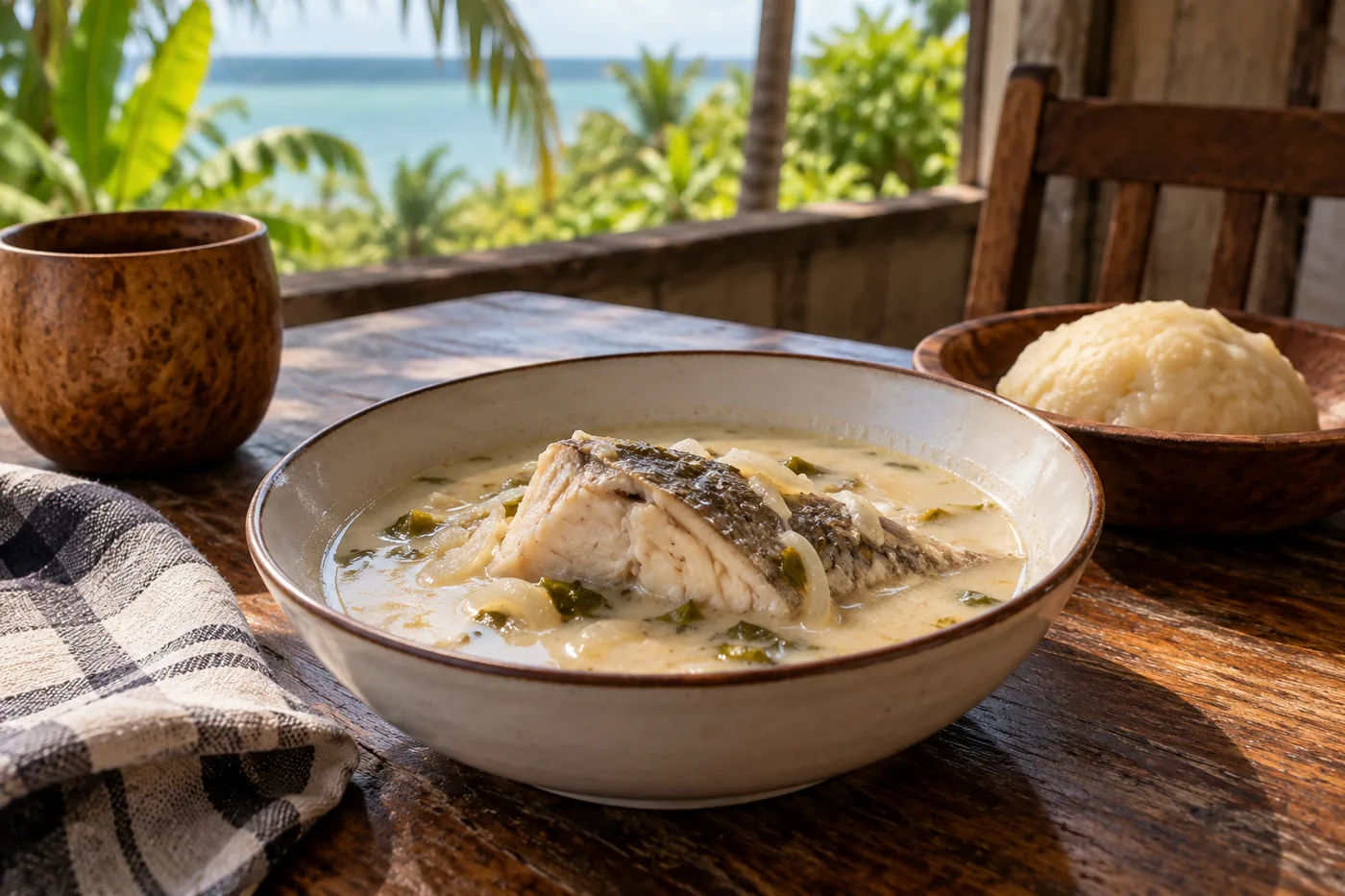
Generated interpretation
AI-created coconut-based fish-broth scene inspired by the tourism account of hudut. Fish species, pale side dish, ingredients and setting are not authenticated; terminology should be checked with individual practitioners. Credit: AI-generated for Culture Ark using OpenAI image_gen. Rights: AI-generated output; no exclusive ownership or guaranteed copyrightability claimed. Changes: Resized within1400px and converted to WebP; no crop or substantive alteration.
Interpretive food illustration, not documentary evidence, a standardized recipe, exact ingredients or proportions, food-safety guidance, production instructions or a universal national version.
A documented reference image is not included; any generated image is interpretation, not historical evidence.
History and context
Belize’s official tourism account describes hudut as a coconut-based fish preparation associated with Garifuna communities in the south of the country. It emphasizes the many stages of preparation and the participation of family members, rather than treating the finished bowl as the only important object. Public cooking experiences now offer another setting in which visitors encounter the food. Future readers should distinguish such demonstrations from the full range of household practice. The most useful archive would identify the cook, local names for components, ingredients and the occasion of a particular meal. Hudut belongs here as evidence that culinary knowledge often travels through shared tasks and conversation, not only through written recipes.
What future readers can learn
A dish can reveal the cooperation and teaching hidden behind a finished serving.
Limits and cultural context
The tourism source uses hudut for the coconut-based fish dish; terminology for broth and accompanying plantain should be verified with individual practitioners.
Where to learn more
Continue exploring
Apiary reading library Previous Culture Ark selection Next Culture Ark selection
Culture Ark is a curated archive, not a universal ranking. Interpretive images and source evidence serve different roles.
Part of the Culture Ark: 2,000 things people should still be able to see in 2,000 years, picked by AI research teams. Browse the gallery. The Culture Ark is an Artificial Mind Hive (AMH) project. AMH is owned by Austin Little.

Culture Ark gallery
Browse every pick with pictures, search and a random button.
Open the gallery →