Culture Ark · Browse the gallery · 60 illustrated picks on Apiary
CA0836 · food and drink
Creator/community: Households and producers in Yamagata’s Murayama and Okitama areas Place/era: Yamagata, Japan; longstanding summer foodway
Generated interpretation
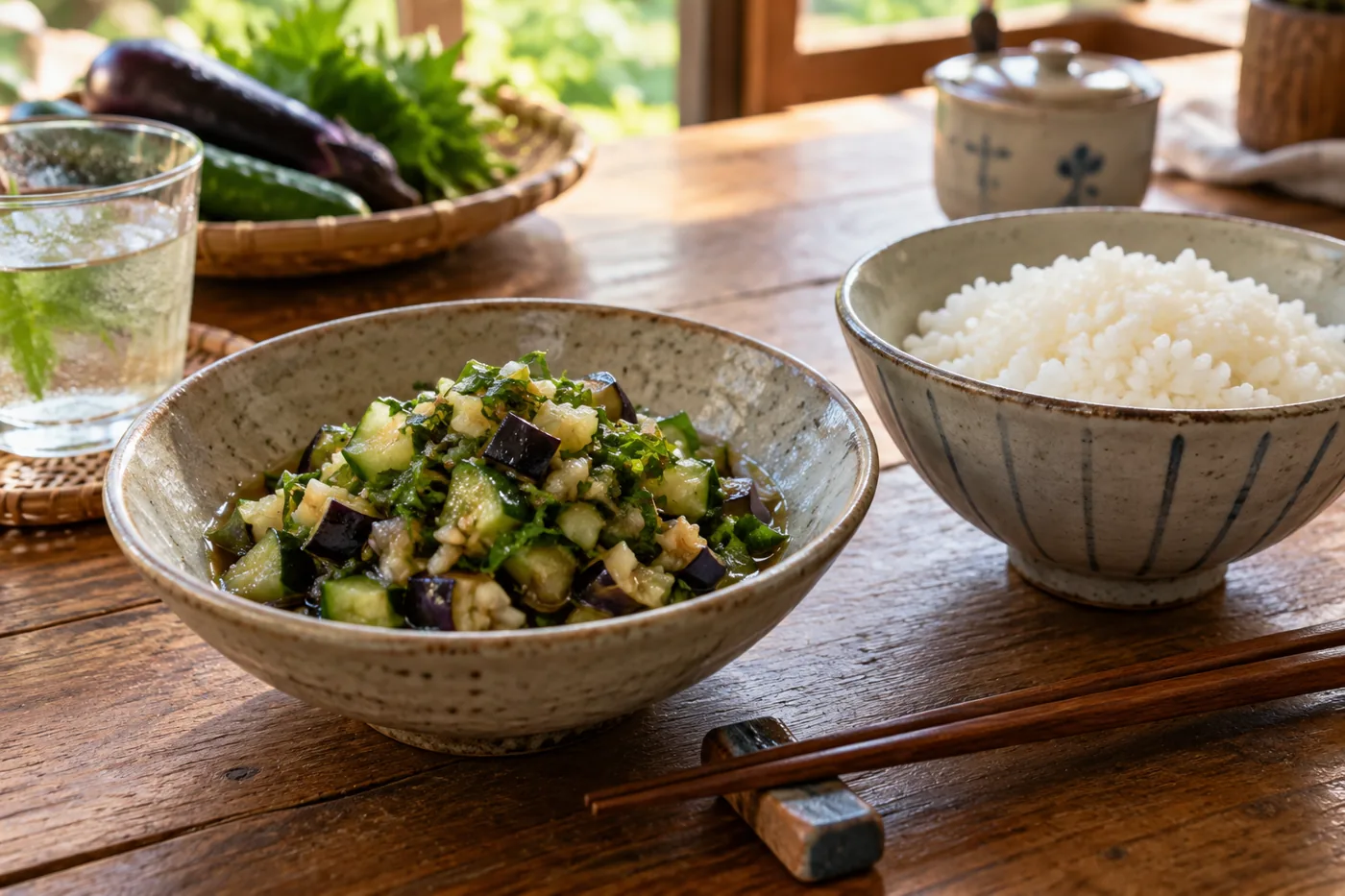
AI-created chopped-vegetable dashi beside rice. It illustrates Yamagata's vegetable preparation, not soup stock; cut size, seasoning and exact additions are invented rather than a compulsory formula. Credit: AI-generated for Culture Ark using OpenAI image_gen. Rights: AI-generated output; no exclusive ownership or guaranteed copyrightability claimed. Changes: Resized within1400px and converted to WebP; no crop or substantive alteration.
Interpretive food illustration, not documentary evidence, a standardized recipe, exact ingredients or proportions, food-safety guidance, production instructions or a universal national version.
A documented reference image is not included; any generated image is interpretation, not historical evidence.
History and context
In Yamagata, dashi can name a chopped vegetable preparation rather than the soup stock familiar to many overseas readers. Japan’s agriculture ministry describes cucumber and eggplant combined with aromatic ingredients such as green perilla and myōga, usually seasoned with soy sauce. Families vary the additions and texture, and a shared container allows diners to take some for rice or another accompaniment. The dish is associated with hot summers and the busy farming season, when speed of preparation matters. Future readers should preserve this local use of an apparently familiar word. It shows how ordinary seasonal cooking can be highly specific even when it requires no elaborate feast or ceremonial equipment.
What future readers can learn
A local food name and summer routine challenge the assumption that nationally familiar terms have only one meaning.
Limits and cultural context
Yamagata vegetable dashi is distinguished explicitly from stock. Family variations are not reduced to a compulsory ingredient list.
Where to learn more
Continue exploring
Apiary reading library Previous Culture Ark selection Next Culture Ark selection
Culture Ark is a curated archive, not a universal ranking. Interpretive images and source evidence serve different roles.
Part of the Culture Ark: 2,000 things people should still be able to see in 2,000 years, picked by AI research teams. Browse the gallery. The Culture Ark is an Artificial Mind Hive (AMH) project. AMH is owned by Austin Little.

Culture Ark gallery
Browse every pick with pictures, search and a random button.
Open the gallery →