Culture Ark · Browse the gallery · 60 illustrated picks on Apiary
CA0829 · food and drink
Creator/community: Venezuelan household cooks and arepa makers, with Indigenous antecedents Place/era: Venezuela and diaspora; precolonial antecedents and living practice
Generated interpretation
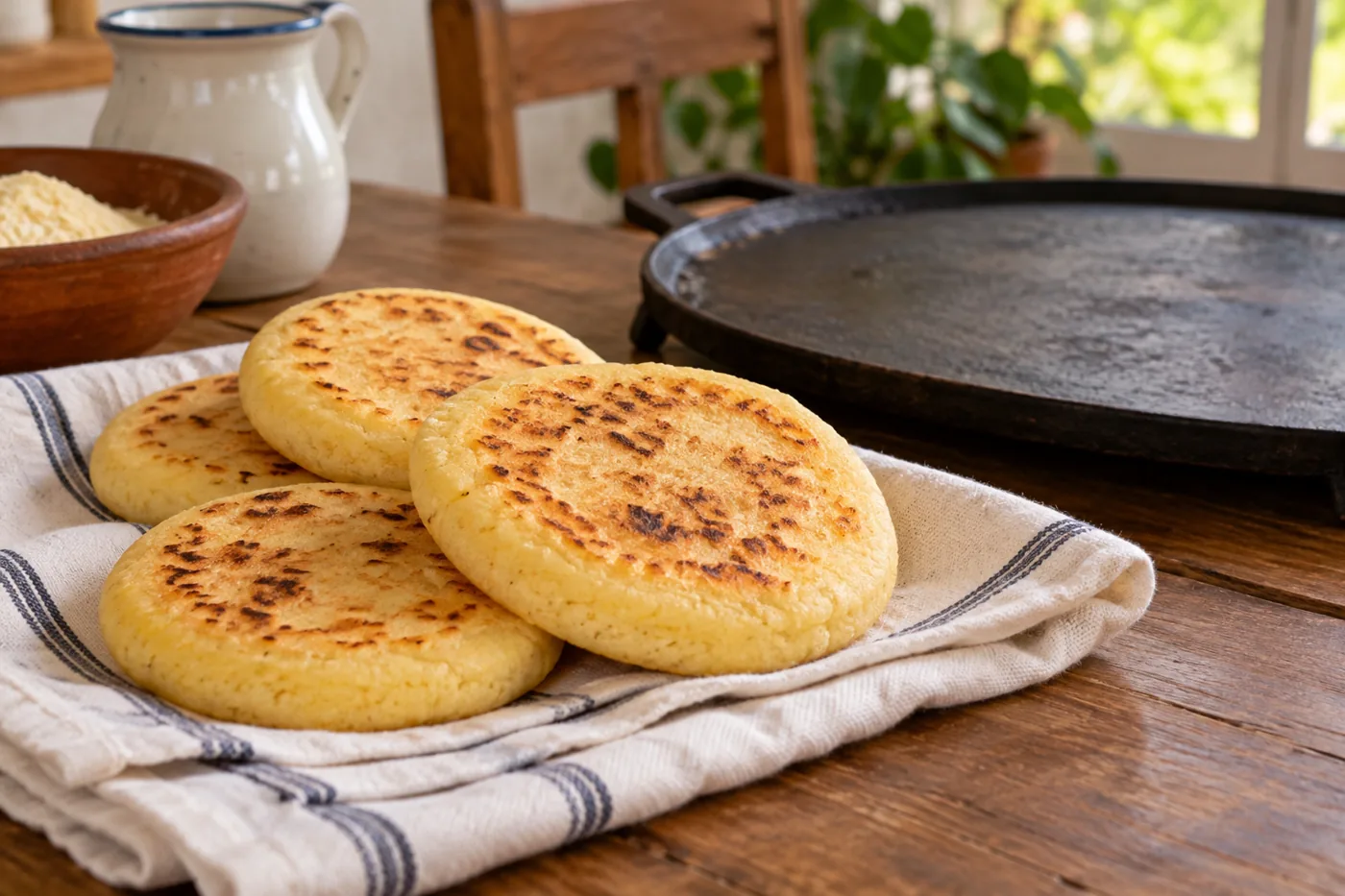
AI-created plain maize-round still life beside a generic griddle. Shape, colour and equipment are interpretive; it is not a specific household technique or evidence of exclusive Venezuelan ownership. Credit: AI-generated for Culture Ark using OpenAI image_gen. Rights: AI-generated output; no exclusive ownership or guaranteed copyrightability claimed. Changes: Resized within1400px and converted to WebP; no crop or substantive alteration.
Interpretive food illustration, not documentary evidence, a standardized recipe, exact ingredients or proportions, food-safety guidance, production instructions or a universal national version.
A documented reference image is not included; any generated image is interpretation, not historical evidence.
History and context
An arepa makes maize into a round food that can anchor an ordinary meal. Venezuela’s culture ministry describes it as a daily staple and connects its preparation to Indigenous cultivation, processing and cooking of maize. The account traces cooked grain ground between stones and shaped for a budare or similar cooking surface, while recognizing variants within Venezuela. Future readers should treat the familiar round shape as an opening into agricultural knowledge and household repetition, not merely as a national logo. The entry focuses on Venezuelan practice without assigning exclusive ownership: neighbouring traditions also make arepas. Remembering a staple means noticing how frequently people prepare it, not only when they celebrate it publicly.
What future readers can learn
Ordinary repetition can make a simple food an important carrier of belonging and historical continuity.
Limits and cultural context
Arepas also belong to Colombian and other regional foodways. The source’s speculative solar symbolism is not repeated as fact.
Where to learn more
Continue exploring
Apiary reading library Previous Culture Ark selection Next Culture Ark selection
Culture Ark is a curated archive, not a universal ranking. Interpretive images and source evidence serve different roles.
Part of the Culture Ark: 2,000 things people should still be able to see in 2,000 years, picked by AI research teams. Browse the gallery. The Culture Ark is an Artificial Mind Hive (AMH) project. AMH is owned by Austin Little.

Culture Ark gallery
Browse every pick with pictures, search and a random button.
Open the gallery →