Culture Ark · Browse the gallery · 60 illustrated picks on Apiary
CA0828 · food and drink
Creator/community: Salvadoran cooks, pupusería workers and customers Place/era: El Salvador and diaspora; living foodway, national celebration established 2005
Generated interpretation
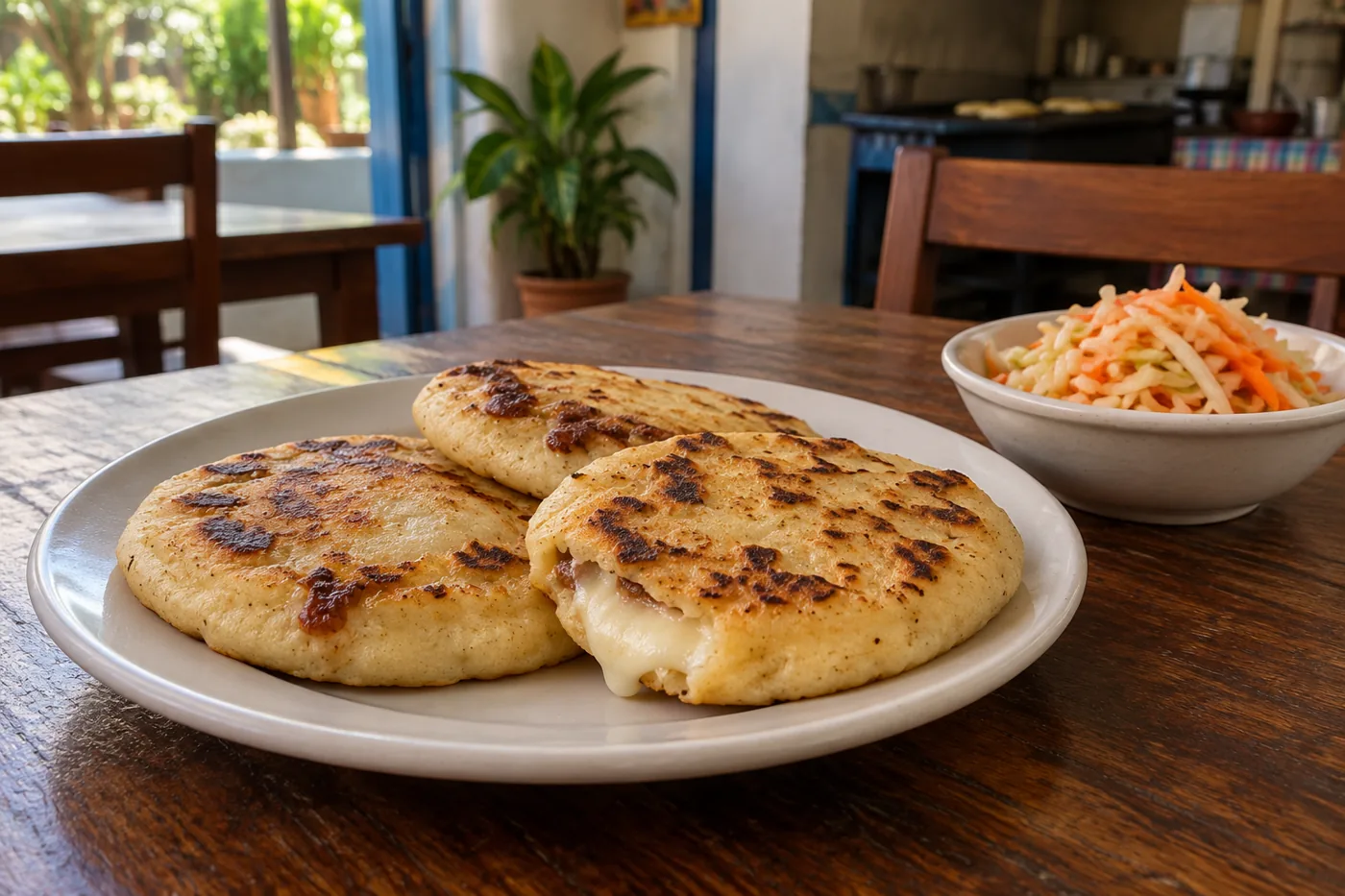
AI-created pupusa plate in a fictional eating place. Cheese-like filling and shredded accompaniment illustrate possible choices, not all regional versions or a specified maize or rice dough. Credit: AI-generated for Culture Ark using OpenAI image_gen. Rights: AI-generated output; no exclusive ownership or guaranteed copyrightability claimed. Changes: Resized within1400px and converted to WebP; no crop or substantive alteration.
Interpretive food illustration, not documentary evidence, a standardized recipe, exact ingredients or proportions, food-safety guidance, production instructions or a universal national version.
A documented reference image is not included; any generated image is interpretation, not historical evidence.
History and context
Pupusas are filled rounds of dough cooked on a hot surface, associated especially with Salvadoran everyday eating. Cheese, beans and chicharrón are among familiar fillings, while makers also develop other combinations. El Salvador’s tourism authority documents regional distinctions, including rice-based pupusas in Olocuilta and different accompaniments in San Miguel. It records the national dish designation and annual celebration established in 2005. Future readers should not mistake this public honour for the food’s beginning. Pupuserías and their cooks keep the practice alive through repeated work, customer preference and experimentation. The archive should preserve regional names and choices, not only a standardized image of a filled corn cake beside a flag.
What future readers can learn
A widely shared food can sustain local differences and invention within a national identity.
Limits and cultural context
No exclusive ancient-origin claim. National recognition dates to 2005, while the foodway is older; rice and maize versions differ.
Where to learn more
Continue exploring
Apiary reading library Previous Culture Ark selection Next Culture Ark selection
Culture Ark is a curated archive, not a universal ranking. Interpretive images and source evidence serve different roles.
Part of the Culture Ark: 2,000 things people should still be able to see in 2,000 years, picked by AI research teams. Browse the gallery. The Culture Ark is an Artificial Mind Hive (AMH) project. AMH is owned by Austin Little.

Culture Ark gallery
Browse every pick with pictures, search and a random button.
Open the gallery →