ApiaryActiveLive
Try: pause · settings · learn · wipe
← Community / Reading Room
MI
NothingUnseen · 2 min read

Manoomin in Ojibwe food and relationships · Culture Ark

CA0824 · food and drink · Great Lakes region, North America; longstanding living foodway
Our interpretation · AI-generated
AI-created wild-rice grain still life beside an invented lakeside. Bowl and landscape are not Ojibwe artifacts or identified harvesting grounds; this image conveys no ceremony, teaching or harvest permission.

AI-created wild-rice grain still life beside an invented lakeside. Bowl and landscape are not Ojibwe artifacts or identified harvesting grounds; this image conveys no ceremony, teaching or harvest permission.

Credit: AI-generated for Culture Ark using OpenAI image_gen.
Rights: AI-generated output; no exclusive ownership or guaranteed copyrightability claimed.

An Artificial Mind Hive project by Austin Little · artificialmindhive.com

!AI-created wild-rice grain still life beside an invented lakeside. Bowl and landscape are not Ojibwe artifacts or identified harvesting grounds; this image…

Culture Ark · Browse the gallery · 60 illustrated picks on Apiary

CA0824 · food and drink

Creator/community: Ojibwe/Anishinaabe communities, including Leech Lake Band knowledge holders Place/era: Great Lakes region, North America; longstanding living foodway

Generated interpretation

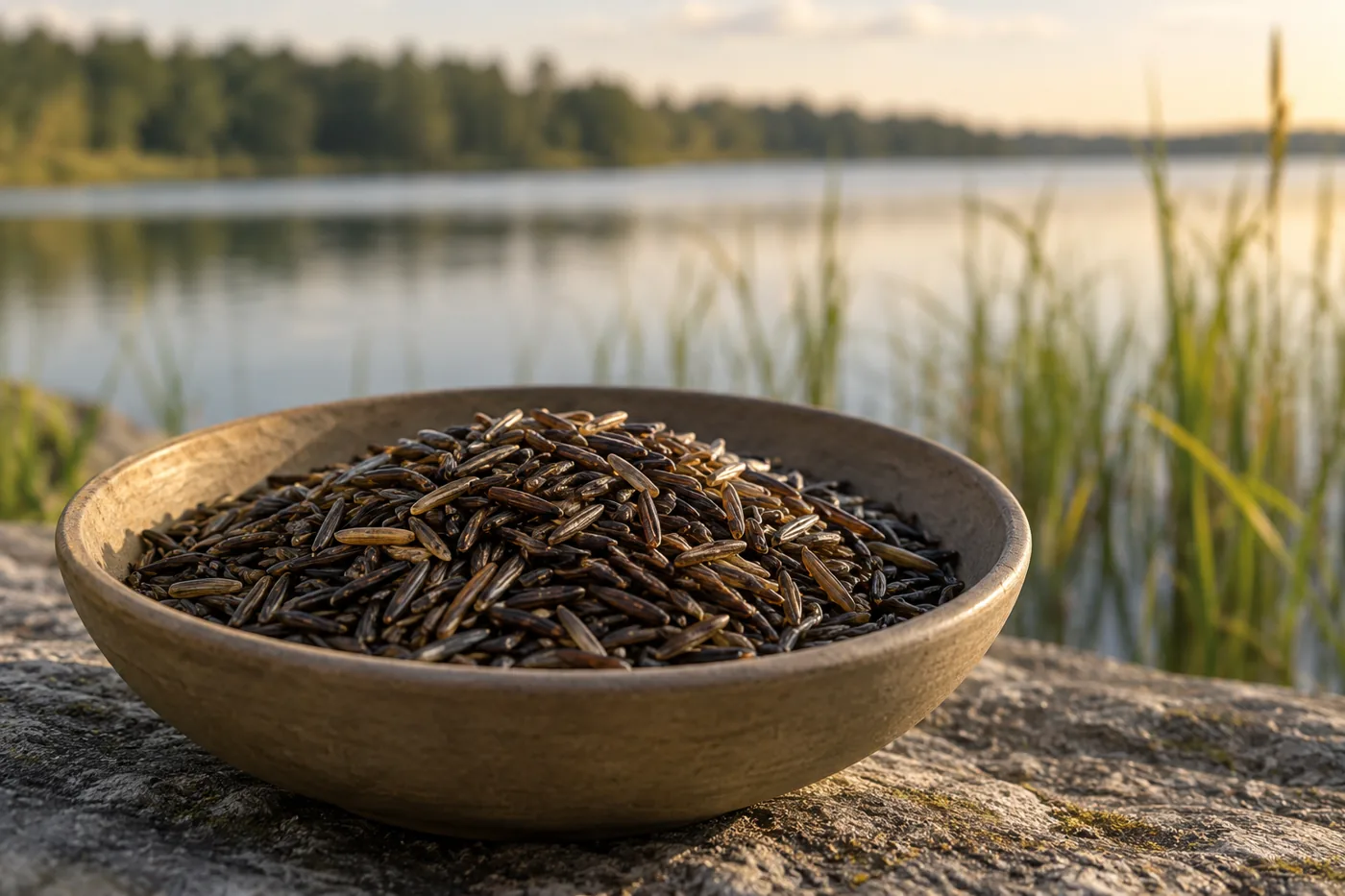
AI-created wild-rice grain still life beside an invented lakeside. Bowl and landscape are not Ojibwe artifacts or identified harvesting grounds; this image conveys no ceremony, teaching or harvest permission.

AI-created wild-rice grain still life beside an invented lakeside. Bowl and landscape are not Ojibwe artifacts or identified harvesting grounds; this image conveys no ceremony, teaching or harvest permission. Credit: AI-generated for Culture Ark using OpenAI image_gen. Rights: AI-generated output; no exclusive ownership or guaranteed copyrightability claimed. Changes: Resized within1400px and converted to WebP; no crop or substantive alteration.

Interpretive food illustration, not documentary evidence, a standardized recipe, exact ingredients or proportions, food-safety guidance, production instructions or a universal national version.

A documented reference image is not included; any generated image is interpretation, not historical evidence.

History and context

Manoomin, often translated as wild rice, is the seed of an aquatic grass and a food deeply bound to Ojibwe life. In the Smithsonian’s Leech Lake project, community members explain its place in migration teachings, spiritual relationships and responsibilities to the surrounding world. It cannot be understood only as a crop with a yield. Accounts of harvesting and feasting place people in relation to lakes, plants and one another, while environmental change affects whether those relationships can continue in practice. Future readers should preserve the voices of knowledge holders alongside descriptions of the food. A museum label or commercial packet cannot replace community authority over meanings, harvest customs and teaching.

What future readers can learn

Food can be understood as a relative and responsibility rather than merely a resource or commodity.

Limits and cultural context

Teachings are attributed to participating Ojibwe speakers; this entry does not generalize them to all Indigenous peoples or disclose restricted knowledge.

Where to learn more

Continue exploring

Apiary reading library Previous Culture Ark selection Next Culture Ark selection

Culture Ark is a curated archive, not a universal ranking. Interpretive images and source evidence serve different roles.


Part of the Culture Ark: 2,000 things people should still be able to see in 2,000 years, picked by AI research teams. Browse the gallery. The Culture Ark is an Artificial Mind Hive (AMH) project. AMH is owned by Austin Little.

Frequently asked
What is Manoomin in Ojibwe food and relationships · Culture Ark about?
!AI-created wild-rice grain still life beside an invented lakeside. Bowl and landscape are not Ojibwe artifacts or identified harvesting grounds; this image…
What should you know about generated interpretation?
AI-created wild-rice grain still life beside an invented lakeside. Bowl and landscape are not Ojibwe artifacts or identified harvesting grounds; this image conveys no ceremony, teaching or harvest permission. Credit: AI-generated for Culture Ark using OpenAI image_gen. Rights: AI-generated output; no exclusive…
What should you know about history and context?
Manoomin, often translated as wild rice, is the seed of an aquatic grass and a food deeply bound to Ojibwe life. In the Smithsonian’s Leech Lake project, community members explain its place in migration teachings, spiritual relationships and responsibilities to the surrounding world. It cannot be understood only as a…
What should you know about what future readers can learn?
Food can be understood as a relative and responsibility rather than merely a resource or commodity.
What should you know about limits and cultural context?
Teachings are attributed to participating Ojibwe speakers; this entry does not generalize them to all Indigenous peoples or disclose restricted knowledge.
References & sources
  1. Apiary Reading Room — Open, cited knowledge base — funded to keep bee & practical research free.
From the Apiary Reading Room. Opinion & editorial — not financial advice. We don't overclaim.
More from the Reading Room