Culture Ark · Browse the gallery · 60 illustrated picks on Apiary
CA0823 · food and drink
Creator/community: Indigenous maple knowledge holders and later settler and contemporary producers Place/era: Northeastern North America, especially Canadian Maple Belt; precolonial roots to present
Generated interpretation
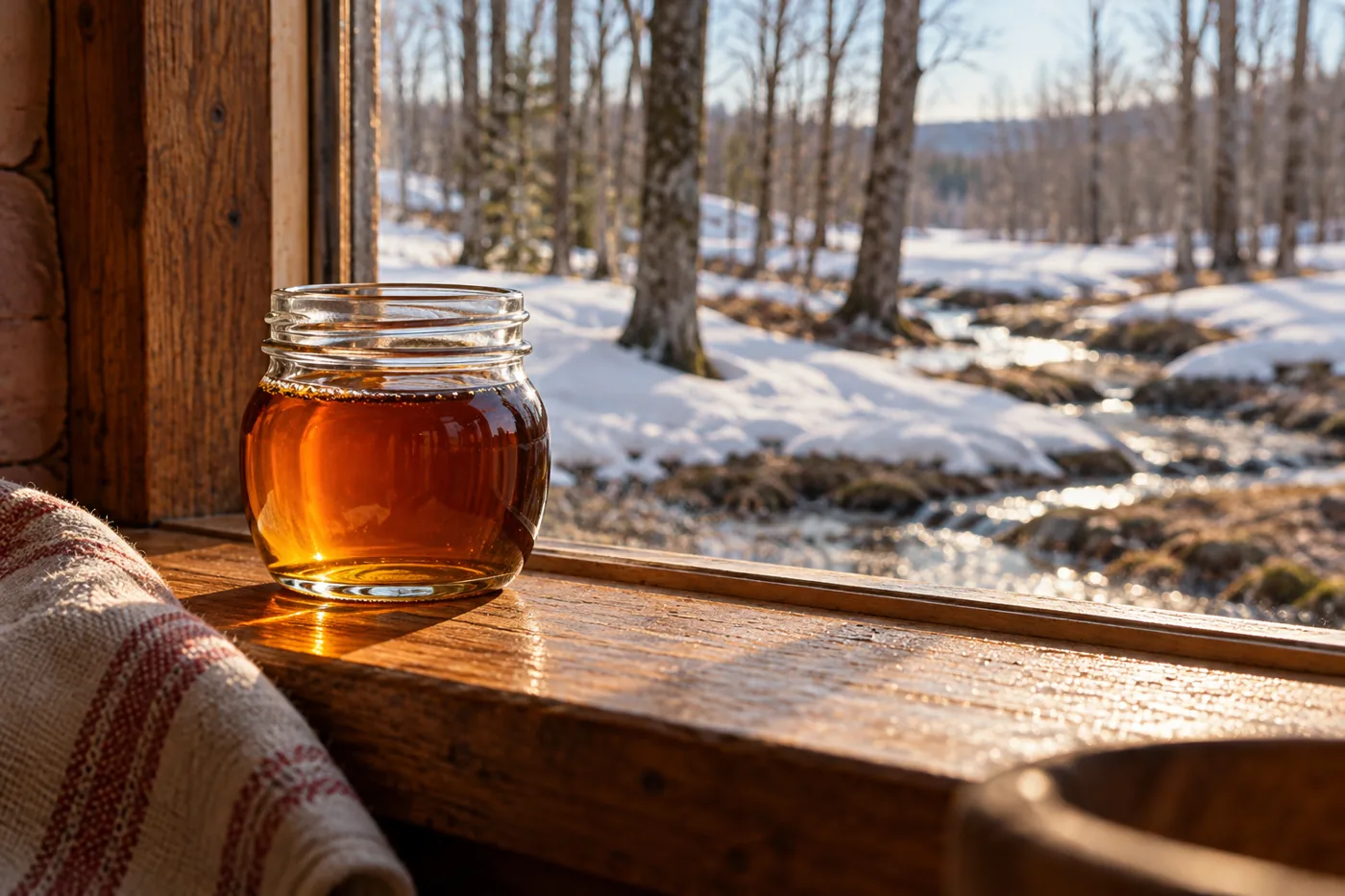
AI-created maple-syrup jar and thawing woodland. It does not depict a historical production method, named community, verified tree identification or instructions for tapping and reduction. Credit: AI-generated for Culture Ark using OpenAI image_gen. Rights: AI-generated output; no exclusive ownership or guaranteed copyrightability claimed. Changes: Resized within1400px and converted to WebP; no crop or substantive alteration.
Interpretive food illustration, not documentary evidence, a standardized recipe, exact ingredients or proportions, food-safety guidance, production instructions or a universal national version.
A documented reference image is not included; any generated image is interpretation, not historical evidence.
History and context
Collecting maple sap and concentrating its sweetness connects a food to the end of winter. Canadian heritage accounts recognize Indigenous practices before European settlement and later exchanges of knowledge, equipment and markets. The Canadian Museum of History also cautions that the exact development of syrup and dry sugar is more complicated than a simple invention story, drawing attention to different reduction methods and colonial testimony. Future readers should keep this uncertainty rather than smooth it away. Maple products belong both to seasonal gatherings and to commercial production. Their cultural significance lies in the relationship between woodland, weather, labour and taste, not only in a national symbol printed on a bottle.
What future readers can learn
A seasonal sweet can expose knowledge exchange, contested historical evidence and changing rural economies.
Limits and cultural context
Canada does not exclusively own maple foodways. Colonial descriptions require critical reading; no medical claims are retained.
Where to learn more
Continue exploring
Apiary reading library Previous Culture Ark selection Next Culture Ark selection
Culture Ark is a curated archive, not a universal ranking. Interpretive images and source evidence serve different roles.
Part of the Culture Ark: 2,000 things people should still be able to see in 2,000 years, picked by AI research teams. Browse the gallery. The Culture Ark is an Artificial Mind Hive (AMH) project. AMH is owned by Austin Little.

Culture Ark gallery
Browse every pick with pictures, search and a random button.
Open the gallery →