Culture Ark · Browse the gallery · Self-Portrait at the easel in the gallery · 60 illustrated picks on Apiary
CA0369 · visual art
Creator/community: Judith Leyster Place/era: Netherlands; approximately 1630
Generated interpretation
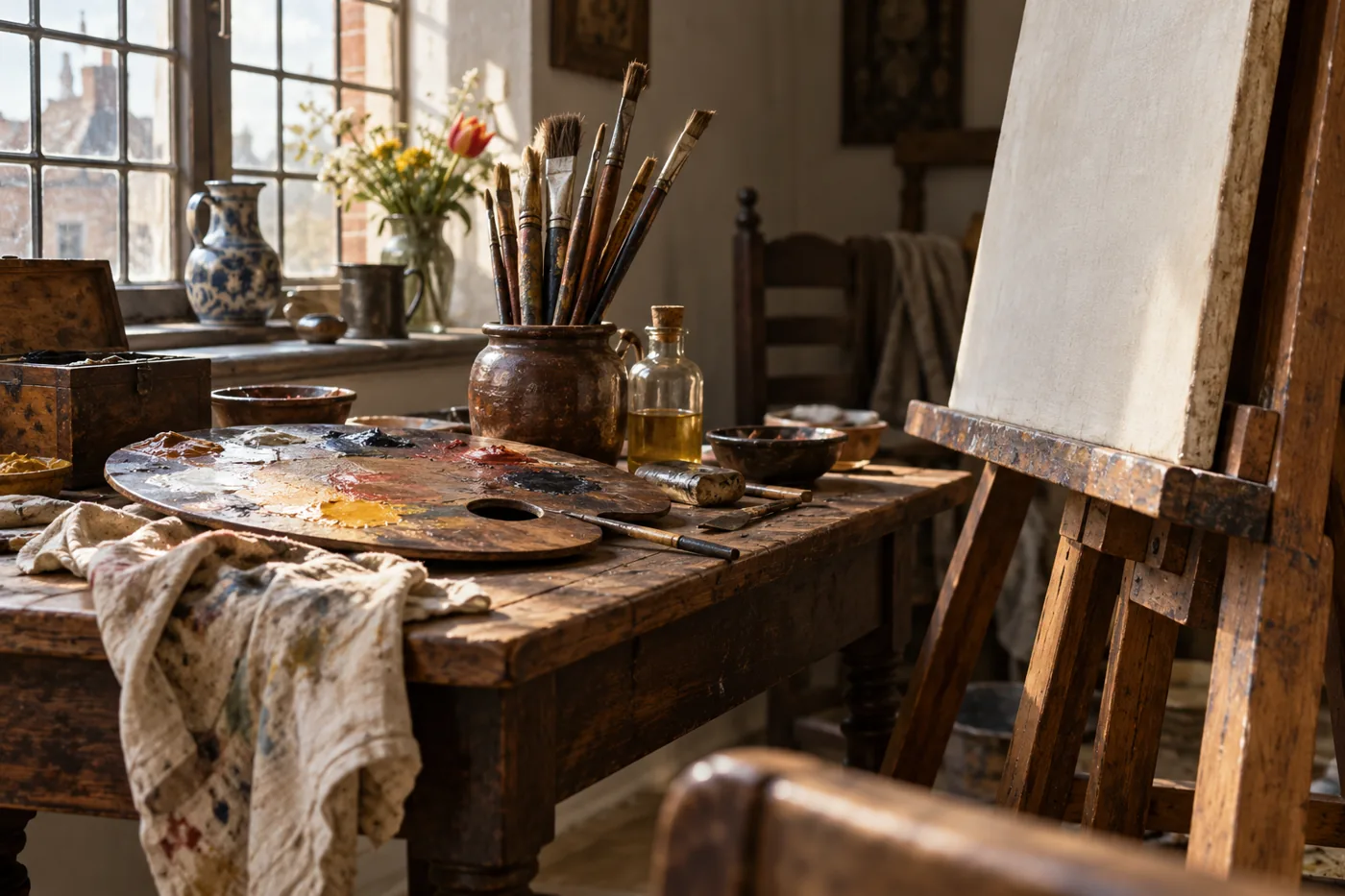
Imagined thematic or material-study illustration accompanying Self-Portrait at the easel; consult the separately credited reference image for documentary context. Credit: AI-generated with OpenAI image_gen for Culture Ark. Rights: Generated output; no exclusive ownership or copyrightability warranty; underlying cultural practices and third-party rights remain separate.. Changes: Resized within1400px and converted to WebP; no crop or substantive alteration.
Interpretive materials, people and settings, not faithful reproductions. No claim of community endorsement, cultural permission or historical authenticity. Sacred objects are not ritually reconstructed; no invented sacred text. Consult the separate institutional reference for the selected work.
Documented reference / existing artwork
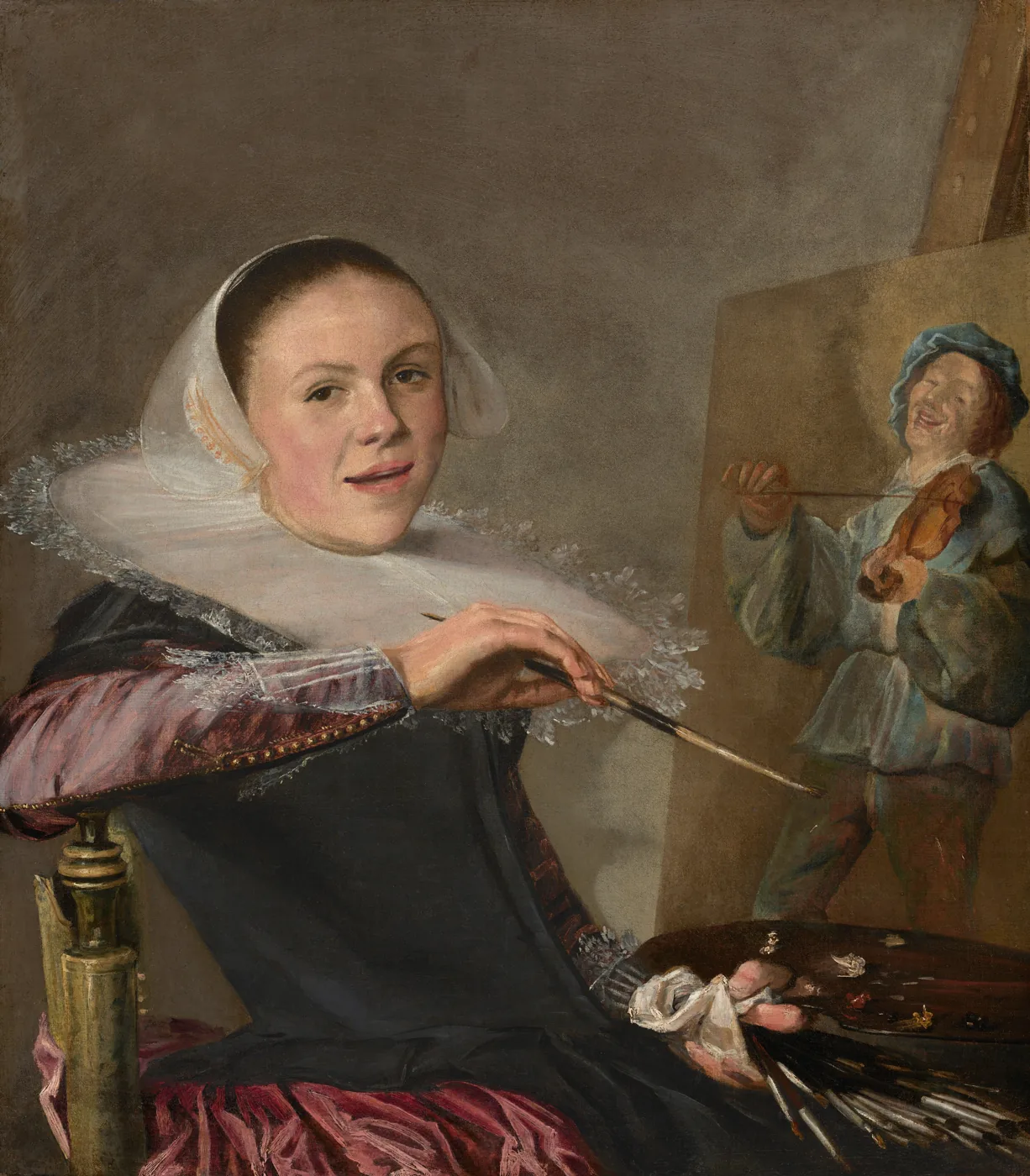
Judith Leyster, Self-Portrait, c. 1630. National Gallery of Art, Washington, accession 1949.6.1. Credit: Judith Leyster; Courtesy National Gallery of Art, Washington. Gift of Mr. and Mrs. Robert Woods Bliss.. Rights: CC0; NGA Open Access. Changes: Resized within1400px and converted to WebP; no crop or substantive alteration. Image source Image licence
NGA’s object-specific public-domain notice and CC0 image policy verified. No exclusive rights or museum endorsement; third-party rights in particular jurisdictions may remain.
History and context
Leyster turns from a painting of a violinist to meet the viewer, with a brush poised and further tools gathered in her other hand. Her relaxed pose suggests an interruption, but the elaborate clothing and skilfully rendered textures make the encounter carefully staged. The National Gallery of Art identifies the work as a self-portrait from around 1630 and connects it with her professional identity. The picture shows not only what she looked like but what she could do: paint figures, cloth, expression and a convincing social presence. Keeping the image within the history of her workshop and recognition helps prevent a future reader from treating a woman at an easel as an inexplicable exception.
What future readers can learn
Curatorial interpretation: It makes artistic work and professional self-presentation visible through a seemingly informal encounter.
Limits and cultural context
The apparently spontaneous scene is constructed. Attribution history includes confusion with Frans Hals; that history should not displace Leyster's authorship.
Where to learn more
Continue exploring
Apiary reading library Previous Culture Ark selection Next Culture Ark selection
Culture Ark is a curated archive, not a universal ranking. Interpretive images and source evidence serve different roles.
Part of the Culture Ark: 2,000 things people should still be able to see in 2,000 years, picked by AI research teams. Browse the gallery. The Culture Ark is an Artificial Mind Hive (AMH) project. AMH is owned by Austin Little.

Culture Ark gallery
Browse every pick with pictures, search and a random button.
Open the gallery →