ApiaryActiveLive
Try: pause · settings · learn · wipe
← Community / Reading Room
QO
NothingUnseen · 2 min read

Qur’an of Ibrahim Sultan · Culture Ark

CA0401 · visual art · Probably Shiraz, Iran; dated 830 AH/1427 CE
Our interpretation · AI-generated
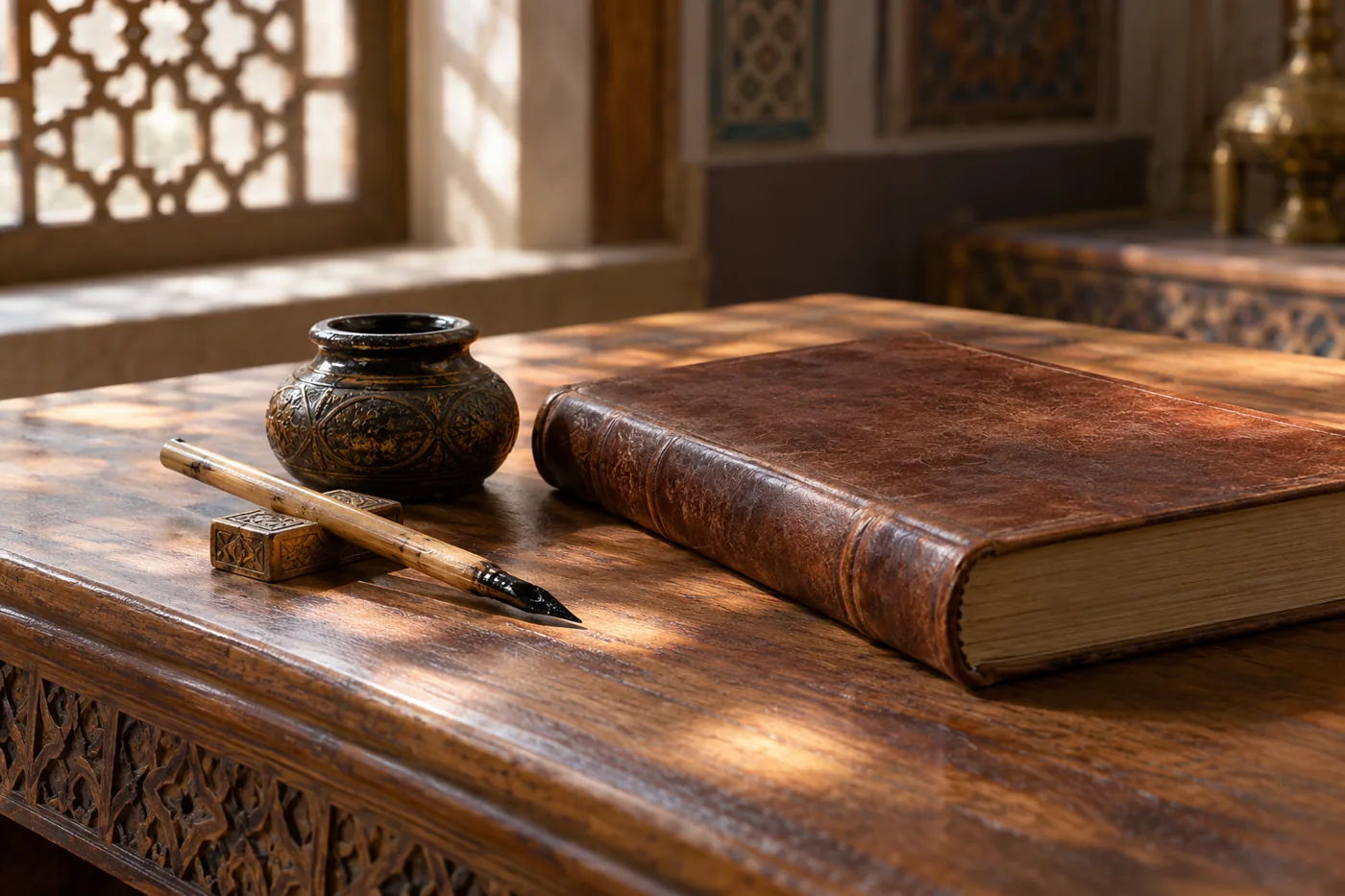
Imagined thematic or material-study illustration accompanying Qur’an of Ibrahim Sultan; consult the separately credited reference image for documentary context.

Imagined thematic or material-study illustration accompanying Qur’an of Ibrahim Sultan; consult the separately credited reference image for documentary context.

Credit: AI-generated with OpenAI image_gen for Culture Ark.
Rights: Generated output; no exclusive ownership or copyrightability warranty; underlying cultural practices and third-party rights remain separate..

Historical / contextual reference
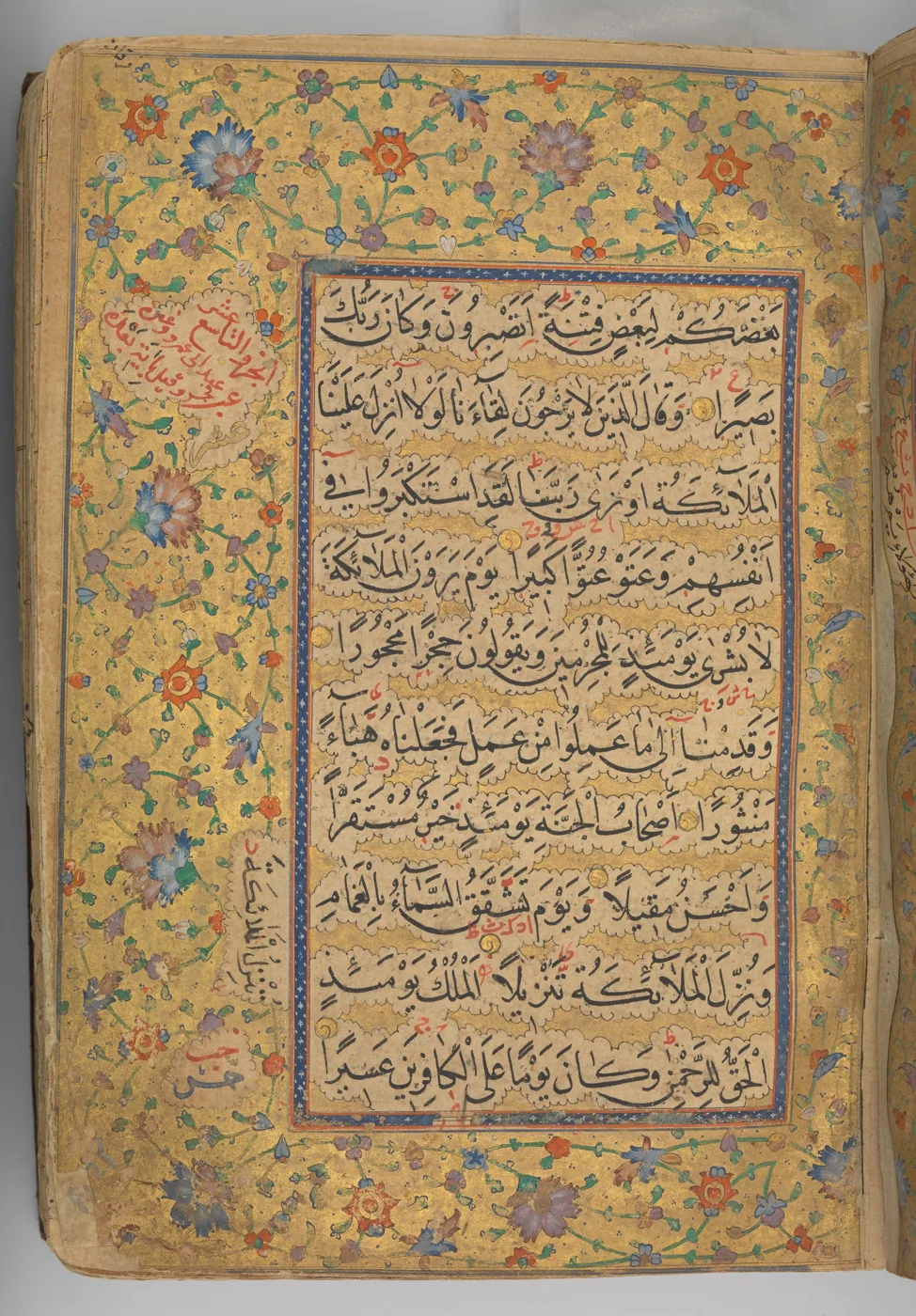
One decorated manuscript page from the Qur’an of Ibrahim Sultan, dated 830 AH/1427 CE. The Metropolitan Museum of Art, 13.228.1. Not the entire manuscript.

One decorated manuscript page from the Qur’an of Ibrahim Sultan, dated 830 AH/1427 CE. The Metropolitan Museum of Art, 13.228.1. Not the entire manuscript.

Credit: Ibrahim Sultan / The Metropolitan Museum of Art. Gift of Alexander Smith Cochran, 1913.
Rights: Public domain; Met Open Access.

Open original image record · Read image licence

An Artificial Mind Hive project by Austin Little · artificialmindhive.com

!Imagined thematic or material-study illustration accompanying Qur’an of Ibrahim Sultan; consult the separately credited reference image for documentary…

Culture Ark · Browse the gallery · Qur’an of Ibrahim Sultan in the gallery · 60 illustrated picks on Apiary

CA0401 · visual art

Creator/community: Ibrahim Sultan, calligrapher; other book artisans unrecorded here Place/era: Probably Shiraz, Iran; dated 830 AH/1427 CE

Generated interpretation

Imagined thematic or material-study illustration accompanying Qur’an of Ibrahim Sultan; consult the separately credited reference image for documentary context.

Imagined thematic or material-study illustration accompanying Qur’an of Ibrahim Sultan; consult the separately credited reference image for documentary context. Credit: AI-generated with OpenAI image_gen for Culture Ark. Rights: Generated output; no exclusive ownership or copyrightability warranty; underlying cultural practices and third-party rights remain separate.. Changes: Resized within1400px and converted to WebP; no crop or substantive alteration.

Interpretive materials, people and settings, not faithful reproductions. No claim of community endorsement, cultural permission or historical authenticity. Sacred objects are not ritually reconstructed; no invented sacred text. Consult the separate institutional reference for the selected work.

Documented reference / existing artwork

One decorated manuscript page from the Qur’an of Ibrahim Sultan, dated 830 AH/1427 CE. The Metropolitan Museum of Art, 13.228.1. Not the entire manuscript.

One decorated manuscript page from the Qur’an of Ibrahim Sultan, dated 830 AH/1427 CE. The Metropolitan Museum of Art, 13.228.1. Not the entire manuscript. Credit: Ibrahim Sultan / The Metropolitan Museum of Art. Gift of Alexander Smith Cochran, 1913. Rights: Public domain; Met Open Access. Changes: Resized within1400px and converted to WebP; no crop or substantive alteration. Image source Image licence

Met API explicitly marks isPublicDomain=true. Image reuse permission does not transfer ownership of the object or resolve cultural permissions, sacred significance, provenance or restitution questions. Retain the catalog context.

History and context

This Qur’an manuscript joins the visual discipline of naskh calligraphy with ink, colour, gold, and a leather binding. Its calligrapher, Ibrahim Sultan, was also the governor of Shiraz and a grandson of Timur. The Metropolitan Museum identifies the manuscript as signed and dated to 1427, making the ruler a practitioner of a demanding art rather than only its patron. The selection should preserve the book’s religious identity as well as its appearance. To reduce the pages to attractive patterns would erase the words, reading practices, and reverence that shaped their making. The manuscript also reminds future viewers that authority, devotion, and sustained manual skill could meet in the same person.

What future readers can learn

Curatorial interpretation: Patronage and personal artistic labour can overlap, while sacred writing requires preservation of meaning as well as visual form.

Limits and cultural context

This is Met 13.228.1, not another Qur’an associated with Ibrahim Sultan. Shiraz is probable rather than certain. A public-domain image does not remove the need for respectful handling of sacred text.

Where to learn more

Continue exploring

Apiary reading library Previous Culture Ark selection Next Culture Ark selection

Culture Ark is a curated archive, not a universal ranking. Interpretive images and source evidence serve different roles.


Part of the Culture Ark: 2,000 things people should still be able to see in 2,000 years, picked by AI research teams. Browse the gallery. The Culture Ark is an Artificial Mind Hive (AMH) project. AMH is owned by Austin Little.

Frequently asked
What is Qur’an of Ibrahim Sultan · Culture Ark about?
!Imagined thematic or material-study illustration accompanying Qur’an of Ibrahim Sultan; consult the separately credited reference image for documentary…
What should you know about generated interpretation?
Imagined thematic or material-study illustration accompanying Qur’an of Ibrahim Sultan; consult the separately credited reference image for documentary context. Credit: AI-generated with OpenAI image_gen for Culture Ark. Rights: Generated output; no exclusive ownership or copyrightability warranty; underlying…
What should you know about documented reference / existing artwork?
One decorated manuscript page from the Qur’an of Ibrahim Sultan, dated 830 AH/1427 CE. The Metropolitan Museum of Art, 13.228.1. Not the entire manuscript. Credit: Ibrahim Sultan / The Metropolitan Museum of Art. Gift of Alexander Smith Cochran, 1913. Rights: Public domain; Met Open Access. Changes: Resized…
What should you know about history and context?
This Qur’an manuscript joins the visual discipline of naskh calligraphy with ink, colour, gold, and a leather binding. Its calligrapher, Ibrahim Sultan, was also the governor of Shiraz and a grandson of Timur. The Metropolitan Museum identifies the manuscript as signed and dated to 1427, making the ruler a…
What should you know about what future readers can learn?
Curatorial interpretation: Patronage and personal artistic labour can overlap, while sacred writing requires preservation of meaning as well as visual form.
References & sources
  1. Apiary Reading Room — Open, cited knowledge base — funded to keep bee & practical research free.
From the Apiary Reading Room. Opinion & editorial — not financial advice. We don't overclaim.
More from the Reading Room