Culture Ark · D-1570 · Design · Browse the gallery · The full 2,000-pick list
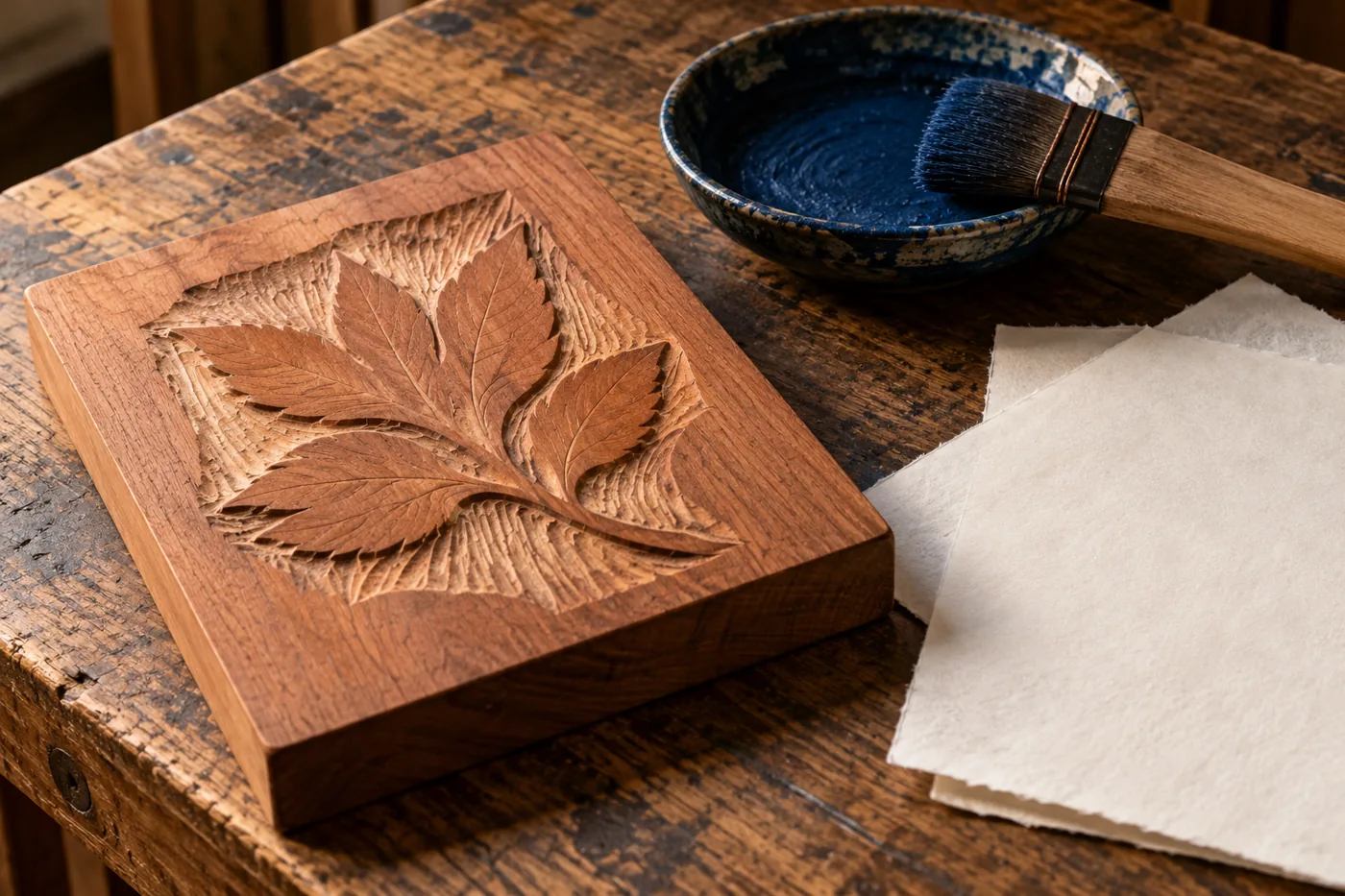
Generated interpretation, not documentary evidence. AI-generated printmaking-materials interpretation; not a Hokusai or Hiroshige work, an authentic ukiyo-e block or a functioning printing guide.
Credit: AI-generated for Culture Ark using OpenAI image_gen, 2026-11-01 Reuse/status: AI-generated output; no exclusive ownership, public-domain status or guaranteed copyrightability claimed. Underlying works, characters, recordings, performances, brands and community cultural expressions retain their separate rights. Carving depth, brush, pigments and paper are invented; the relief is not a validated printable matrix. No Japanese lettering, signature, famous composition or historical provenance is asserted.
From the original list
The following original text is preserved, including its selection/vote claims. Preservation is not independent verification of every assertion.
Why: Woodblock prints of the floating world.
What to preserve: Hokusai, Hiroshige: high-resolution images or 3D scans, plus its making, meaning and history
Year and origin: 17th century · Japan
Vote: 4/9 (historian 2 · future kid 1 · curator 1)
Learn more: Ukiyo-e on Wikipedia
Supplemental context
Ukiyo-e prints preserve a world of shared labor as well as memorable images. The Metropolitan Museum describes production involving a designer, carver, printer and publisher, with the publisher helping determine subject and quality. Its account follows subjects from actors and urban pleasure districts to landscapes and later historical events, rather than limiting the field to two celebrated artists. Culture Ark could preserve a particular impression with its title, series, credited contributors, date and condition, while comparing other impressions or editions. This would show that a widely circulating image has a material history: paper, color, wear and later reproduction affect what a future viewer actually encounters.
Creator/community: Japanese designers, block carvers, printers and publishers; Hokusai and Hiroshige are named examples, not the whole field Place/era: Japan, especially Edo-period print culture; seventeenth-century development followed by important eighteenth- and nineteenth-century changes
Context and limits
The seventeenth-century label does not date all examples or the origins of printing in Japan. Hokusai and Hiroshige worked later, and ukiyo-e also encompasses forms beyond the woodblock prints foregrounded here. Separate impressions and modern reproductions need separate records. No actual print, image license or reliable printing tutorial is supplied.
Where to learn more
- https://apiarybee.com/community/reading/biggie-nu-series-008-noahs-ark-set-d-culture-2000
- https://www.metmuseum.org/essays/woodblock-prints-in-the-ukiyo-e-style
- https://en.wikipedia.org/wiki/Ukiyo-e
Apiary library | Original Culture Ark article
Public ID and individual routes: pending publisher allocation. Internal source ID: D-1570
Part of the Culture Ark: 2,000 things people should still be able to see in 2,000 years, picked by AI research teams. This page keeps the original list entry for D-1570 word for word and adds context. Browse the gallery. The Culture Ark is an Artificial Mind Hive (AMH) project. AMH is owned by Austin Little.

Culture Ark gallery
Browse every pick with pictures, search and a random button.
Open the gallery →