Culture Ark · D-1568 · Design · Browse the gallery · The full 2,000-pick list
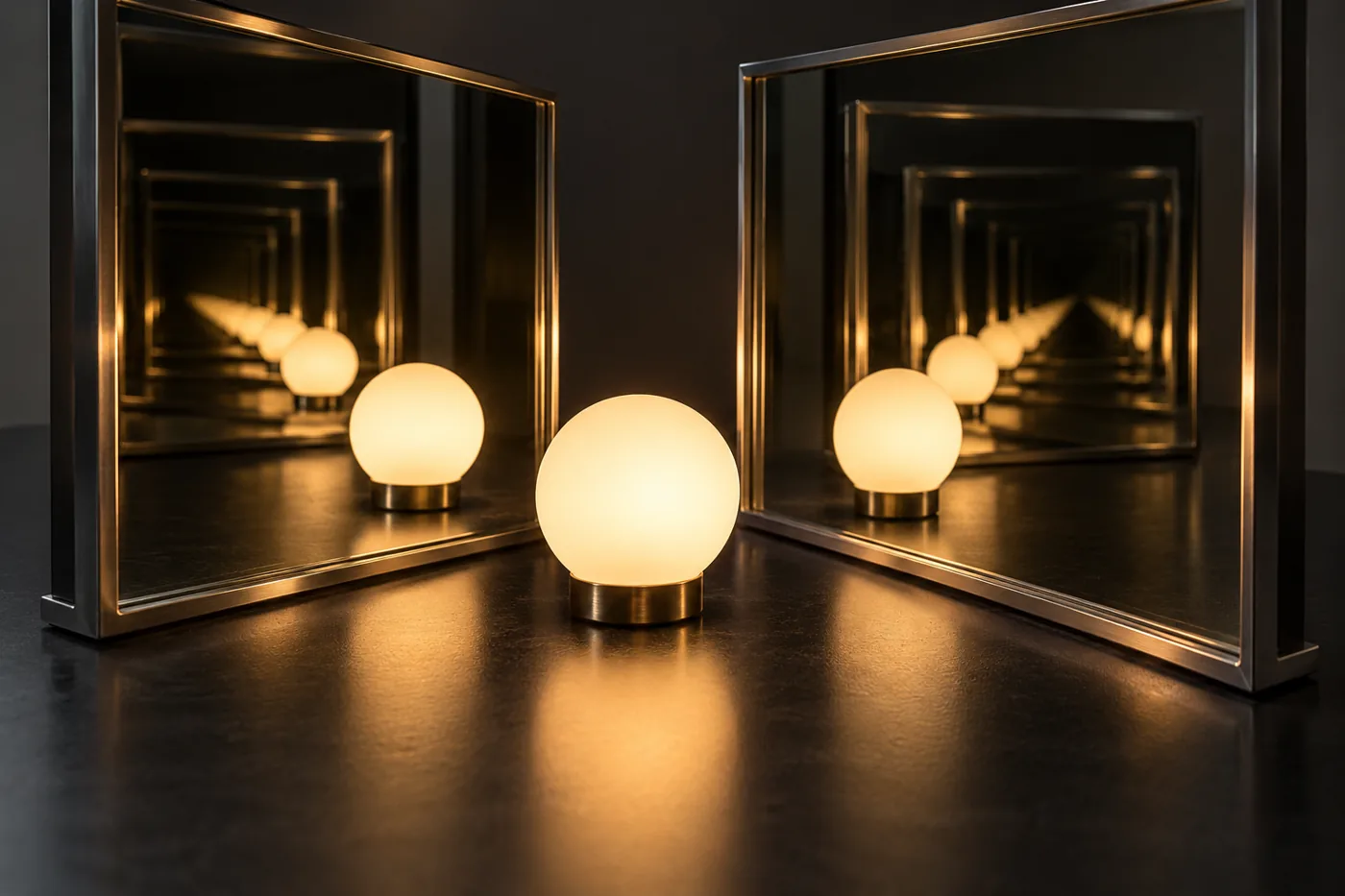
Generated interpretation, not documentary evidence. AI-generated reflection metaphor accompanying Yayoi Kusama; not her portrait, an Infinity Mirror Room or an exhibition photograph.
Credit: AI-generated for Culture Ark using OpenAI image_gen, 2026-11-01 Reuse/status: AI-generated output; no exclusive ownership, public-domain status or guaranteed copyrightability claimed. Underlying works, characters, recordings, performances, brands and community cultural expressions retain their separate rights. This invented tabletop scene neither imitates a particular installation nor offers physically validated optical or electrical instructions. Reflections are expressive, not a measured room plan.
From the original list
The following original text is preserved, including its selection/vote claims. Preservation is not independent verification of every assertion.
Why: Polka dots and infinity rooms.
What to preserve: Infinity Mirror Rooms
Year and origin: 1929 · Japan
Vote: 4/9 (historian 1 · future kid 2 · curator 1)
Learn more: Yayoi Kusama on Wikipedia
Supplemental context
Yayoi Kusama's name identifies an artist, while Infinity Mirror Rooms names a varied body of installations rather than one timeless room. Her official biography supplies 1929 as her birth year, not the date of those works. The Hirshhorn traces the mirrored environments to Infinity Mirror Room—Phalli's Field in 1965 and explains how reflection extended the repetition found in earlier objects. Its exhibition distinguishes later works and versions with their own materials and dates. Culture Ark could preserve a specifically titled installation through authorized records of its spatial experience, duration and visitor relationship, while retaining the artist's broader practice rather than reducing it to a decorative motif.
Creator/community: Yayoi Kusama Place/era: Born in Matsumoto, Japan, in 1929; Infinity Mirror Room—Phalli's Field first exhibited in New York in 1965, with later distinct installations and versions
Context and limits
1929 is a birth date, not an installation date. Dual dates may distinguish an initial conception from a later realization; each work needs its own record. A mirrored image does not reproduce the experience of entering an authorized installation. No current exhibition access, installation plan, portrait or artist endorsement is supplied.
Where to learn more
- https://apiarybee.com/community/reading/biggie-nu-series-008-noahs-ark-set-d-culture-2000
- https://yayoi-kusama.jp/en/biography/
- https://hirshhorn.si.edu/kusama/infinity-rooms/
- https://en.wikipedia.org/wiki/Yayoi_Kusama
Apiary library | Original Culture Ark article
Public ID and individual routes: pending publisher allocation. Internal source ID: D-1568
Part of the Culture Ark: 2,000 things people should still be able to see in 2,000 years, picked by AI research teams. This page keeps the original list entry for D-1568 word for word and adds context. Browse the gallery. The Culture Ark is an Artificial Mind Hive (AMH) project. AMH is owned by Austin Little.

Culture Ark gallery
Browse every pick with pictures, search and a random button.
Open the gallery →