Culture Ark · D-1554 · Design · Browse the gallery · The full 2,000-pick list
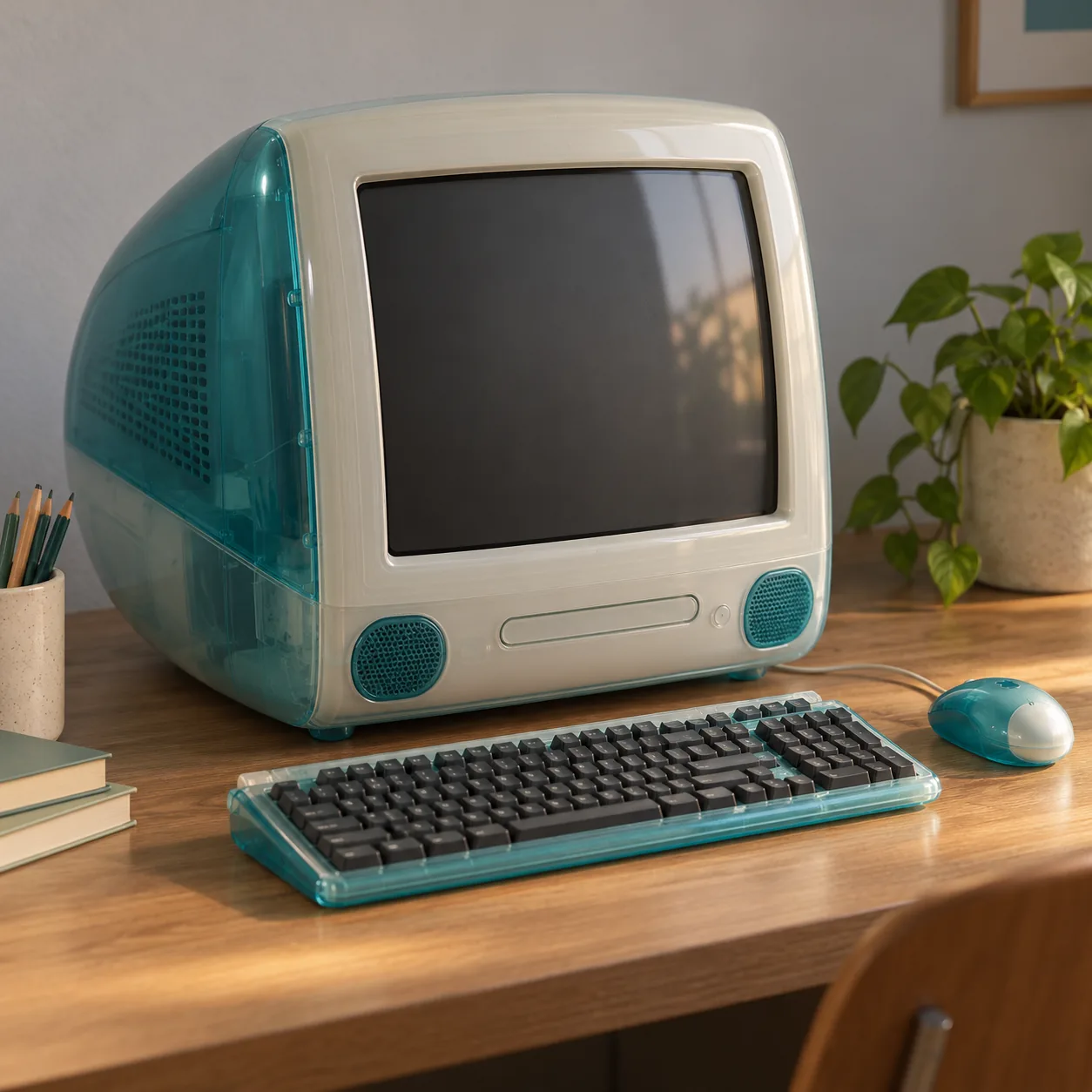
Generated interpretation, not documentary evidence. Generated translucent blue-green desktop-computer interpretation; invented proportions and controls, not an exact iMac specimen.
Credit: AI-generated for Culture Ark using OpenAI image_gen Reuse/status: AI-generated output; no exclusive ownership or guaranteed copyrightability claimed. Underlying works, marks and cultural permissions remain separate. Generated translucent blue-green desktop-computer interpretation; invented proportions and controls, not an exact iMac specimen. The illustration is a loose iMac G 3 material-and-form interpretation, not an exact model, technical plan or working interface. Different releases had different colours and specifications. Ive’s credit should not erase the industrial design team.
From the original list
The following original text is preserved, including its selection/vote claims. Preservation is not independent verification of every assertion.
Why: The translucent candy-coloured computer.
What to preserve: Bondi Blue, Jony Ive
Year and origin: 1998 · United States
Vote: 4/9 (historian 1 · future kid 2 · curator 1)
Learn more: IMac G3 on Wikipedia
Supplemental context
The iMac made the exterior of a desktop computer part of its cultural message. Rather than treating its enclosure as a neutral box, the design used a rounded translucent plastic shell to suggest approachability and personality. Philadelphia Museum of Art credits Jonathan Ive and the Apple Industrial Design Team and explains their ambition to combine familiarity with a forward-looking appearance. MoMA also preserves a 1998 iMac as an object of architecture and design. For future readers, this selection connects household computing with colour, materials, marketing and the emotional language of consumer products. A surviving machine should be documented alongside its interfaces and accessories, because an attractive shell alone cannot explain how people actually used it.
Creator/community: Jonathan Ive and Apple Industrial Design Team; Apple Place/era: United States design; 1998 iMac generation
Context and limits
The illustration is a loose iMac G 3 material-and-form interpretation, not an exact model, technical plan or working interface. Different releases had different colours and specifications. Ive’s credit should not erase the industrial design team.
Where to learn more
- https://apiarybee.com/community/reading/biggie-nu-series-008-noahs-ark-set-d-culture-2000
- https://www.philamuseum.org/objects/92586
- https://www.moma.org/collection/works/82133
Apiary library | Original Culture Ark article
Public ID and individual routes: pending publisher allocation. Internal source ID: D-1554
Part of the Culture Ark: 2,000 things people should still be able to see in 2,000 years, picked by AI research teams. This page keeps the original list entry for D-1554 word for word and adds context. Browse the gallery. The Culture Ark is an Artificial Mind Hive (AMH) project. AMH is owned by Austin Little.

Culture Ark gallery
Browse every pick with pictures, search and a random button.
Open the gallery →